
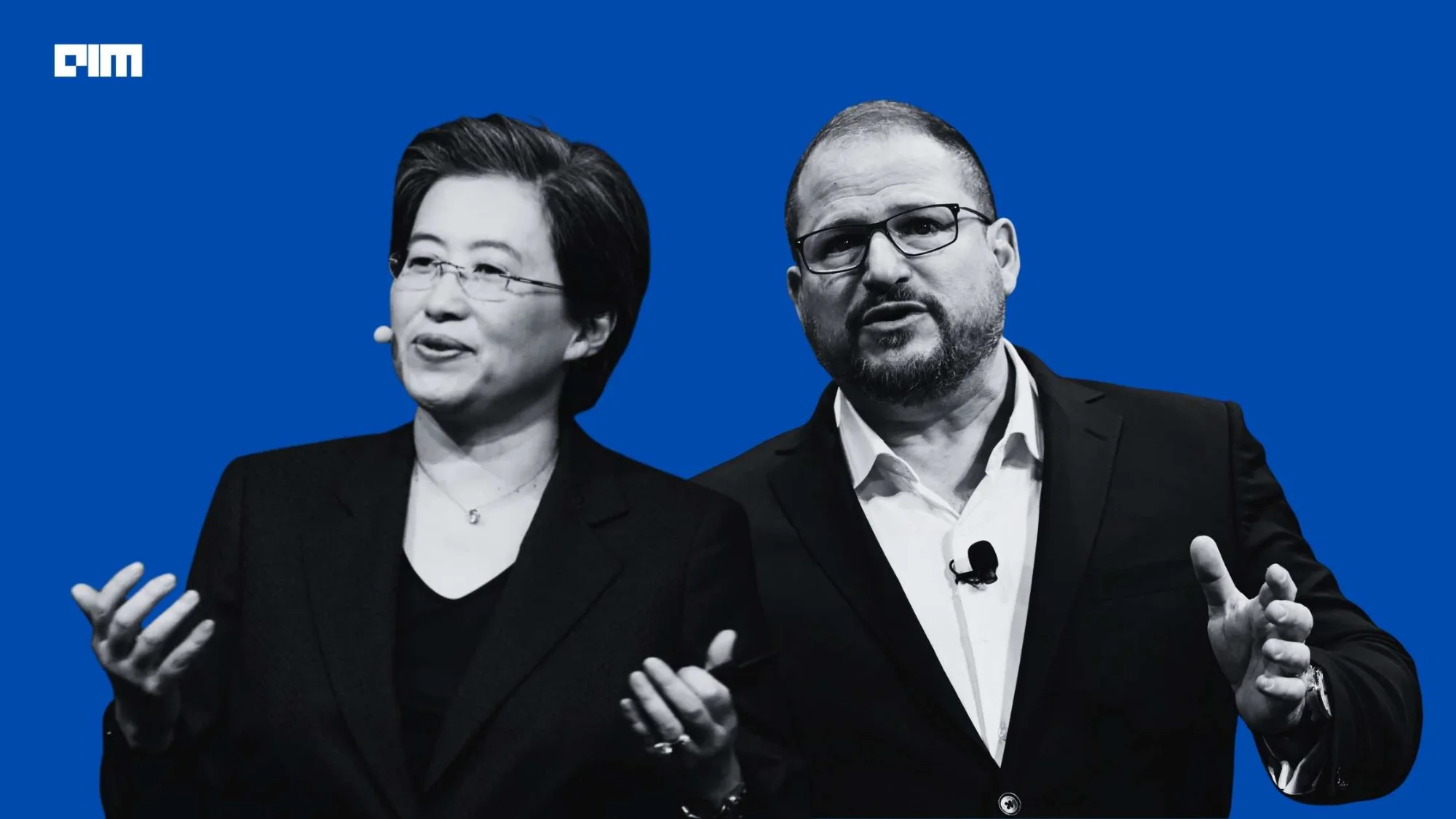
Despite AMD and Qualcomm posting strong quarterly earnings, the semiconductor companies showed very different results to Wall Street, as investors focused on near-term guidance, seasonal slowdowns, and questions around the durability of AI and device demand.
AMD
AMD posted its strongest quarterly performance in years. Fourth quarter revenue jumped 34.1% year-on-year to a record $10.27 billion.
The company delivered its widest earnings per share in more than three years and guided first-quarter revenue to $9.50–10.10 billion, including about $100 million in sales of its Instinct line of high-performance GPU accelerators to China.
Growth came from almost every segment. Data centre revenue rose 39% from a year earlier and 24% sequentially to $5.4 billion, helped by MI350 deployments and strong demand for EPYC chips.
Fifth-generation EPYC Turin processors accounted for more than half of total server revenue, with adoption across hyperscale cloud and enterprise customers.
Client and gaming revenue climbed 37% to $3.9 billion. Client revenue hit a record $3.1 billion on demand for high-performance, multi-core microprocessors, Ryzen, while gaming rose 50% YoY to $843 million, though it slipped sequentially as console chip sales cooled.
AMD expects a double-digit decline in semi-custom system-on-chip revenue by FY26 as the console cycle matures. The company said its next wave of AI hardware, including MI450 and Helios systems, will ramp in the second half of 2026, with revenue building from the third quarter and scaling into 2027.
Even with the upbeat outlook, shares fell as some investors viewed the quarter as less clean due to China-related revenue and a sequential slowdown outside the data centre business. AMD’s shares tanked 17.3% on NASDAQ on February 4. The reaction suggested the market wants proof of execution rather than projections tied to complex, large-scale deployments.
Despite this, CEO Lisa Su defended the results. “AI is accelerating at a pace that I would not have imagined,” she told CNBC in an interview.
Qualcomm
Coming to Qualcomm, the chip-maker delivered a narrower but still notable beat. Its first-quarter revenue for FY26 totalled $12.252 billion, slightly ahead of expectations of $12.23 billion. Earnings per share of $3.50 topped the $3.41 estimate.
The company’s net income stood at $3 billion, a 6% decrease from the same quarter last year.
Qualcomm’s shares ended 1.7% higher on Wednesday. However, they sunk nearly 11% in the after-market trading, sliding from a close of $148.89 to as low as $134.66.
“While our near-term handsets outlook is impacted by industry-wide memory supply constraints, we are encouraged by end-consumer demand for premium and high-tier smartphones,” Qualcomm CEO Cristiano Amon said in a statement.
Shares of Dixon Technologies and Kaynes Technologies fell as much as 4% on Thursday, February 5, after Qualcomm's overnight results and guidance disappointed investors. Both electronics manufacturing services companies rely on guidance from the smartphone processor manufacturer.
While the company did not flag any dramatic slowdown, the small revenue outperformance and lack of a clear acceleration in core handset and licensing trends appeared to temper enthusiasm, especially at a time when investors are demanding stronger growth signals from chipmakers tied to mobile and edge devices.

Your reaction
Discussion
What's your take on this story?
No comments yet — be the first to share your view.