IIT Madras Releases India’s First Cancer Genome Database
By Merin Susan John ·
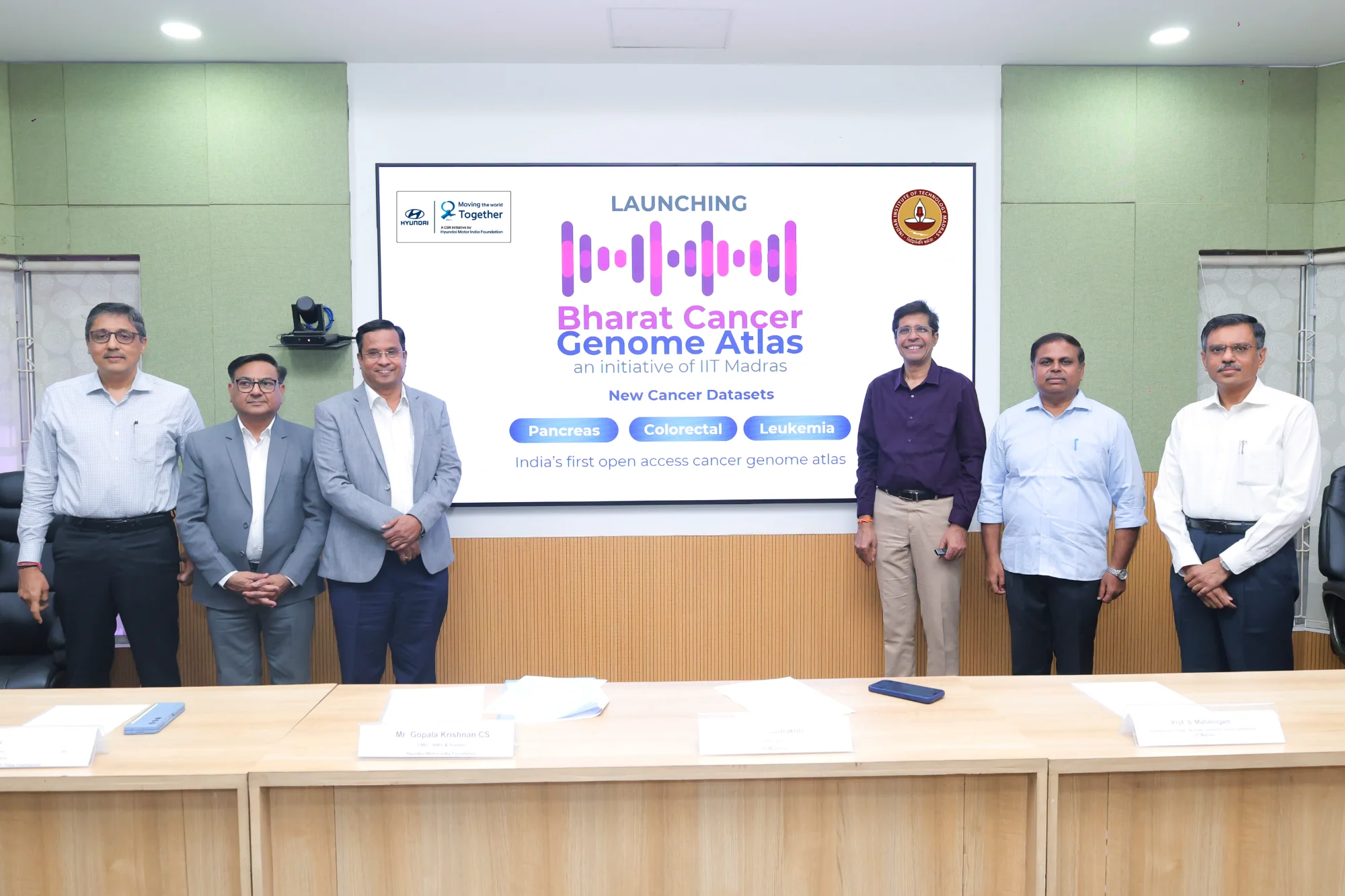
The Indian Institute of Technology Madras has released India’s first comprehensive cancer genome database covering paediatric leukaemia, colorectal, and pancreatic cancers, a move expected to strengthen cancer research and precision oncology in the country.
The database was developed under the Bharat Cancer Genome Atlas (BCGA) initiative and is now publicly accessible to researchers and clinicians in India and abroad.
According to the Indian Council of Medical Research (ICMR), cancer incidence in India continues to rise, with the National Cancer Registry Programme estimating that one in nine Indians is likely to develop cancer during their lifetime. Around 2.5 million people are currently living with cancer in the country, with incidence increasing by nearly 12.8% annually since 2022.
Despite the growing disease burden, India has been underrepresented in global cancer genome studies, limiting the availability of population-specific genetic data needed for diagnostics and drug development. IIT Madras initiated the Indian Cancer Genome Programme in 2020 to address this gap, completing whole genome sequencing of cancer samples collected from patients across the country.
The effort is supported by Hyundai Motor India through its Hyundai Hope for Cancer initiative and is led by IIT Madras’ Centre of Excellence on Cancer Genomics and Molecular Therapeutics. The project involved partnerships with several hospitals and healthcare institutions to analyse anonymised genetic data from Indian cancer patients.
Announcing the release, IIT Madras Director Prof V Kamakoti said in a statement that the dataset would help fill a critical gap in understanding cancer genomics in India. He said the initiative aims to generate deeper insights into the factors driving these cancers and support their prevention through early and timely interventions.
Project Coordinator Prof S. Mahalingam added the database would enable the identification of India-specific cancer biomarkers and novel therapeutic targets, supporting the development of more effective, population-specific treatment strategies.
The release also comes close on the heels of the Union Budget 2026, which announced customs exemption on select cancer drugs and life-saving medicines to improve affordability and access to treatment.
The Budget also outlined initiatives to strengthen India’s biopharma and biotechnology ecosystem, including support for domestic drug development, research-linked manufacturing, and skilling, as part of a broader effort to build end-to-end capabilities in cancer care and reduce dependence on imports.