
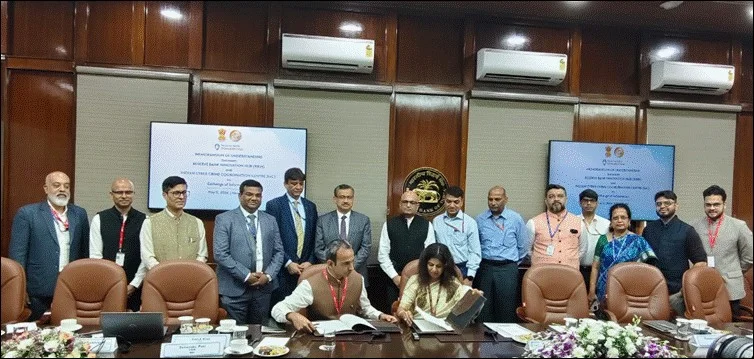
The Indian Cyber Crime Coordination Centre (I4C), under the Ministry of Home Affairs, and the Reserve Bank Innovation Hub (RBIH) have signed a Memorandum of Understanding (MoU) to strengthen AI-driven detection of mule accounts and cyber-enabled financial frauds across India’s banking ecosystem.
The collaboration aims to improve the sharing of fraud risk intelligence, analytical support, and operational coordination between the two organisations to strengthen fraud prevention systems in digital banking and payments.
Union Home Minister Amit Shah stated that the government is working continuously towards building a “cyber secure Bharat.” “Mule accounts are big hurdles in curbing cyber crimes,” Shah said in a post on X.
He added that the partnership between I4C and RBIH would “unleash the power of artificial intelligence to combat cyber fraud” by enabling faster identification and removal of hidden mule accounts through AI-powered fraud detection systems.
Mule accounts are bank accounts used by cybercriminals to transfer or launder illegally obtained money. Such accounts are often created using fake identities or by unsuspecting individuals and pose a major challenge in tackling online financial fraud.
Under the MoU, I4C will share mule account-related intelligence and suspect identifiers from its Suspect Registry with RBIH. The data will be integrated into AI-driven fraud detection systems such as MuleHunter.ai, which has been deployed across banks to identify suspicious transactions and financial activities.
RBIH will use the datasets to train and enhance fraud-risk assessment models to improve proactive fraud detection and prevention mechanisms in the digital payments ecosystem.
The collaboration is expected to improve the resilience and safety of India’s digital banking ecosystem while increasing public trust in digital financial services.
The initiative is also part of I4C’s broader efforts to strengthen India’s cybercrime response infrastructure through platforms such as the National Cybercrime Reporting Portal and other intelligence-sharing mechanisms.

Your reaction
Discussion
What's your take on this story?
No comments yet — be the first to share your view.