
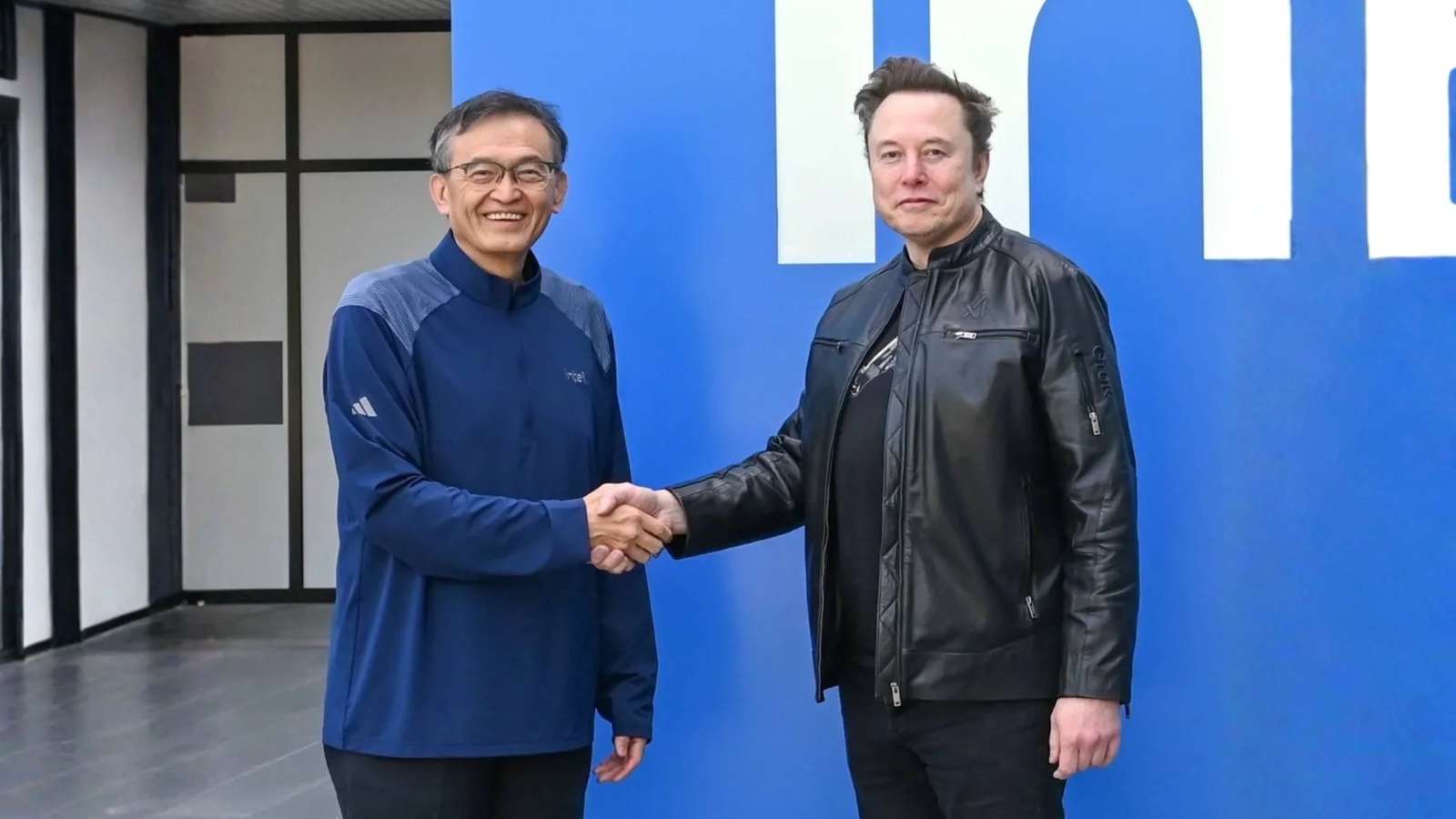
Intel announced that it will join the Terafab semiconductor venture alongside Tesla, SpaceX, and xAI. This venture was announced by Tesla CEO Elon Musk last month as a fabrication project jointly owned and developed by Musk’s companies.
The companies now plan to build a $25 billion chip manufacturing facility in Austin, Texas, with plans for a full-scale facility on the North Campus of Giga Texas. Intel will design, fabricate, and package chips for the project, which aims to produce 1 terawatt of compute power annually to support AI, robotics, and space systems.
The deal marks a shift in Elon Musk’s strategy to secure domestic chip supply. Intel will operate key parts of the facility, while Tesla and its partners will use the output for self-driving systems, humanoid robots, and satellite networks.
Intel’s shares rose about 4% after the announcement on NASDAQ.
In a post on X, Tesla described the project as “the most epic chip-building effort ever”.
The partnership strengthens Intel’s foundry business and positions it as a US-based alternative to overseas manufacturers. CEO Lip-Bu Tan said the project represents a “step change” in semiconductor manufacturing. He added that Musk’s approach is “exactly what is needed” to rethink how chips are built.
Elon has a proven track record of reimagining entire industries. This is exactly what is needed in semiconductor manufacturing today. Terafab represents a step change in how silicon logic, memory and packaging will get built in the future. Intel is proud to be a partner and work… https://t.co/PmzsTLNmad
— Lip-Bu Tan (@LipBuTan1) April 7, 2026
For Musk’s companies, the deal reduces reliance on external suppliers amid rising demand for AI chips. Musk said he is “looking forward to working with Intel on the Terafab”.
Terafab plans to integrate logic, memory, and advanced packaging under one roof. Intel will deploy its EMIB (Embedded Multi-die Interconnect Bridge) and Foveros packaging technologies to support high-performance chips at scale. The facility will produce two types of chips, including edge processors for Tesla vehicles and Optimus humanoids, and space-grade chips for satellites and orbital systems.
The agreement did not specify any financial terms or production timelines, but both sides described it as a long-term strategic collaboration.
- AI Productivity to Add $28 Billion to $84 Billion to India's GDP: Cognizant Study
- OpenAI's Codex Helps in Aerodynamic Engineering for Mazda
- Bengaluru Accounts for 34% of India's FDE Talent: Report
- 84% See AI Productivity Gains, but Only 10% Allow Agent Autonomy: TCS Study
- Snowflake Introduces Business Ontology, Cortex AI Gateway to Bring AI Agents Into Enterprise Workflows
- Three Members Behind Claude Code Leave Anthropic Within 10 Days