Why Everything at Intel Now Rides on 18A’s Success
By Siddharth Jindal ·
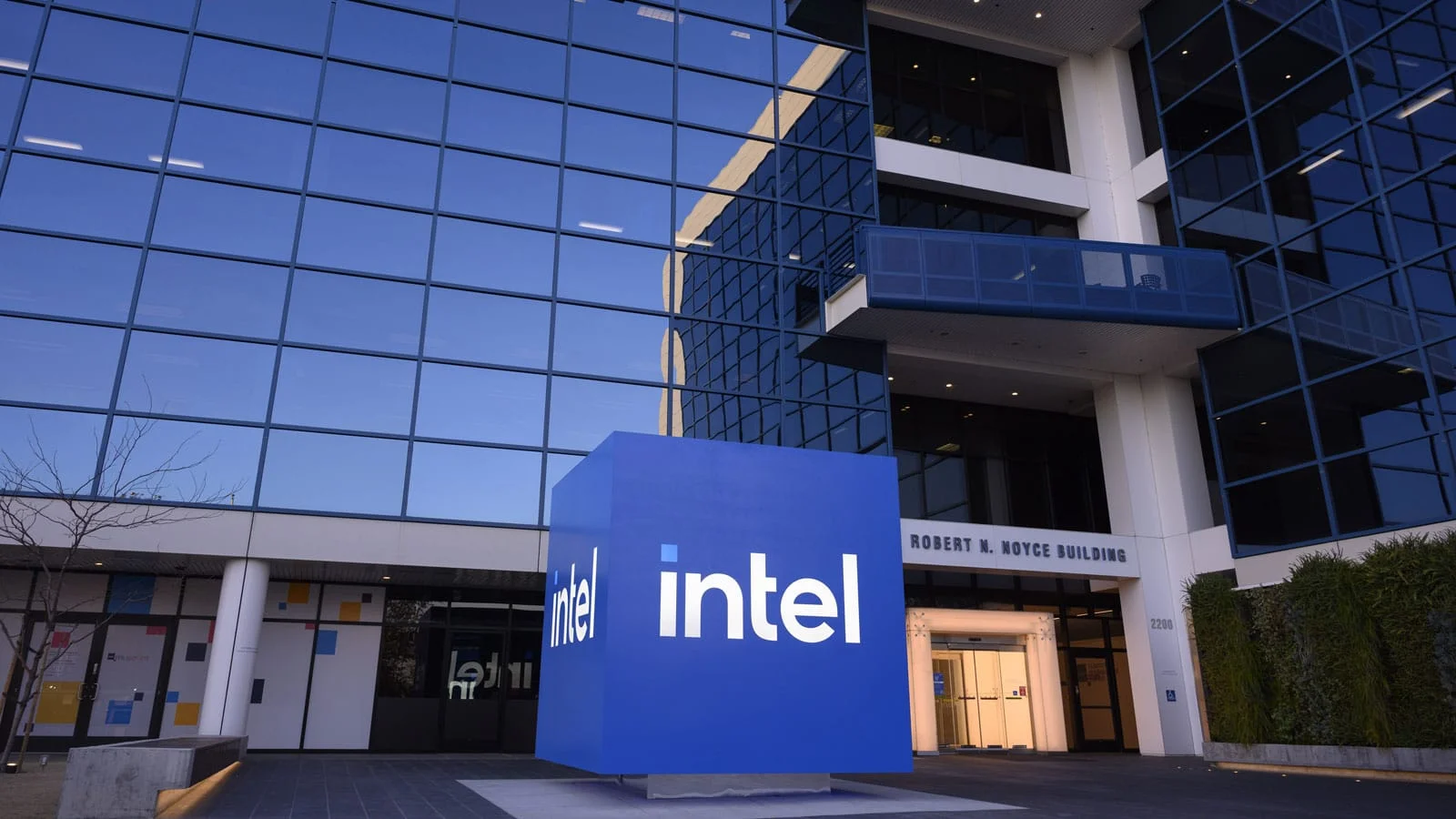
Intel has been through tough times—it lost its dominance in the semiconductor industry, had to go through a painful restructuring and massive layoffs, suffered a $18.8-billion loss in 2024, and watched its stock struggle for years. But now, something exciting is happening.
Shares of Intel gained over 11% on Wednesday after HSBC and Seaport Research Partners raised their ratings on the chipmaker, drawing investor attention ahead of its fourth-quarter earnings report due after market close on January 22. The stock has gained about 33.5% since late December, rising from around $36 on December 26 to over $54 apiece on January 21 on NASDAQ.
Investor focus is now on CEO Lip-Bu Tan’s turnaround strategy, including cost cuts, progress in the foundry business, and upcoming product launches. Central to that effort is Intel’s 18A, a cutting-edge, 2nm semiconductor process node expected to play a significant role in reviving its manufacturing capabilities and attracting AI PC and foundry customers.
Semiconductor process nodes indicate a chip generation's advancement with smaller features and higher transistor density, improving speed and power efficiency.
On January 13, investment banker KeyBanc upgraded the Intel stock to ‘Overweight’ with a $60 price target. The firm pointed to strong 2026 server CPU demand, expected 10–15% price increases from hyperscalers, and improving 18A yields above 60%, though still trailing the world’s largest semiconductor foundry TSMC’s 70–80% yields at 2nm.
Can 18A Help Intel Make a Comeback?
“18A is very critical to Intel’s comeback story,” Manoj Sukumaran, principal analyst for data centre compute and networking at research advisory firm Omdia, tells AIM. He adds that Intel expects the node to bring process parity with TSMC, with potential leadership at the subsequent 14A node.
“We hear that 18A is gaining maturity, yields are improving, and Intel’s own x86 CPUs are adopting it,” Sukumaran says. However, he adds that external validation remains limited. “We are yet to see anyone else in the market going for 18AP, the node meant for external customers.”
As a result, Intel still needs to secure third-party customers for the same technology. Apple has been named as a potential future customer for variants of the 18A process, though no deal has been confirmed.
Looking ahead, Sukumaran says yield improvements, PDK stability (minimising mismatch between design rules and chip fabrication), and a successful pull-in of 14A will be decisive. “If Intel pulls in 14A or 14AP, that could be the node that gives leadership to the company and drives wider adoption of Intel Foundry Services,” he says.
The chip maker launched Core Ultra Series 3 processors, also known as Panther Lake, at CES 2026, introducing what it described as its first AI PC platform built on the Intel 18A manufacturing process.
On similar lines, Raymond Paquet, vice president analyst at Gartner, states that there is a symbiotic relationship between Intel’s chip designs and its manufacturing ambitions. The success of its upcoming Panther Lake processors depends on the 18A manufacturing process, while 18A itself needs high-volume products such as Panther Lake to make the economics work.
However, he adds that for Intel Foundry to be considered a success, landing customers beyond Intel itself is critical. “The first thing the foundry has to have is a customer that’s not named Intel,” Paquet says. “Right now, almost all of the business is internal.”
Securing external customers on advanced nodes such as 18A and eventually 14A will help validate Intel’s manufacturing competitiveness and offset the enormous capital costs involved.
Why Panther Lake, AI PCs Aren’t Enough
Paquet views Panther Lake as a meaningful technical step forward for Intel’s PC roadmap. However, he believes that the broader PC market remains mature. Enterprise PC buying, in particular, is driven largely by replacement cycles rather than new demand.
“The PC market is largely saturated,” he notes. According to an IDC report, the global PC volume was expected to reach 273 million in 2025, only 3.7% up from last year.
“Purchasing of new PCs is predominantly driven by a replacement cycle. The real question for Intel is whether Panther Lake substantially increases the rate of that replacement cycle.”
Without a compelling software-driven reason for customers to upgrade sooner, Gartner cautions that Panther Lake alone may not materially expand the overall PC market.
Meanwhile, Sukumaran is blunt about Intel’s PC strategy. “Personally, I am not a big fan of the term ‘AI PC’,” he says. “A PC with a GPU can do much better than a CPU with a small neural accelerator block. To me, AI PC is just a marketing term.”
Opportunity in Data Centres
Sukumaran says Intel’s challenges are more acute in data centres, traditionally its strongest business. Hyperscalers such as Google, Microsoft, Meta, and Amazon Web Services are increasingly deploying their own custom Arm-based CPUs in data centres, reducing their dependence on x86 processors. While x86 servers continue to be deployed, volumes are falling as Arm gains share—the number of customers using its chips in data centres has grown 14x since 2021.
He says NVIDIA’s bundling of its Grace and upcoming Vera Arm CPUs with new AI server architectures is accelerating the shift, helping Arm capture about 24% of global server socket share. Within the x86 segment, Sukumaran says AMD continues to take market share from Intel, with major cloud providers now using mostly AMD processors for their x86 server fleets.
“We are yet to see Intel bouncing back or gaining share in server CPUs,” Sukumaran says. AMD currently holds about 27–28% of server share, according to Mercury Research, compared with roughly 63–67% for Intel. He notes that Intel controlled more than 90% of server sockets just a few years ago.
On the contrary, Paquet says that while the PC market remains constrained, he sees far greater upside on the data centre side, driven by AI. “On the server side of the equation, it’s much more unbounded,” he says. “The growth there is substantial, particularly due to AI-related requirements.”
Notably, the chipmaker recently hired veteran GPU architect Eric Demers, who spent nearly 14 years at Qualcomm and also worked at AMD, to lead parts of its GPU and AI chip development efforts. Demers is best known for his role in designing Qualcomm’s Adreno GPU architecture.
At the same time, Sukumaran says Intel’s EMIB packaging technology is emerging as a credible alternative to TSMC’s CoWoS, an advanced 2.5D/3D packaging technology for ultra-high performance computing, which is currently supply-constrained. “Almost all popular GPUs and AI ASICs today use CoWoS for attaching logic dies to HBM,” he says. “But CoWoS capacity is far lower than demand, and TSMC is struggling to bridge that gap.”
As a result, major chip designers—including Broadcom, MediaTek, Marvell, Apple, and NVIDIA—are evaluating Intel’s EMIB (embedded multi-die interconnect bridge) for future AI processors. “This is a great opportunity for Intel Foundry Services,” Sukumaran says, noting that Amazon Web Services already uses Intel’s packaging technology for its Graviton CPUs.
What’s Next for Intel Foundry?
Last year, the US government agreed to invest $8.9 billion in Intel, acquiring a 9.9% stake. That support, however, does not translate into near-term profits.
“I don’t think Intel Foundry Services will turn profitable before the 2029–2030 timeframe,” Sukumaran says. “Right now, the priority is manufacturing leadership—even at the cost of profitability.”
NVIDIA has also committed up to $5 billion as part of a strategic partnership with Intel, spanning manufacturing, advanced packaging, and product development. Under the agreement, Intel will design custom x86 CPUs for NVIDIA’s AI infrastructure platforms and develop new x86 system-on-chips that combine NVIDIA RTX GPU chiplets with Intel CPUs for PCs.
Sukumaran says expectations for Intel Foundry Services (IFS) over the next two to three years should remain realistic. “IFS is critical for the U.S. to reduce reliance on other countries for semiconductor manufacturing,” he says.
Similarly, Paquet downplayed the idea that US government backing for Intel is primarily about competing with TSMC. “It’s not so much about TSMC as it is about Taiwan,” he says. “If Taiwan were unable to ship chips due to geopolitical problems, the world would come to a grinding halt very quickly.”
Domestic manufacturing capacity—whether from Intel or others—is seen as a strategic necessity.
Ultimately, Paquet says Intel’s long-term success hinges less on individual product launches and more on restoring sustained growth.
“Intel has gone from nearly an $80 billion revenue stream down to roughly $50 billion in the last few years,” he says. “The key question is whether the company can return to growth and start taking share again.”
With Intel set to report earnings soon, investors will be watching closely to see whether optimism around 18A and Panther Lake translates into concrete financial momentum.