
SK Hynix reported record second-quarter 2026 results as AI infrastructure spending continued to fuel demand for high-bandwidth memory (HBM), while outlining a strategy to secure future growth through multi-year supply agreements with major customers.
The South Korean memory chips maker posted revenue of ₩79.32 trillion ($55 billion), up 51% quarter-on-quarter and 257% year-on-year, alongside a record operating profit of ₩60.54 trillion ($42 billion), a 557% jump YoY.
Growth was driven by HBM3E, AI server DRAM, and enterprise SSDs, lifting operating margins to 76%, while non-operating investment gains pushed net profit to ₩93.92 trillion ($65 billion).
SK Hynix said it has completed long-term supply agreements with 10 major AI customers, marking a shift away from the memory industry’s traditional spot-market cycles. The agreements include pricing mechanisms designed to reduce volatility alongside financial commitments, including deposits, to improve demand visibility and support long-term capacity planning.
The company said the agreements go beyond volume commitments by aligning future memory development with customers’ technology roadmaps while providing greater visibility for production and capital investment.
It also dismissed concerns that more efficient AI models or cloud providers leasing data centre capacity could reduce demand for AI hardware. Instead, management argued that efficiency improvements would broaden AI adoption and ultimately increase demand for memory.
“We view these developments not as a sign of AI investment slowdown, but more as a transition towards higher utilisation of the AI infrastructure that has already been built at scale, as well as accelerated monetisation efforts,” Corporate Center President Song Hyeon-jong said in a statement.
“As AI models improve and software optimisation advances, the computational volume and cost per individual task are continuously decreasing. We anticipate that these improvements in efficiency will not dampen overall infrastructure demand,” he added.
SK Hynix said demand is increasingly extending beyond HBM to conventional server DRAM and enterprise SSDs as agentic AI applications expand.
The company expects DRAM demand to grow in the mid-20% range and NAND demand in the high teens, while arguing that supply constraints will persist because of increasingly complex manufacturing processes for AI memory and the long lead times required to build new fabrication capacity.
The company also forecast stronger profitability in the second half of 2026 as HBM4 shipments ramp and higher-value products make up a larger share of sales.
It expects second-half DRAM bit growth to exceed the first half, supported by higher HBM4 volumes and increased shipments of 1c DRAM.
On its product roadmap, SK Hynix said it began mass-producing HBM4 during the second quarter and expects a full production ramp in the second half of the year. HBM4E samples have already been supplied to major customers, with volume production planned for 2027.
The company is also preparing technologies for HBM5, including integrated HBM (IHBM), which it said could reduce thermal resistance by more than 30% in future AI systems.
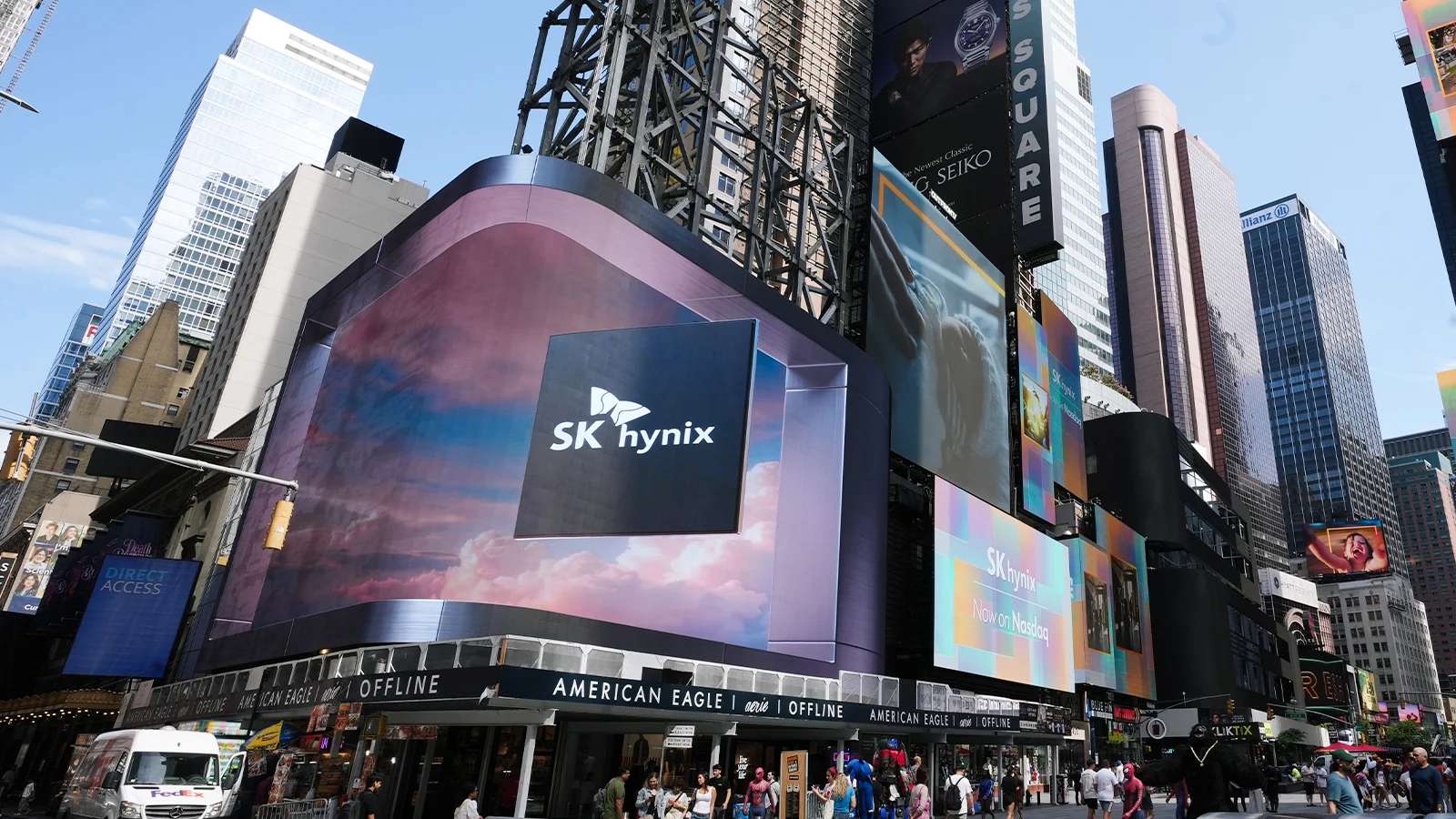
The results come weeks after SK Hynix completed its Nasdaq ADR listing, which the company described as the largest-ever US listing by a foreign issuer. Management said the listing was intended not only to raise capital but also to strengthen relationships with major AI customers and expand its presence in the next-generation computing ecosystem.
However, its shares dropped sharply on the Korean stock exchange KOSPI, falling over 18% at the time of publishing as sales fell short of analyst estimates.
The stock is also underperforming on Nasdaq, closing around 9% lower on July 28 as investors duno semniconductor stocks. It’s now trading 4% below the listing price.
- Coforge Revenue Rises 54% as AI Engineering and Deal Bookings Gain Momentum
- Tech Mahindra Partners With SpaceXSI to Bring AI Into Software Engineering
- Infosys AI Revenue Rises 29% in Q2, FY27 Growth Guidance Cut
- LTM Launches BlueVerse Industrial AI Lab in Chennai
- Chariot Launches Speech Recognition Model for 10 Indian Languages
- Meta Expects Up To $145 Billion In Capex As AI Investments Expand