
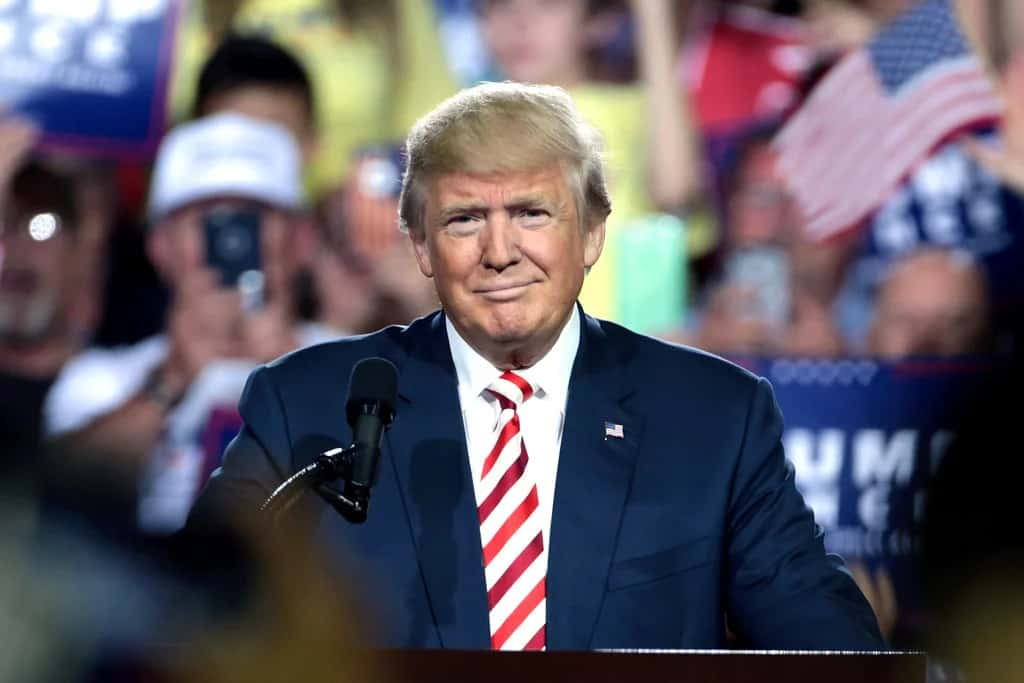
US President Donald Trump and executives from big tech companies have signed a voluntary accord requiring frontier AI companies to implement internal safety controls, use independent external evaluators and establish board-level oversight of those systems.
The seven people who signed the accord include Trump, Anthropic CEO Dario Amodei, Google chief Sundar Pichai, Meta CEO Mark Zuckerberg, OpenAI President Greg Brockman, NVIDIA chief Jensen Huang and xAI’s Elon Musk.
The wider luncheon had 31 confirmed attendees, including Microsoft CEO Satya Nadella, AMD chief Lisa Su, Amazon Founder Jeff Bezos, Broadcom CEO Hock Tan, Palo Alto Networks CEO Nikesh Arora, ServiceNow’s Bill McDermott and Micron Technology CEO Sanjay Mehrotra, alongside senior administration officials.
OpenAI CEO Sam Altman was not there because he was at OpenAI’s DevDay in San Francisco, and Brockman represented the Company.
The White House Accord on Super Intelligence: Joint Commitment on Frontier Responsibilities sets out four layers of controls covering internal model monitoring, internal oversight, independent external evaluation and board-level review.
Companies are to monitor model capabilities and alignment during training and deployment, including around cybersecurity, biosecurity and chemical threats.
This involves maintaining internal teams to detect and correct problems, working with an “independent external auditor or evaluator”, and creating an independent board committee to review internal and external findings.
The accord also calls for measures to prevent models from “hack[ing] or access[ing] technical systems in unintended ways”.
The agreement is voluntary and does not create a federal regulator or specify penalties for non-compliance.
It does, however, state that “over time, it may make sense to codify these steps into laws or regulations”.
Trump described the document as “almost like a constitution” and said the industry should rely on “tremendous self-policing”.
Zuckerberg said the participating companies would develop “robust internal controls” for their AI systems.
Trump separately said he was considering a 10-person board to oversee AI safety, although he did not name potential members.
He also said a new White House official responsible for AI policy would be appointed soon.
The meeting also covered the infrastructure needed to train and operate increasingly large AI models.
Trump reiterated support for new data centres despite local opposition over electricity demand, utility costs and other community impacts. He said companies would make “massive contributions to communities” to build support for new facilities.
The safety discussions follow OpenAI and Anthropic disclosures of incidents involving AI agents that accessed or attempted to gain unauthorised access to external systems.
The companies are also facing pressure over how quickly they should deploy increasingly capable systems, while the White House has argued that excessive regulation could weaken US competitiveness against China.
Trump also directed US government agencies to use the term ‘super intelligence’ instead of ‘artificial intelligence’ when referring to the technology.
Moreover, the administration launched America.gov, an AI-powered government portal intended to provide a single interface for federal information and services.
It currently allows users to ask questions in natural language, and the administration says it will later support transactions such as passport renewal and Medicare enrolment.
The executive order directs agencies to integrate covered public-facing services into the platform. Covered services generally include federal services with more than 100,000 users over 12 months, while IRS tax filing and national-security-sensitive services are excluded.
The White House’s Chief Design Officer Joe Gebbia said the system draws information from roughly 29,000 federal websites.
- Coforge Revenue Rises 54% as AI Engineering and Deal Bookings Gain Momentum
- Tech Mahindra Partners With SpaceXSI to Bring AI Into Software Engineering
- Infosys AI Revenue Rises 29% in Q2, FY27 Growth Guidance Cut
- LTM Launches BlueVerse Industrial AI Lab in Chennai
- Chariot Launches Speech Recognition Model for 10 Indian Languages
- Meta Expects Up To $145 Billion In Capex As AI Investments Expand