
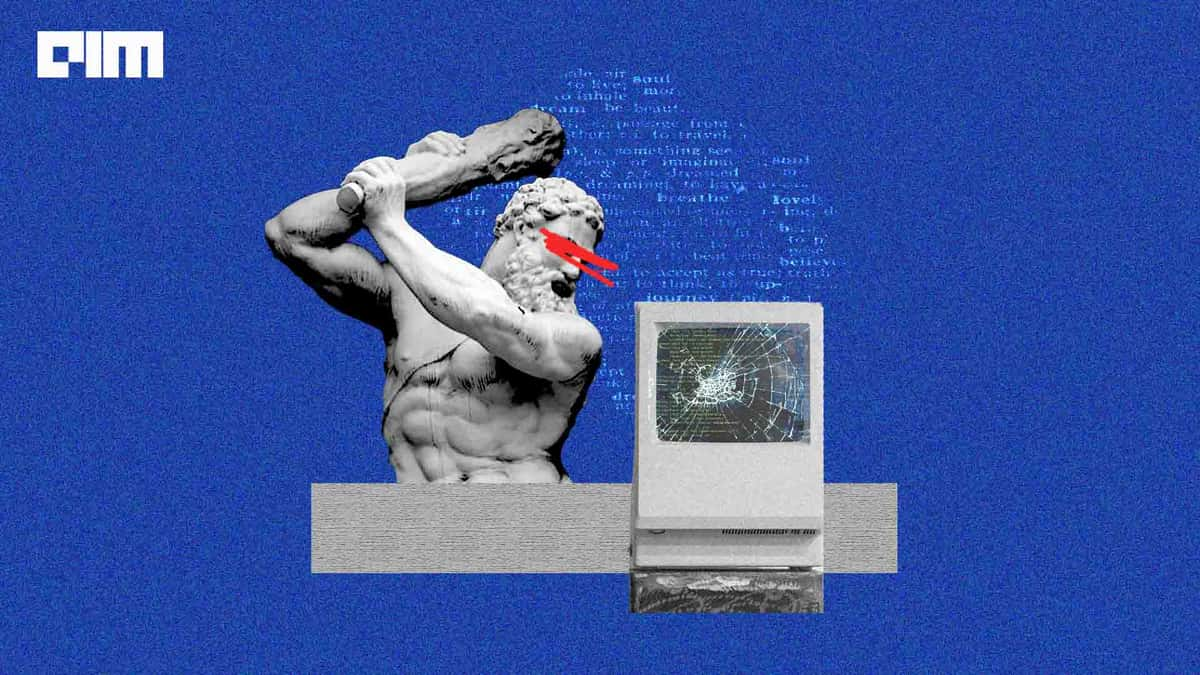

Assuming that the discussion about how GPT-3 can eventually make developers obsolete is true, there is not enough backlash from the community against auto-code platforms that can write code. Instead, they seem happy about it. It looks like programmers and developers are actually excited about a lot of their repetitive tasks getting automated with the help of auto-code platforms.
However, the same cannot be said about the artists’ community’s reaction towards AI-based art generation tools like Midjourney or DALL-E, which the community still seeks to boycott.
The backlash towards AI making art started in August when an AI artist won a digital art competition that used Midjourney for a lot of the work. Artists blasted the AI tools and the ethical stance of it as it is built on the datasets of art available on the internet, which juggles on the line of copyright.
Read: Artists' Envy, AI's Pride
This discussion about technology making a lot of artistic jobs obsolete began with the introduction of tools that could convert photos into artistic oil paintings, or even further back to the introduction of the internet to replace newspapers and printing presses. The field of art is often characterised by competition and the struggle to be recognized and valued, and many artists fear that AI could create art that is better than their own. This could potentially lead to a sense of resentment for AI.
Offering a perspective, Avanish Kumar, our in-house creative editor, said that the new AI softwares are just tools like Photoshop and Canva. “Back when Canva was released, a lot of creative and graphic designers were worried about their jobs getting taken away, but it did not turn out this way,” said Kumar. He added that this hostility towards AI by artists is just a temporary phenomenon and they will eventually start adopting it in their workflow. “An AI tool can generate similar pictures for different users, but it is up to the designer how he utilises the images for the final output.”
Journalists, writers, and content creators have mixed views about the generative AI field. Tools like Copy.ai or ChatGPT that are built on GPT-3 are able to generate original content on anything you ask for, with a creative twist. Though there is an obvious connotation of this to replace copy writers, the truth is actually quite different.
Many, who use text generating tools, are actually implementing it to improve their content rather than completely relying on it. For example, an AI-powered tool could automatically check the accuracy of facts in an article, allowing the journalist to focus on the overall structure and flow of the piece. But the view is not shared by everyone.
We are asking the wrong questions
An interesting argument pointed out by an artist on Twitter questioned the questions that we ask about AI-based art generation software being merely tools. The right question is – "Where is the line between the human and the corporation?" The user gives an example of how apps like Uber and Ola have been offering cheap taxi services for everyone, but now the cab drivers are struggling to compete with it.
People offering these automated tools have their own profits to chase. An art generated by Midjourney or Stable Diffusion might benefit the person who put the prompt and maybe later worked on it, but the person who built the tool is the real profiteer and the one to be questioned.
Moreover, these robots are trained using thousands of pictures of real images collected off the internet. They then learn to recognize stylistic features of original artists and draw those features in a synthetic fashion. AI art generators do not give credit to the original artists' work they were trained on. This can lead to copyright infringement and theft of intellectual property.
"Coders like martini shaken, but not stirred, unlike Artist"
Krishna Rastogi, CTO of MachineHack, said that there are a lot more coders in the IT companies than there are artists. “Coders care about building systems to get the work done and develop something. This involves a lot of repetitive tasks that can be automated. On the other hand, inspiration for art is driven by experience and is unique for individual artists, which now AI can somehow create with a click of a button.” He goes on to say that artists should consider AI-generated art as an inspiration, rather than the final product.

Mrityunjay Bhardwaj, ex-CGI artist and AI/ML expert weighed in his thoughts and offered a slightly different perspective. “When it comes to artists and AI art, the problem that artists have is that just by giving simple text prompts, people without any skills in the field can generate art with almost the exact same end result, with just a little need for polishing” said Bhardwaj.
Concluding thoughts
AI is revolutionising art. The postmodernists held the view that the future of art was dead, whereas the modernists believed it was alive. Now with AI in the picture, art has taken a completely new life, outliving its creators and finding new meaning in synthetic realities.
Bhardwaj stresses on the point that this apparent threat is mostly in the field of concept art and not other fields like CGI art or VFX. On the developer part of the conversation, he said that programmers do not care about AI replacing their jobs because the end result requires augmentation. “We require accountability when building software and writing code. Copilot, ChatGPT, or other text generation and automation tools can only provide assistance for the work,” he added.
Overall, it is clear that AI can play a valuable role in the creation of content. Rather than viewing it as a competitor, it should be considered a tool that can help human creators to generate ideas, automate tedious tasks, and overcome their own biases.
On the other hand, the fear of losing their unique perspective or creative vision is an overall concern for all, not just artists. A belief that art requires human touch and cannot be replicated by a machine is absolutely true, and that is where the hostility stems from. The case is a little different for developers.
- Tech Mahindra’s Q2 Revenue Modest, But AI-led Deflation Remains Higher
- Wipro’s Deal Slump Puts Its AI Growth Story to the Test
- The Unintended Winner of US Green Card Pause: India’s Offshore AI Hubs
- HCLTech Shows Indian IT Can Win AI Deals—But at the Cost of Core Business
- Indian IT's Q2 Will Test the Economics of AI
- Can Mid-Market Deals Save HCLTech From the Great AI Tech Squeeze?