
The carbon footprint of the global information technology & computing industry almost equals or, at times, exceeds that of the aviation industry. The bad news is that it is going to substantially increase as generative AI gets embedded into the global economy.
Therefore, there is a greater need for IT companies to adopt sustainable practices and innovative solutions to reduce their environmental impact.
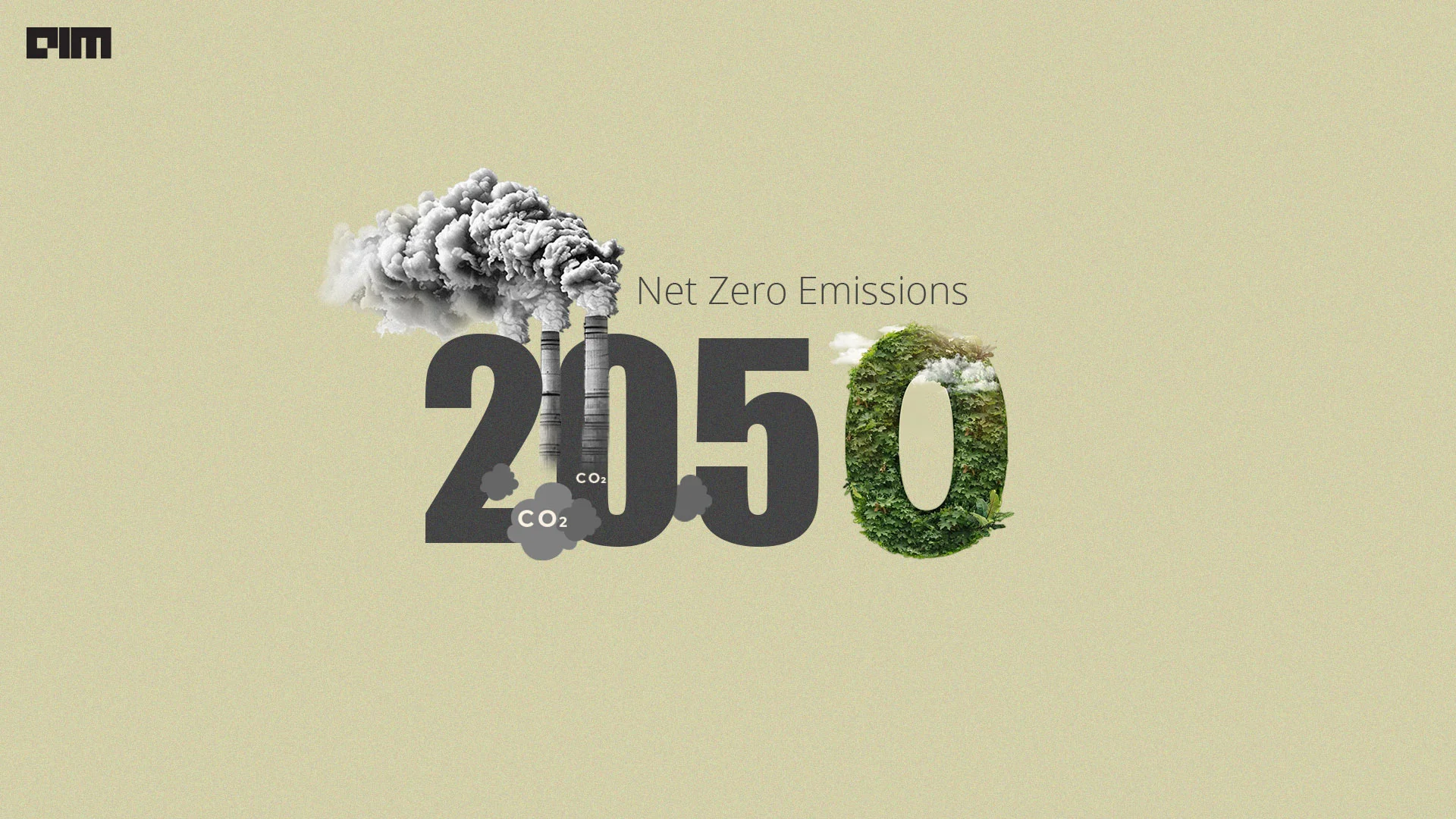
Nagarro, a global player in digital engineering with a strong presence in India, has pledged net-zero carbon emissions by 2050. To achieve this, the company has come up with an ‘eco-digital’ strategy guided by three fundamental principles – green, inclusive, and ethical.
“I see it playing a crucial role because the eco-digital strategy is designed not just to change technology but to shift human behaviour. With a workforce of 18,000 employees, the objective is to ensure that everyone understands and embraces this change towards sustainability,” Ashish Agarwal, the global BU head and custodian of sustainability at Nagarro, told AIM.
This becomes highly critical because the IT industry was quick to integrate generative AI into their existing solutions and has reported multiple proofs of concept (PoC) and revenue directly from generative AI.
Nagarro, which reported over $1 billion in revenue in FY 2023 for the first time, has also launched various LLM-powered solutions for its clients.
Generative AI Carbon Footprint
However, these models, which primarily run on the cloud, require significant energy. Google, which has invested heavily in generative AI and is the third biggest cloud service provider in the world, saw its carbon emission soar by 50% in the generative AI era.
According to reports, it costs OpenAI millions of dollars every day just to keep ChatGPT running.
“When generating not just text, but especially new videos or images, the energy consumption can be extremely high. Therefore, it's crucial to use such technologies judiciously and evaluate whether they are truly necessary.
“Cloud computing plays a major role in this and is often used continuously throughout the day. However, cloud resources do not always automatically shut down or scale back, leading to the use of capacity that may remain idle. This can result in a substantial increase in energy consumption due to the scale of cloud operations,” Agarwal said.
As part of its eco-digital strategy, Nagarro plans to implement sustainable practices to ensure the responsible use of AI. Some of the best practices include evaluating whether every piece of software or API call is truly necessary when making decisions.
“Consider if some functions can be managed locally rather than through multiple API calls. Additionally, assess whether the image or video quality is required for the end user's needs and the context in which it will be used. Making these considerations can lead to more efficient and responsible use of resources,” Agarwal added.
Nagarro has also developed a dashboard that enables both customers and the company to monitor their cloud and energy consumption. It provides insights into policies that the customer can implement to reduce their carbon footprint.
The dashboard visually displays current carbon consumption and projects potential reductions based on specific policies, which are automatically suggested based on their cloud usage patterns.
Green Softwares
As part of its eco-digital strategy, Nagarro is also exploring ways to use software with limited energy. Besides designing energy-efficient software, the IT company is also ensuring that its software is backward compatible.
The goal, according to Agarwal, is to extend the lifespan of devices such as laptops or mobile phones. This has been particularly relevant as in the past enterprises often discarded old devices every few years.
“To address this, it is important to design software that is both backward and forward compatible, allowing devices to be used effectively in the long term while accommodating new technologies as they emerge,” he said.
The best practices also include deciding which programming language to use. For instance, C is a much more energy-efficient language compared to Python because it is an assembly language and gets executed very quickly. There are also softwares available that can translate Python code into a simpler form of language, closer to assembly language.
Moreover, Nagarro is training its employees in best practices by partnering with Terra.do, an edtech startup and climate careers platform, to develop a specialised curriculum. Approximately 2,000 Nagarro employees are currently receiving training through this programme.
“In terms of accessibility, global standards are well-established and effectively addressed. However, on the software engineering side, standards are not as developed. This is an area that will need to evolve and improve over time,” Agarwal said.
Ensuring Eco Digital Success
Besides training its employees, Nagarro’s approach includes labelling a sustainability number to every project. Currently, the company assigns every engineering project with a carbon number, reflecting factors such as Microsoft Office 365 usage, hardware, travel, and hotel stays.
“While we aim to advance toward a sustainability rating in the future, our current approach involves tracking the carbon footprint of all our engineering projects. Although this is still an early stage in our journey, we ensure that every project has a carbon number associated with it,” Agarwal said.
Though these are ambitious steps, the carbon footprint and energy consumption associated with training and inferencing LLMs remain substantial. While Nagarro's efforts may appear modest, similar adoption across the industry could make a meaningful impact.

Your reaction
Discussion
What's your take on this story?
No comments yet — be the first to share your view.