Key takeaways
- Acknowledge DeepSeek's potential to transform Indian IT with its low-cost, open-source model.
- Overcome security concerns to enhance trust in DeepSeek for Indian use cases.
- Leverage DeepSeek's accuracy, comparable to leading models, for innovative applications.
- Recognize the financial barrier that has hindered Indian companies from developing large language models.
- Explore community feedback on DeepSeek to foster informed adoption and usage.
DeepSeek, the open-source AI model from China, has captured global attention, and since then, the AI world hasn’t been the same. While ChatGPT served as a wake-up call for India to build its own foundational models, DeepSeek seems to be the one that could actually turn that vision into reality – after more than two years of anticipation.
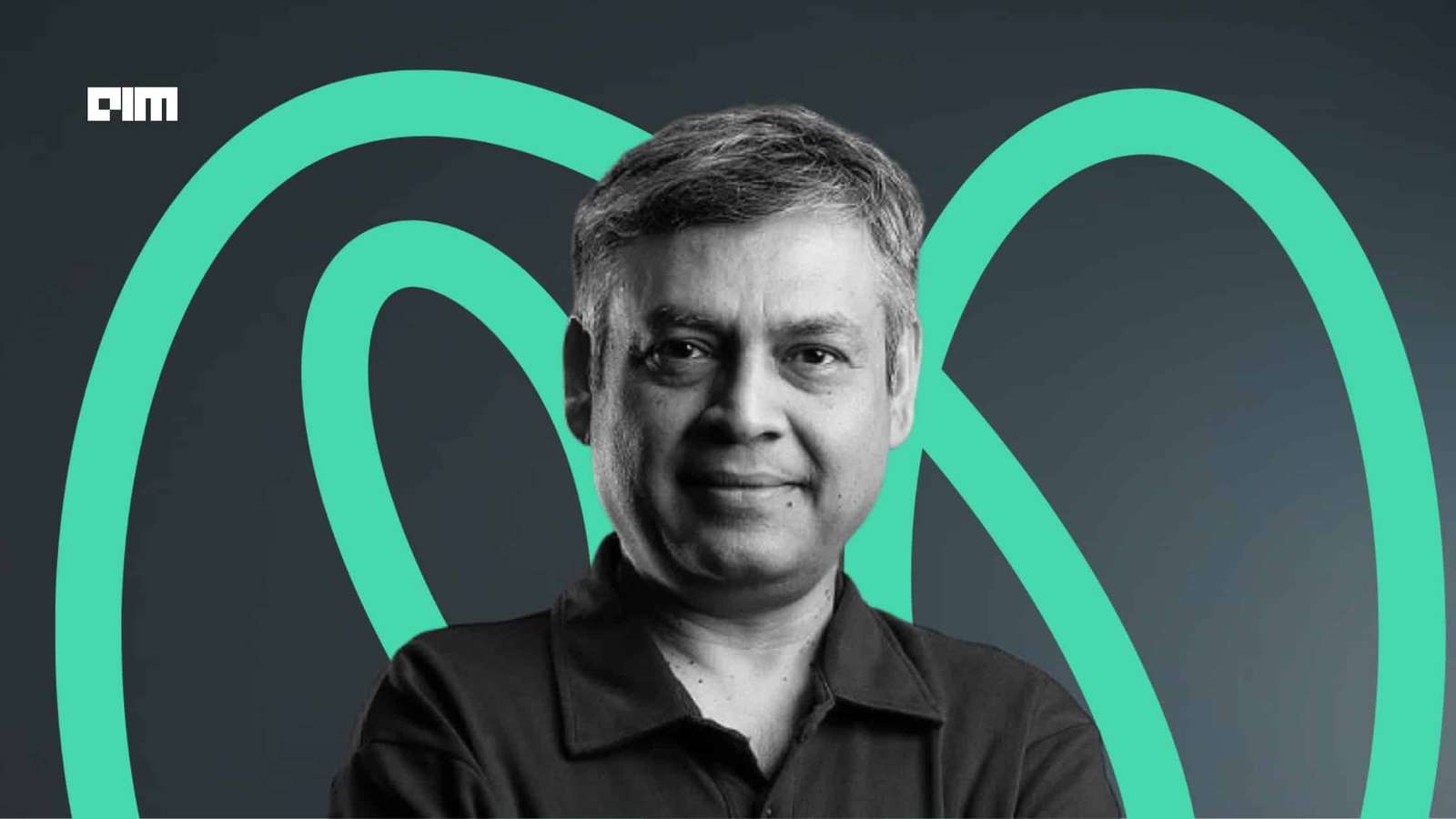
While Indian IT remains hesitant about building foundational models, Nagarro’s CTO Kanchan Ray acknowledged that DeepSeek brings capabilities that could be particularly relevant for Indian use cases.
Just like most Indian companies, Ray also expressed scepticism about DeepSeek when it comes to Indian use cases due to its low trust factor. “I don’t have any well-formed opinion yet…but the interesting spin to this is [that] they have made it open source,” Ray told AIM.
He added that DeepSeek’s open-source nature is the first promising sign from the company. According to him, the world will use it, review it, form opinions, and then possibly build some use cases around it.
“The accuracy is so good that it is on par with ChatGPT, Gemini, and Llama. This is very encouraging,” Ray said while adding that if India can surpass the security issues with DeepSeek, the model’s low cost will play a big role in its adoption.
Indian IT companies are not making LLMs, and the most important reason is the cost. “Not so many Indian companies could afford spending triple-digit million dollars into making LLMs, but now this (DeepSeek) is interesting,” Ray said. According to him, since DeepSeek is expected to be trained with a budget of around $5 million, Indian companies might finally have an opportunity to enter the field of building foundational AI models.
Pick a Model and Build a Service
Prompted by the announcement of the US’ $500 billion AI initiative, The Stargate Project, and China’s open-source “side project” DeepSeek, the Indian IT sector might finally make an AI model. Despite unwavering confidence in Infosys co-founder Nandan Nilekani’s vision of making India the AI use case capital of the world, the pressure and the keen eye from Indians might push service companies to build an LLM.
Honestly, it is not as if they are not building them. For example, Infosys said it has built four small language models and is in the process of building around 100 AI agents for its clients. This proves there are enough funds and capabilities for Infosys to step in and possibly spend close to $10 million on building a foundational model.
The same is true of TCS, whose CEO recently said that building LLMs from scratch does not offer any real benefit. K Krithivasan believes that building a foundation model for regional languages makes sense for democratising technology.
CP Gurnani, former CEO of Tech Mahindra, told AIM that building a foundational model is important, and that is what led him to start the Project Indus initiative during his tenure. Meanwhile, Gurnani’s AI startup AIonOS has already said that it will work with DeepSeek’s model and provide it to its clients.
Since DeepSeek is also available as an API and the inference cost is almost nine times less than that of OpenAI, India IT services might finally adopt the model for building services for its clients.
India has the Skills
Ray said that along with the cost, the skills are also an essential factor when it comes to building LLMs in India. “We might not have created an LLM from scratch, but we have taken LLMs, fine-tuned them to our client’s context,” Ray said, adding that this is the same with the Indian IT firms.
If Indian IT services can build models for their clients, they definitely have the skills and workforce to build one from scratch.
Ray added that IT services are more concerned about providing AI infrastructure as a service. That is why Nagarro also has its platform, NIA, which hosts different frameworks and LLMs for its clients.
Comparing the metaverse wave and the ChatGPT wave to DeepSeek, Ray said that he is concerned about what will happen as no one talks about the metaverse anymore.
Nagarro strongly believes that 2025 is the year of agentic AI and has developed its own generative AI playbook. The firm has implemented this AI framework across various industries, including beauty, healthcare, and automotive. While the core algorithms for forecasting and decision-making remain similar, the fine-tuning is highly context-sensitive.
So while the IT giants from India discuss building a foundational model, Ray is optimistic about what DeepSeek has to offer for Indian IT firms: if not a motivation to build from scratch, at least an adoption of the model by its clients.