Key takeaways
- Facial recognition technology is increasingly adopted for surveillance, particularly in China and India, highlighting its growing global relevance.
- The European Union has deferred a ban on facial recognition, allowing individual countries to decide on its use.
- There is a rising demand for professionals skilled in developing facial recognition solutions to enhance efficiency in various sectors.
- Online courses, such as those by Andrew Ng, are valuable resources for learning about convolutional neural networks and facial recognition.
- The course on convolutional neural networks offers comprehensive materials and high ratings, making it a recommended starting point for learners.
What is Facial Recognition?
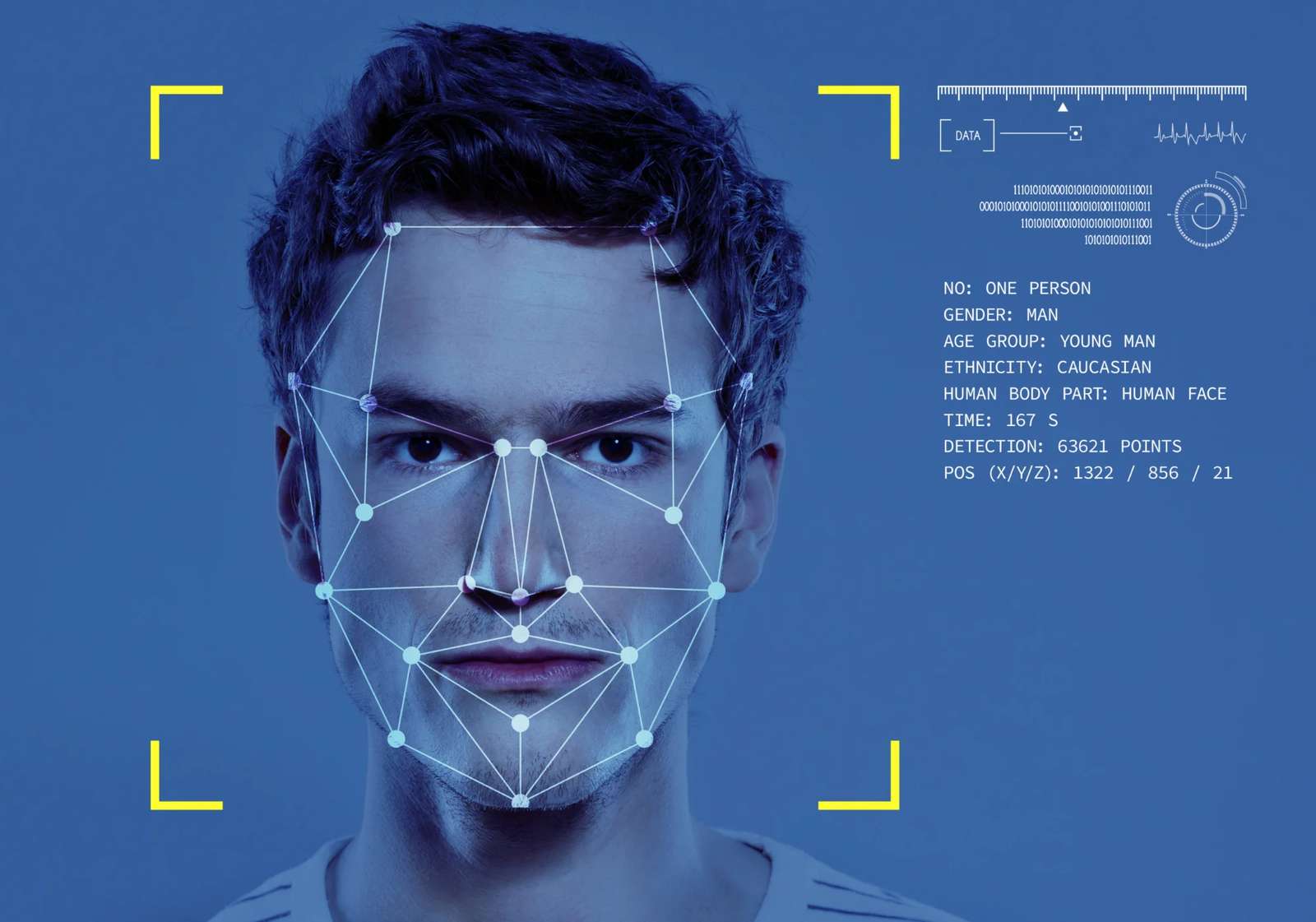
Facial recognition is arguably the most talked-about technology within the artificial intelligence landscape due to its wide range of applications and biased outputs. Several countries are adopting this technology for surveillance purposes, most notably China and India. Both are among the first countries to make use of this technology on a large scale. Even the EU has pulled back from banning this technology for some years and has left it for the countries to decide. This will increase the demand for professionals who can develop solutions around facial recognition technology to simplify life and make operations efficient.
Best Resources to Learn Facial Recognition
Analytics India Magazine has curated the top resources from where you can learn facial recognition technology to carve a successful career in this field:-
1. Convolutional Neural Networks
Data science influencer Andrew Ng, along with teaching assistants from Stanford University, have devised a course that includes neural style transfer which enables working with facial images effectively. This is a technique that manipulates digital images or videos to replicate other images.
The course is designed to help learners gain basic knowledge of CNN, before teaching them about facial recognition and object detection. The four weeks’ course includes almost 7 hours of video lessons and other reading materials. With a 4.9 rating, the course is one of the best to learn facial recognition technology.
2. Computer Vision & Image Analysis
Computer vision and image analysis is an advanced course which goes beyond facial and object detection, and semantic segmentation models. Consequently, it requires some prerequisites, such as Introduction to AI and Deep Learning Explained before you can understand the advanced techniques of CNNs.
However, it also teaches classical machine learning and deep learning techniques with some of the popular libraries like Scikit-Image, Scikit-Learn, Keras, PyTorch, OpenCV, and more.
3. Handbook Of Face Recognition
The bookis intended for practitioners and students who want to get started with facial recognition. The lessons address some of the longest standing predicaments of the technology. These are related to privacy and other technical challenges of building a face recognition system. Besides, it also teaches various statistical learning methods, such as AdaBoost for non-frontal face detection.
This book is a must for any beginner who wants to make facial recognition solutions. This is because it mostly educates them on the importance of privacy protection and guaranteeing visual privacy with the products. And since privacy concerns related to the technology are at an all-time high, the book is essential for anyone who is developing solutions using this technology.
4. Introduction To Deep Learning For Face Recognition
This blog post works as an index to numerous learning resources for facial recognition technology. It will redirect you to several research papers, books, and surveys carried out about the technology.
While the blog includes historical developments associated with facial technology - which dates back to 1991 - it is also updating the content by adding links to new advancements in the space.
5. Deep Learning: Face Recognition
Deep Learning: Face Recognition is hosted on LinkedIn Learning by Adam Geitgey, who teaches the techniques to tag images through facial recognition. The course also focuses on analyzing a histogram of oriented gradients (HOG), lactating facial features, finding lookalikes, and generating face encoding automatically. But the course is only an intro to facial recognition. To learn more advanced techniques, you can enrol in OpenCV for Python Developers.
6. Introduction To Computer Vision
The course is yet another introduction to facial recognition hosted by Georgia Tech. It teaches you right from the beginning of computer vision techniques such as filtering, edge detection, and more, before introducing advanced technologies like image to image projection, motion models, etc. Apart from the algorithm, you will also get to learn the mathematics behind the facial technology, like Fourier transformation, matrix, and Bayes filters. Since it covers every requirement, the approximate time to complete all 70 lessons is around four months.
7. Deep Face Recognition
This is one of the most-cited research papers of facial recognition. It goes deep into the manipulation of network architecture and optimizing loss functions for making state-of-the-art facial recognition models. Besides, it categories the two face processing methodologies -- one-to-many augmentation and many-to-one normalization -- and compares the outcome depending on the types of input image data.
Resources
Spotted an error? Tell our editors. Read our editorial standards and corrections.