

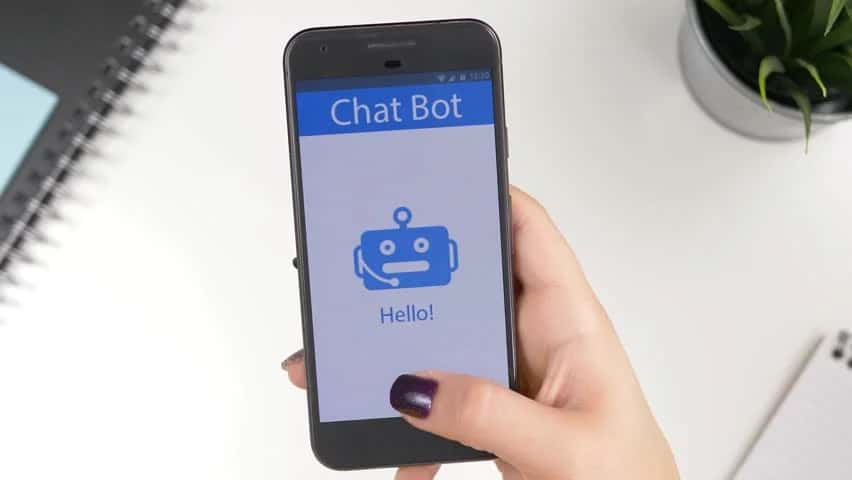
Conversational AI serves as a bridge between machine and human interaction. The demand for this technology has been on an upward spiral with organizations increasingly embracing it across the world. According to a report, the size of the global conversational AI market will grow to $15.7 billion by the year 2024, at a Compound Annual Growth Rate of 30.2% during the forecast period.
In this article, we list the six Top Python libraries for Chatbots - based on GitHub stars - that one must know for chatbot development:-
1| spaCy
spaCy is an open-source library for Natural Language Processing (NLP) in Python language. The library is designed specifically for developers to build interactive NLP applications, which can process and ‘understand’ large volumes of text. spaCy can also be utilized to create information extraction or NLU systems, as well as pre-process text for deep learning.
Some features of spaCy are mentioned below:
- Tokenization: Tokenization helps in segmenting text into words, punctuations, etc.
- Part-of-speech (POS) Tagging: This feature helps assign word types to tokens, like a verb.
- Sentence Boundary Detection (SBD): This feature helps find and segment individual sentences in a text.
- Similarity: This feature helps compare words, text spans, etc. and matches the similarities between them.
- Text Classification: It helps assign categories or labels to a document.
- Rule-based Matching: This feature helps search and find sequences of tokens based on their texts and linguistic annotations.
Click here to install.
2| ChatterBot
ChatterBot is a Python library designed to make it easy to create software that can engage in conversation. It uses a selection of machine learning algorithms to produce different types of responses. This helps create chatbots and automate conversations with users.
Installing ChatterBot
To install this library, a user is recommended to use pip. From PyPi using pip run the following command in your terminal: pip install chatterbot
Click here to install.
3| NLTK
Natural Language Tool Kit - or NLTK - is an open-source suite of libraries and programs for building programs in Python language. The toolkit provides easy-to-use interfaces with several corpora and lexical resources, such as WordNet, along with a suite of text processing libraries for tokenization, stemming, tagging, parsing, classification and semantic reasoning.
Installing NLTK
NLTK requires Python 3.5, 3.6, 3.7, or 3.8 versions. After installing the NLTK package, you need to install the necessary datasets/models for specific functions to work.
Click here to install.
4| TextBlob
TextBlob is a library for processing textual data which is written in Python language. The library provides a simple API for working into common NLP tasks, such as part-of-speech tagging, noun phrase extraction, sentiment analysis, and more. This library runs on Python versions 2 and 3, and it focuses on providing access to common text-processing operations through a familiar interface.
Installing TextBlob
pip install -U textblob
python -m textblob.download_corpora
Click here to install.
5| DeepPavlov
DeepPavlov is an open-source conversational AI library built on TensorFlow and Keras. It has comprehensive and flexible tools that let developers and NLP researchers create production-ready conversational skills and complex multi-skill conversational assistants.
Installing DeepPavlov
The library supports Python 3.6 and 3.7. To install the package, type: pip install deeppavlov
Click here to install.
6| PyNLPl
PyNLPl, pronounced as ‘pineapple’, is a Python library for NLP. It can be used for basic tasks, such as the extraction of n-grams and frequency lists, and to build a simple language model. The library is divided into several packages and modules. It works on Python 2.7, as well as Python 3.
Click here to install.
