Key takeaways
- Language translation involves complex cultural and historical nuances that challenge both humans and machines.
- Machine learning is advancing in its ability to understand and translate languages through transfer learning techniques.
- Context plays a crucial role in grasping cross-linguistic references, which machines are beginning to emulate.
- Teaching machines to learn independently is essential due to the scarcity of structured data in real-world scenarios.

How Does This Model Work
A model trained on transfer learning through Romanization of Japanese words is compared with a model trained from scratch on the same data. Both these models, English and Japanese ones are trained to do NER task for categorisation. The inputs to these models have both word and character embeddings, which are produced by neural networks. These embeddings are then used as an anchor to identify the data items in a vector space of high dimensionality. So those words whose embeddings are close to each other in a vector space are assumed to have similar meaning. Here every input word is embedded separately and then passed to bi-LSTM (Long Short-Term Memory) neural network. This network processes subword chunks of a single word in both directions. The output of this network is joined with other outputs and together passed to another bi-LSTM to capture the intrinsic meaning and context within the sentence.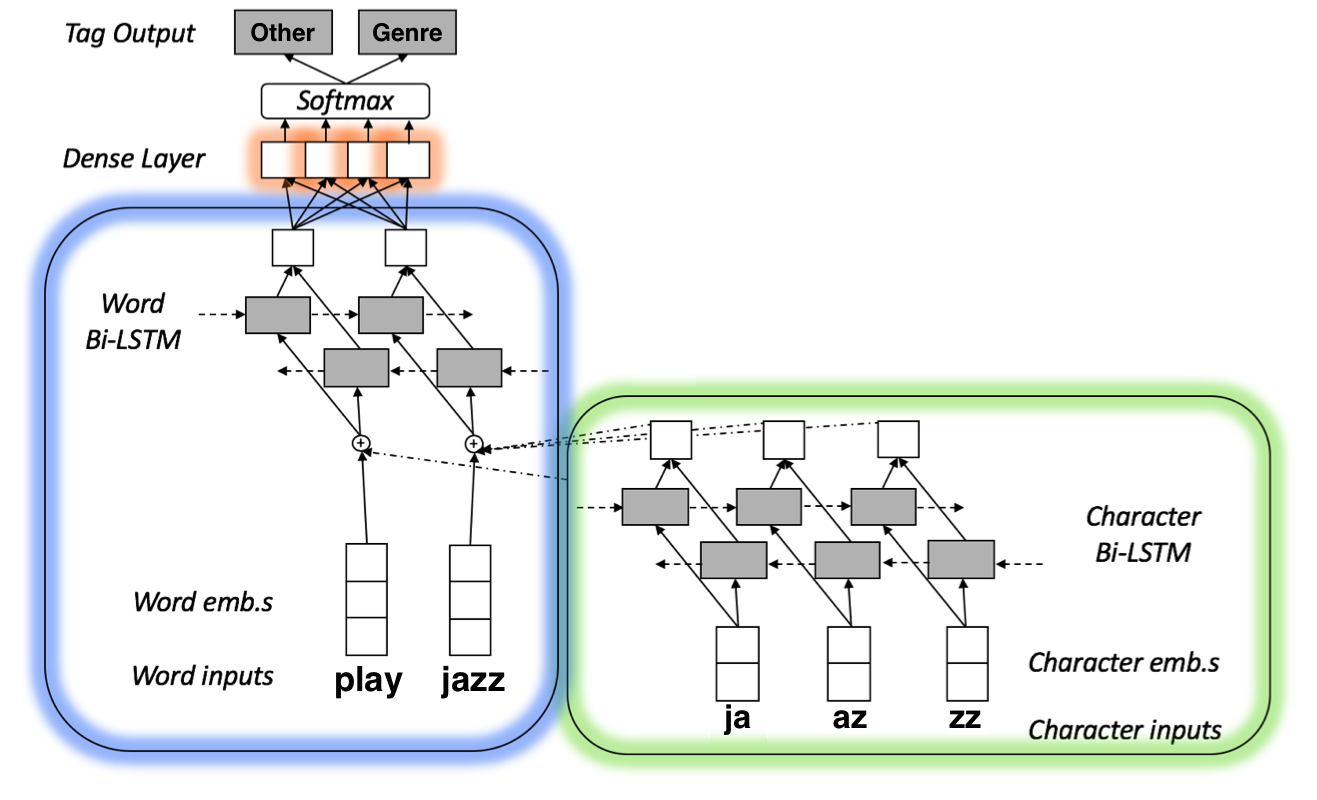
Key Ideas
- A new model for named entity recognition is proposed for dissimilar languages.
- A part of Japanaese input is romanized to overcome the dissimilarities between target languages.
- This success will lead to transfer of knowledge between other dissimilar languages like English and Chinese.
Spotted an error? Tell our editors. Read our editorial standards and corrections.