Key takeaways
- Tesla's Optimus was developed in eight months, contrasting with Boston Dynamics' long-term refinement of Atlas.
- At Tesla's 2022 AI Day, Optimus made a modest debut, demonstrating limited capabilities amidst high expectations.
- Musk acknowledged the robot's potential exceeds the initial display, aiming to avoid mishaps during the presentation.
- Media reactions to Optimus ranged from scepticism to disappointment, reflecting the challenges of meeting public anticipation.
Tesla’s 2022 AI Day was finally held on September 30. The event that was initially scheduled to be held in August was pushed back to buy more time to have Tesla’s robot prototype working. On the company’s previous AI Day in August last year, Musk announced that the electric carmaker was building a humanoid robot called ‘Optimus’. At that point, there was no prototype in question. Instead, Musk was accompanied by a person impersonating the Tesla bot in a skin-tight bodysuit dancing around on stage.
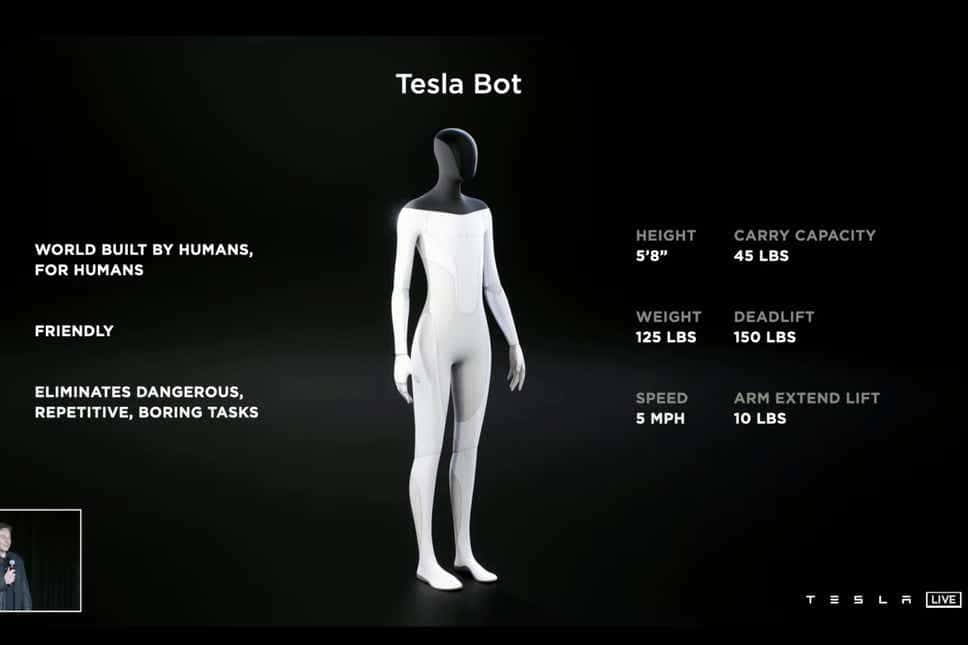
Within the next eight months, Tesla’s engineers had finished creating the star of this year’s show, Optimus. Untethered, the robot walked out on stage, lifted an arm and waved to the crowd gingerly. Musk admitted that while the robot’s abilities looked underwhelming, “the robot can actually do a lot more than what we just showed you. We just didn't want it to fall on its face”.
Tesla’s product launches normally invite a wide range of reactions, from shock to awe and even derision. At first glance, Optimus didn’t impress a substantial chunk of the media who panned the much-hyped reveal. Instant comparisons with robots made by other companies were inevitable.
Comparisons with Boston Dynamics’ Atlas
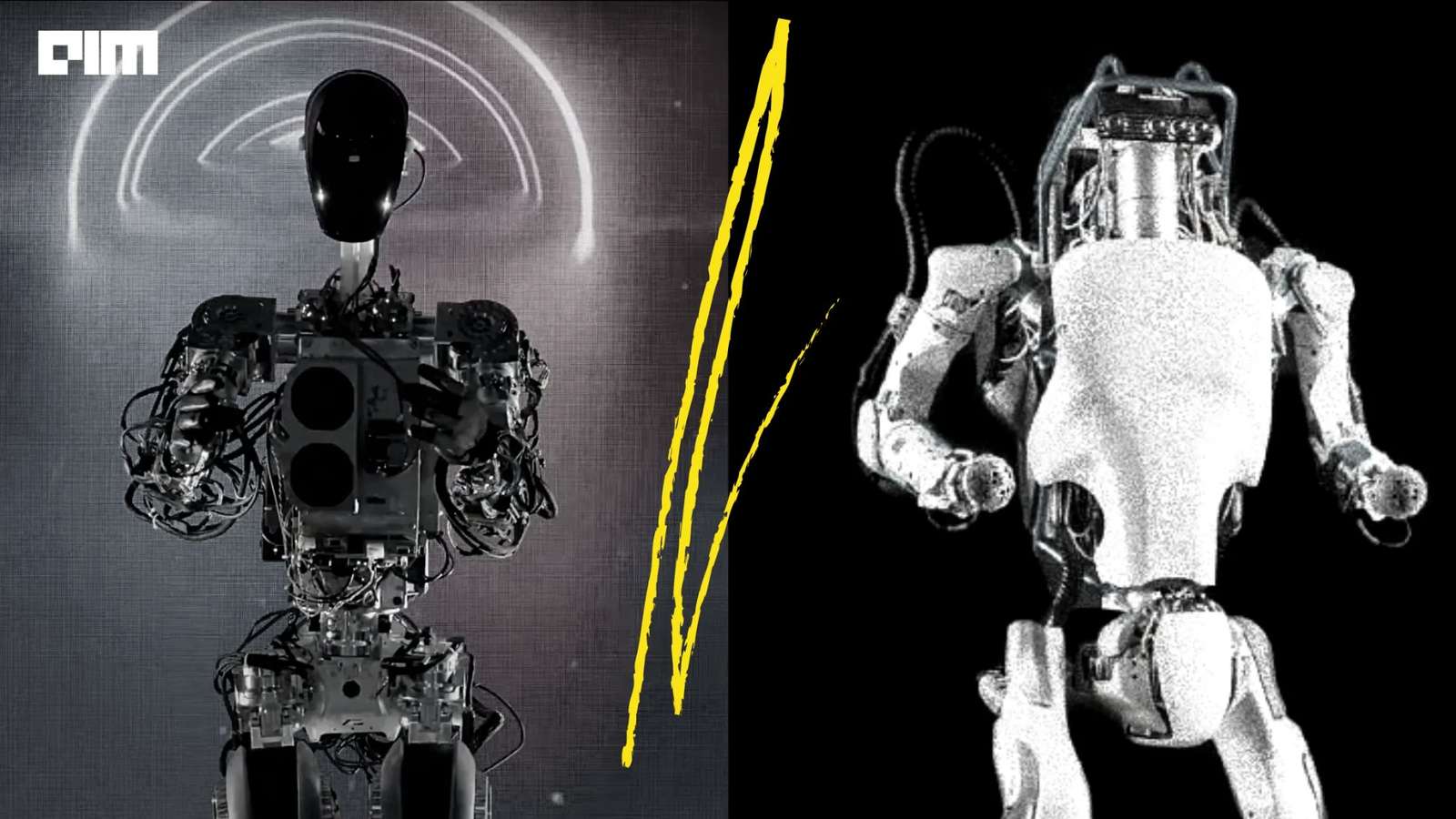
Boston Dynamics, the off-shoot of MIT that Hyundai Motor had recently bought, already had a similar two-legged robot called ‘Atlas’. The robot, admittedly, looks far more impressive than Optimus. Atlas, possibly the most advanced human-like robot currently around, can’t just walk, it can also dance, back-flip and vault with far greater dexterity than the Tesla bot.
Twitter threads compared the two robots with commenters noting how Boston Dynamics’ Atlas was “light years ahead”.
But how fair were these comparisons and just how far ahead was Atlas?
Commercialised and cheap
As similar as the two bots may seem, Atlas and Optimus were made with vastly different intent. Atlas was engineered solely for research purposes unlike Optimus, which Musk intends to commercialise. Musk indicated in his presentation that he wanted to manufacture a million units of Optimus, which would bring down the price to under USD 20,000. However, owing to the reputation Musk has built for overpromising, only time will tell if Tesla will actually be able to deliver on this promise.
The estimate, if true, is a huge feat considering robots usually take years to complete and cost far more. ‘Spot’, the four-legged robot by Boston Dynamics, sells at a cool USD 74,000. According to experts, humanoid robots like ‘Atlas’ cost at least within the USD 150,000 range.
Time difference
Commenters were quick to point out the difference in time frame between building the two bots. While Optimus had been built from scratch in a span of eight months, Boston Dynamics had spent years perfecting Atlas. The company, which was purely focused on robotics, had partnered with the US agency DARPA—or the Defense Advanced Research Projects Agency—to start building Atlas. In 2013, a DARPA programme manager, Gill Pratt, had compared the Atlas prototype to a small child, saying: “a 1-year-old child can barely walk, a 1-year-old child falls down a lot ... this is where we are right now”.
Demo videos versus Practical usage
Since Atlas was built for research purposes, Boston Dynamics makes demo videos for the robot under controlled circumstances unlike Optimus, which has to risk the failure of a real-time event. Creators of Atlas themselves have admitted that the robots in the videos have been programmed to follow a “kind of choreographed routine”. Atlas, unlike Optimus, isn't meant to operate in a practical world.
Tesla’s Optimus runs on the same neural networks that powers its cars. In the presentation, Tesla claimed that Optimus uses a processor designed to improve its battery efficiency due to which the robot can work for a whole day just after a single charge of its 2.7kwh battery pack. Atlas, on the other hand, uses high-powered hydraulic actuators for its stunts. Hydraulics consume huge amounts of power and drain batteries quickly due to which Atlas demos last for a few minutes only.
Tesla’s plans for Optimus are evidently much more ambitious than making fancy demos that Atlas sticks to. The chest of the robot contains the centralised computer which will work similar to how a human brain does—it will process visual data, make quick decisions based on sensory inputs and communicate.
Tesla’s bigger promises
Optimus will also have more complex details such as more human-like hands with five fingers and opposable thumbs, unlike most robots in existence which have simplified the structure. The robot’s hands will have 11 degrees of freedom, which is not fully like human hands which have 27 degrees of freedom but the task will still remain hard to accomplish.
Dexterity and reliability are still areas that haven't been touched by most robotics companies. Like Christian Hubicki, a robotics professor and the director of Optimal Robotics Lab, wrote on twitter, “How often does the robot fall down?” Boston Dynamics’ robots may be more physically able but even robots like Atlas can’t use their hands to pick objects. As he further adds, how human-like a robot will be “can't be inferred from a cool video—or even a live demo. Boston Dynamics, to its credit, has been upfront in showing when its robots fail.”
To put it plainly, while Atlas may be the best bot right now, there are other robots which have similar capabilities. The more intricate human abilities elude all robotic companies currently. Of all of them, Tesla is promising the most human-like qualities for Optimus. Despite its minimal capabilities, Optimus is impressive given its brief turnaround time. As Musk himself said at the event, "Optimus is going to be incredible in five years, ten years mind-blowing”. Do we believe him this time?