AI Labs are the New Battleground for Enterprise AI
By Merin Susan John ·
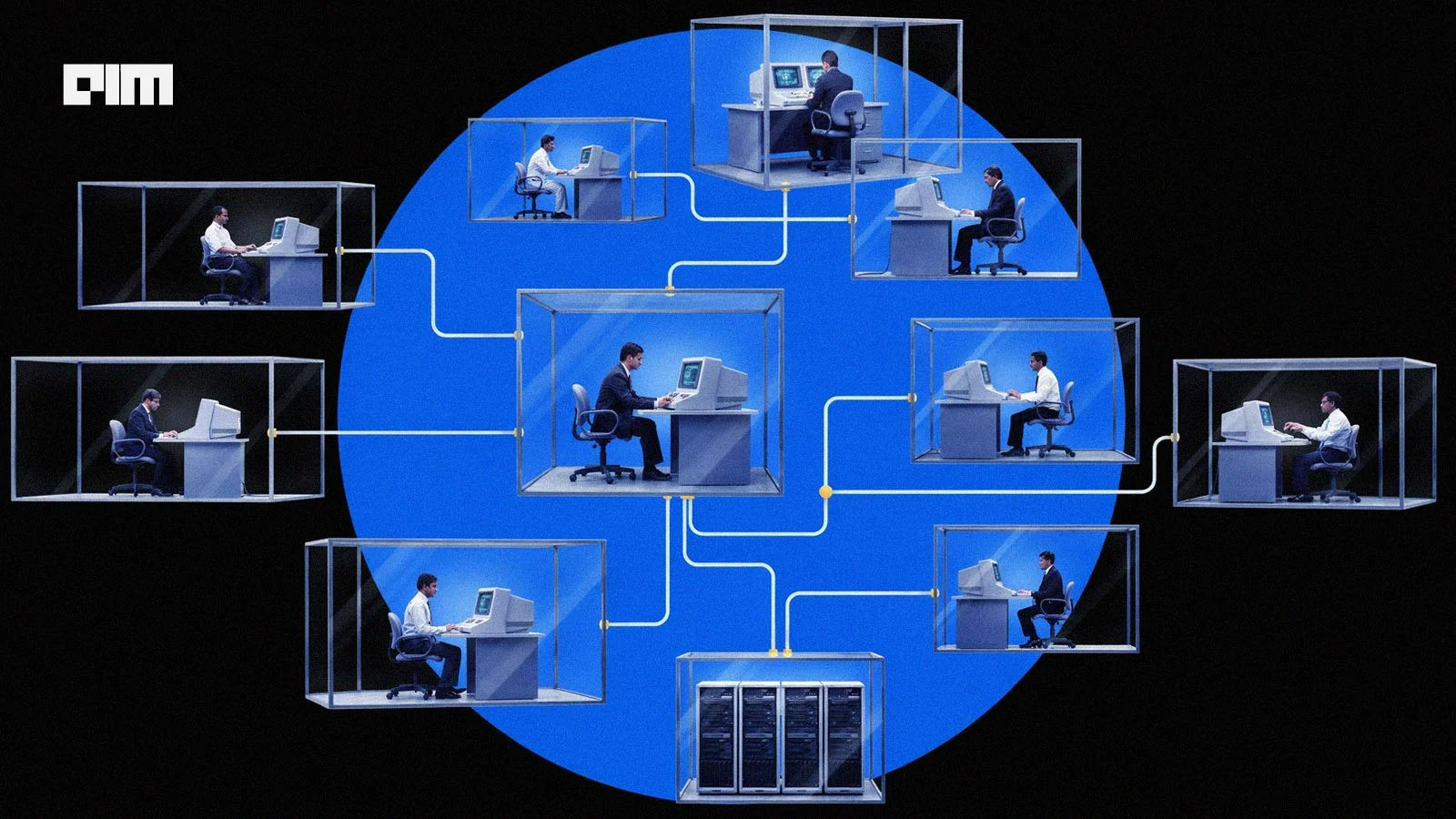
Enterprises have moved from experimenting with AI to deploying it at scale. With that, a new kind of infrastructure is emerging across India's technology landscape: AI labs.
Once viewed primarily as innovation showcases or client experience centres, these facilities are increasingly being positioned as collaborative spaces where enterprises, GCCs, consultants, and AI engineers can jointly design, test, and deploy AI solutions. The shift reflects a growing demand from companies looking to move beyond proofs of concept and address practical challenges in governance, security, infrastructure, and business value.
Earlier this month, EPAM Systems, which offers AI transformation engineering and integrated consulting, launched an AI-native engineering lab in Hyderabad. Meanwhile, Infosys has also been expanding its Generative AI Labs initiative under its Topaz platform. Both efforts signal how AI labs are becoming central to enterprise transformation strategies.
"Today, customers are not coming in asking for AI demos. They are coming in with specific business problems," Srinivas Reddy, Managing Director and Head of EPAM India, tells AIM.
Inside EPAM’s Lab
EPAM’s Hyderabad facility allows enterprises to experiment with AI models, agentic systems, governance frameworks, and industry-specific solutions in a controlled environment before moving into production.
According to EPAM executives, the lab has been designed to support real-world deployment discussions around agent governance, token economics, AI FinOps, and infrastructure choices, including on-premises GPU environments for customers with strict regulatory or security requirements.
The development comes as enterprises globally accelerate investments in generative AI. According to consulting firm McKinsey, more than 70% of organisations now use AI in at least one business function, while spending on generative AI initiatives continues to rise across sectors, including banking, healthcare, and retail.
Yet moving from experimentation to deployment remains challenging.
"Most enterprises are nowhere close to adopting AI at the speed of frontier AI companies," Reddy said during a recent media interaction. "Enterprise environments are much more complicated. Integration, governance, and existing systems take time."
That complexity is driving demand for physical and virtual spaces where business leaders, domain experts, and engineers can work together to evaluate AI use cases.
The IT Equation
Infosys has framed its Generative AI Labs as a platform to help enterprises reimagine business processes, human-machine collaboration, and responsible AI adoption. The company says the initiative combines industry solutions, partner ecosystems, and governance frameworks to help customers operationalise generative AI across functions.
It says several enterprises have tapped into the solutions offered by its AI lab, ranging from financial services firms using generative AI to search and analyse more than 100,000 documents for wealth managers, to life sciences companies reducing manual effort in clinical trial report summarisation by 30%. It has also developed governance frameworks focused on privacy protection, toxicity detection, bias mitigation, and hallucination monitoring.
As enterprises begin deploying AI agents and autonomous workflows, executives say concerns are expanding beyond model performance to include oversight, compliance, and operational risk.
"Partnerships and collaborations around AI will continue because customers need expertise, governance and scalable deployment models," notes Srinivasa Kattuboina, Head of Data and Analytics, India at EPAM. "The focus is increasingly on building joint solutions rather than simply implementing technology."
For IT services companies, AI labs are also becoming talent-development engines. EPAM says thousands of its employees are undergoing AI training programmes and certifications, including partnerships with model providers such as Anthropic and OpenAI. The company recently crossed 1,000 Anthropic-certified professionals in India and expects that number to grow significantly.
"The shelf life of AI skills is getting shorter," Reddy remarks. "People need to constantly learn and adapt because the technology is changing so rapidly."
This evolution could reshape how enterprises engage with technology partners. Traditionally, innovation centres served as venues for demonstrations and executive briefings. AI labs, by contrast, are increasingly functioning as co-creation hubs where solutions are prototyped, tested, and refined before deployment.
The shift is particularly relevant for India's rapidly expanding global capability centre (GCC) ecosystem. Many multinational corporations are giving their India centres greater responsibility for AI adoption, product engineering, and digital transformation. As a result, AI labs are becoming strategic assets for both service providers and enterprise customers.
The business opportunity is significant. Research firm IDC estimates that global spending on AI-centric systems will surpass $1.30 trillion in 2029, with generative AI accounting for a growing share of enterprise technology budgets.
The story was updated to reflect a designation change.