Key takeaways
- Deepwatch opens a new office in Bengaluru to enhance its global R&D capabilities in MDR.
- India leads globally in AI skill penetration, surpassing the US and Germany.
- Cybersecurity job openings in India surged by nearly 30%, highlighting talent demand.
- Deepwatch aims to build a global-grade MDR capability leveraging India's software engineering expertise.
- The Bengaluru centre will accelerate innovation and improve support for Deepwatch customers.
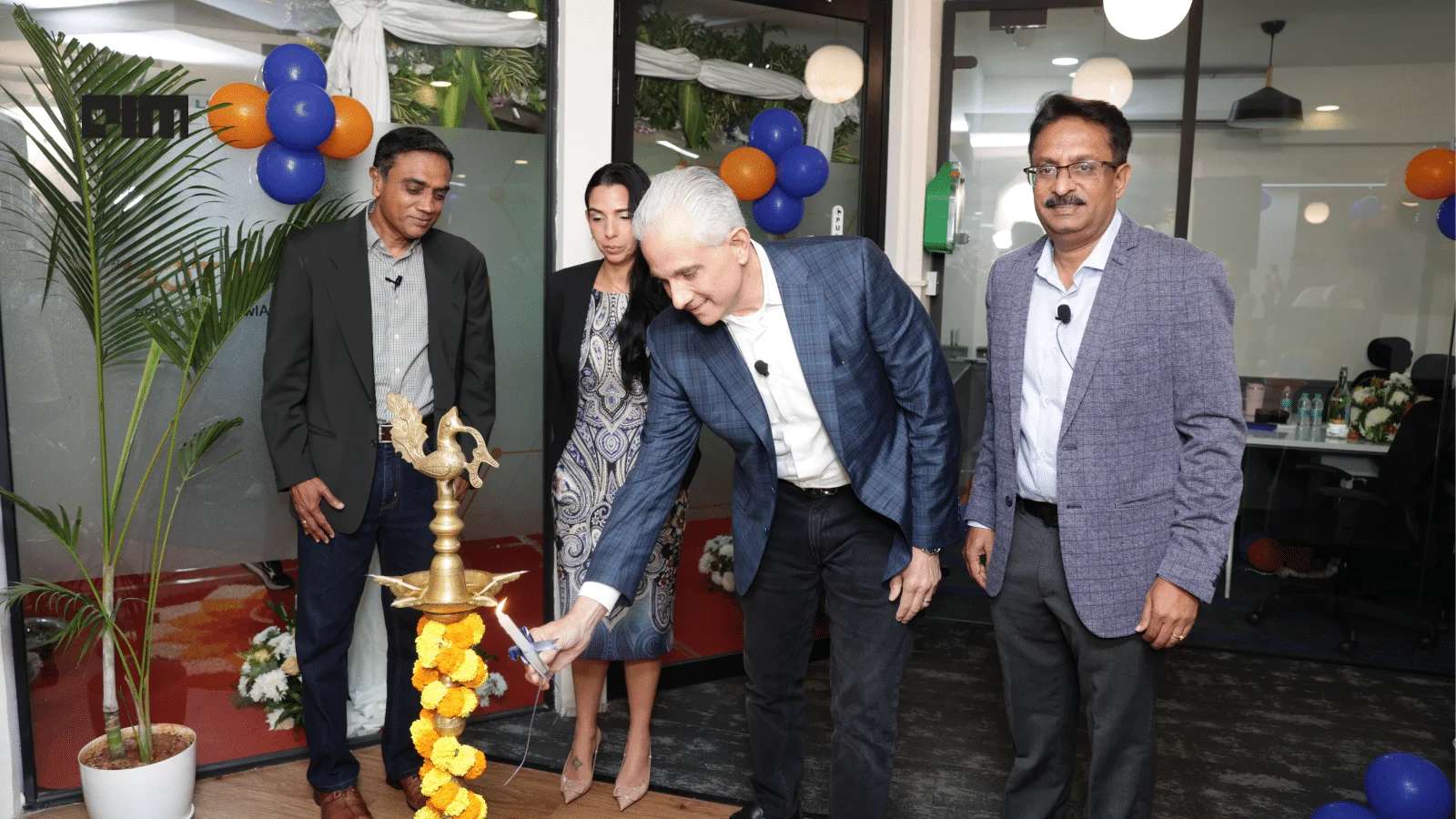
Deepwatch, the leader in Precision managed detection and response (MDR) powered by AI + humans, has officially opened its new office in Bengaluru, India. The state-of-the-art facility will serve as a strategic engineering and technology hub as the company expands its global research and development (R&D) footprint.
India’s rapid rise as an AI powerhouse underscores the significance of this expansion. According to the Stanford AI Index 2024, the country ranks first globally in AI skill penetration with a score of 2.8, surpassing the US (2.2) and Germany (1.9).
AI talent concentration in India has surged by 263% since 2016, positioning it as one of the world’s most dynamic AI hubs. The nation also hosts the fastest-growing developer population and ranks second in public generative AI projects on GitHub, constituting 16% of the global AI talent pool.
Specifically, there are currently 25,000-30,000 active openings for cybersecurity roles across IT firms, GCCs, and enterprises, a rise of nearly 30% from 2023 and more than double since 2021, shows data from Teamlease Digital.
Deepwatch believes it can build global-grade MDR capability from India and expects the MDR market to grow rapidly.
By establishing its GCC in Bengaluru, Deepwatch gains access to India’s world-class expertise in software engineering, agentic AI, and cybersecurity.
The new centre is designed to accelerate platform innovation, enhance development velocity, and reinforce the delivery models and support structures that Deepwatch customers rely on.
“Our investment in Bengaluru represents more than a new office, it’s a testament to Deepwatch's commitment to developing exceptional AI-powered solutions for the cyber industry,” John DiLullo, CEO at Deepwatch said.
Unlike many GCCs that begin with service delivery, Deepwatch entered India with a pure innovation mindset.
In an interview with AIM, Prasad Channabasappa, VP engineering and MD for the Deepwatch India Centre, mentioned, “One of the key things that Deepwatch has already started implementing is on the level three and the level four of the maturity, which is concentrating majorly on the innovation part of it.”
Highlighting the strategic intent, he added that 92% of the India workforce is dedicated to core product functions, including, product managers, interoperable engineers, AI specialists.
Talking to AIM, Anand Ramanathan, chief product officer at Deepwatch described it as a natural progression for a company expanding its product footprint.
Building AI-Powered Cybersecurity from India
The India centre is already playing a crucial role in Deepwatch’s AI innovation pipeline. The company recently launched NEXA, the nexus of AI and human, an agent-based AI framework designed to transform cybersecurity operations.
Ramanathan explained, “We are delivering six new AI agents as part of that framework… We have three in production right now and two of them are being delivered by this particular team.”
These AI agents automate repetitive and time-consuming tasks, such as summarising alerts, freeing analysts to focus on deeper, more technical investigations.
Beyond agents, the India team is also working on new detection engines, scoring mechanisms, and adversarial behaviour analysis, critical components of modern managed detection and response (MDR) platforms.
Bengaluru’s AI Advantage
Both leaders were unequivocal about what drew Deepwatch specifically to Bengaluru. “We think Bengaluru has the kind of talent that we need, not only for the things that we have been doing in the past, but more importantly for the AI forward strategy that we have put together,” Ramanathan said.
Ramanathan added that the pipeline of AI talent they have been able to find just in the last two quarters has been tremendously positive.
The GCC is currently pursuing a targeted hiring strategy with rapid growth ahead. Deepwatch is starting with a headcount of 30 employees, but is already seeing rapid traction.
“Whatever we've tried to do in the last three months has been growing more than 100% as of now,” Prasad said, noting that the company intends to continue this momentum year-on-year. At this stage, hiring is focused on lateral, immediate joiners.
Speaking about the cybersecurity talent base in Bengaluru, Channabasappa mentioned that the GCC has a mix of product managers, developmental engineers, and DevOps engineers. Ramanathan noted that the market is 30% penetrated and expected to get to 75% in the next five years. Their appetite is to capture as much of the market as is relevant for them.
Prasad summed up the India GCC’s mission stating that “We want to be the best MDR provider in the industry, build something in India that can cater to the world. That’s the mantra we are following through.”