

5 min

Why Wasn’t Super Resolution Popular Until Now
- Photographers spend most of their time manipulating settings; for example, adjusting ISO sensitivity on their DSLR for a cleaner image. But, a typical phone user wants to have high-quality photos with a single touch. We don’t want to get just a higher resolution noisy image but to develop algorithms that produce less noisy results.
- Localized alignment issues demand the algorithm to be smart enough to perfectly estimate the motion due to unsteady hand movement, moving people and other factors as discussed above.
- The complexity involved in interpolating randomly distributed data; random because the movements are random. So, the data is both dense and scanty and, this irregular spread of data on the grid makes super-resolution more elusive.
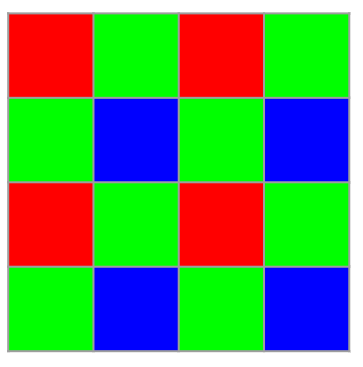 Bayer Array[/caption]
The camera sensor elements measure the intensity of the incoming light and not the colour itself. As shown in the picture above, an RGB filter (Bayer pattern) array is placed in front of this sensor so that each pixel will be filtered to record one of the three colours. These raw Bayer pattern images are then run through demosaicing algorithms to interpolate RGB values for each pixel. These algorithms utilize intensity values of the surrounding pixels to estimate the value of the desired pixel.
[caption id="attachment_30503" align="alignnone" width="1600"]
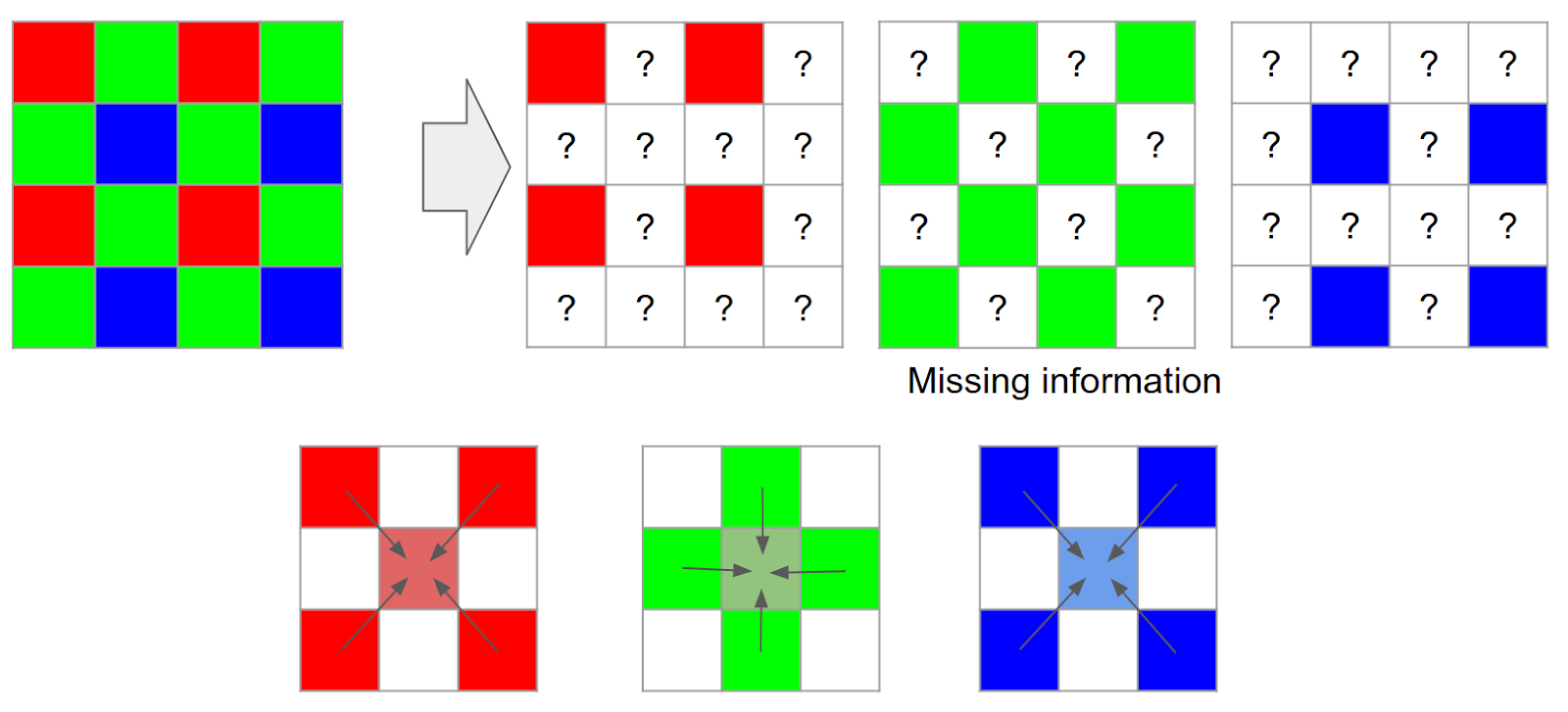 How Demosaicing works via GoogleAI[/caption]
Demosaicing is actually estimating pixel values using nearby values different methods like weighted averages amongst others. Since two-thirds of a zoomed-in image is actually reconstruction, usually we end up with partial information. This loss of information is prevalent even in DSLR cameras but it gets worse when you zoom an image on your phone screens.
How Does Google Address This Issue
With Burst photography, the algorithm tries to compensate for the loss of information in a single frame by taking multiple images. Using multiple frames to improve quality has been in use since Google’s attempt to capture images in a dimly-lit environment with their HDR+ algorithm. Studies on super-resolution imagery with multi-frames for astronomical applications are more than a decade old in which the researchers elaborate on how multi-positional imaging improves the resolution of images on par with optical zooming. “Over the years, the practical usage of this ‘super-res’ approach to higher resolution imaging remained confined largely to the laboratory. In astronomical imaging, a stationary telescope sees a predictably moving sky. But in widely used imaging devices like the modern-day smartphone, the practical usage of super-res for zoom in applications like mobile device cameras has remained mostly out of reach,” wrote researchers at Google in their blog. The algorithm used in Google’s Pixel, generates the RGB value for every pixel by integrating the frames by using edge detection techniques and then adjusting the way pixels merge in alignment with the edges and not across it. The net effect is an efficient trade off between high resolution and noise suppression. Using “ reference image” method, eliminates the ghosting and motion blurs in constantly moving bodies like an automobile or leaves of a tree. [caption id="attachment_30506" align="alignnone" width="962"]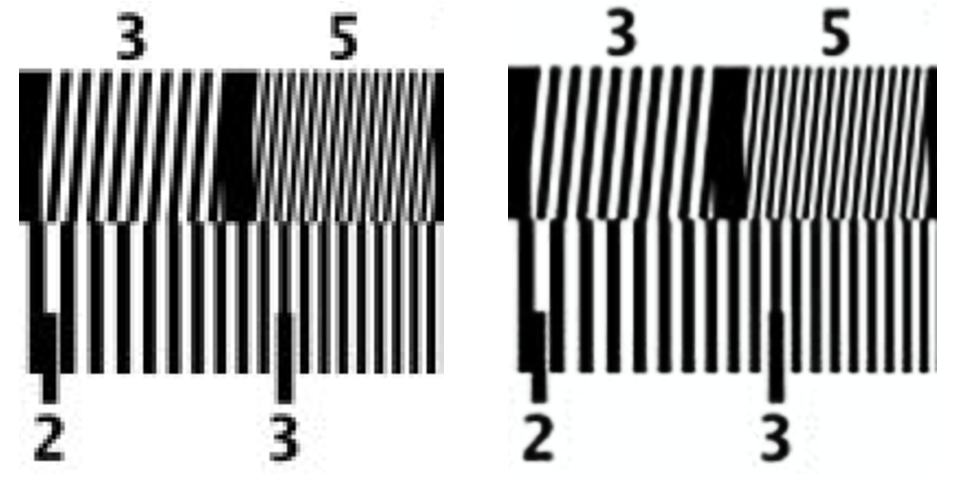 Figure shows Aliasing on the left and RAISR improved image on the right[/caption]
With Pixel, Google manages to bring technology restricted to astronomy labs into the palms of a common man by innovating on standard machine learning methods.
What makes Pixel stand out is its ability to achieve all this with a single rear camera while its contemporaries make a trade-off with design and resolution to accommodate dual lens. This was made possible with the architecture that allows the lens to take two pictures at the same time, one from the left and one through the right, achieving depth perception similar to human optics.
AI-Assisted Photography
While digital zooming deploys state-of-the-art algorithms to paint the picture with some meaning, federated learning pushes the boundary further by sharing the information across the devices with sophisticated anonymity. Decentralizing the learning process makes the machine learning algorithms more robust and quicker. For example, while you capture Eiffel tower in low resolution, the models skims through the network for previously captured high-resolution images of the Eiffel tower and uses it to fill in for the missing information in the low-resolution picture. So every device personalizes a localized model by learning from interactions and patterns of its users and updates the whole decentralized network anonymously. In addition to restoring resolution, these models allow the user to capture images at a lower resolution and save them by utilizing minimum space. And, super-resolve on demand without any degradation in quality.- Why AI is Eating Google Search’s Ad Revenue While Boosting Meta’s
- Anthropic Makes $2.08 in Revenue for Every $1 Spent on Compute — Here’s the Full IPO Story
- OpenAI Says AGI is Here. But Not Everyone is Buying It
- Why Oracle is Bringing Post-Quantum Security to Java
- What Really Happens When You Turn Your Selfie Into a 1980s AI Pic?
- AI Agents Are Making Data Security A Bigger Enterprise Problem