

The healthcare sector has been grappling with the utility of AI for quite a while now. However, since the days of IBM Watson, Big Tech has more often than not stumbled upon the healthcare door and the recent developments in generative AI may be thawing the ice further. A new report published by authors from McKinsey and Harvard certainly mirrors this enthusiasm.
The report posits that the employment of different branches of AI like ML and NLP could save the healthcare system between USD 200 billion and USD 360 billion. This is aside from improving the quality of patient experience and expanding the access to healthcare facilities. While the big fat numbers already have experts salivating, the initial problems with the adoption of the tech are yet to be dealt with. There still exists a silo there.

Azure’s investments in health
But Big Tech hasn’t given up. Earlier this month, Microsoft announced a partnership with AI healthcare startup, ‘Paige’. Launched in 2018, the startup was working on cancer diagnostics and pathology. Paige does a lot on its own—its tools have advanced diagnostics in labs that have computational pathology which is leveraged to recognise complex tissue patterns. It also has predictive tools that offer new methods to identify and then study tissue biomarkers.
Paige was growing seamlessly in a complex sector—in 2020, it picked up another USD 20 million from Goldman Sachs and Healthcare Venture Partners, closing out its Series B funding at an impressive USD 70 million.

Andy Moye, CEO of Paige, addressed the announcement in a blog post:
“In Microsoft, we’ve really found a partner that shares our vision in how healthcare is going to be transformed. . . For us, the vision we talked to Microsoft about is, how do we help create the digitization of pathology? How do we ensure that these tools are being used to get better patient care, to get better patient outcomes?”
To be more specific, Paige will be adopting Microsoft Azure as the cloud partner for their platform. Azure has a robust offering in healthcare and has been making headway in the sector with a bunch of healthcare-centric tools like Azure AI and Machine Learning, Azure Synapse Analytics, Azure Healthcare APIs, Azure Stack and Mixed Reality.
OpenAI Azure compliance change
There is another vital regulatory breakthrough that Azure achieved with a simple update. Azure OpenAI Service is now Health Insurance Portability and Accountability Act, or HIPAA, compliant which will help healthcare companies use generative AI to determine medical outcomes better.
But why is HIPAA compliance so vital in healthcare? Well, first off, it is simply the law of the land. In US healthcare, every medical software must be HIPAA compliant. The main objective under HIPAA is to protect sensitive medical data of patients from potential breaches.
The change has opened the door for companies working with Azure to use LLMs in areas within the medical context, ranging from diagnosis and treatment to patient engagement. For instance, OpenAI’s models GPT and Whisper can remove the need for administrative tasks such as medical note-taking and documentation which normally consume up to 50% of doctors’ time, often causing them to burnout.
Diagnosing using LLMs which are trained on medical literature and health records can help doctors with making decisions faster. A month ago, Google introduced ‘MedPaLM’, an open-source LLM that was able to answer medical questions just as well as clinicians could, according to the new MultiMedQA benchmark.
LLMs can analyse a lot of patient data to predict how likely a patient is to develop a certain disease or a condition in the future. They can also classify patients and direct them immediately to the appropriate level of care.
LLMs can also sift through unstructured data, which includes clinical notes and medical journals, to better medical research.

Besides, Nadella’s company has also invested in developing hardware tools, such as HoloLens, which also have genuine potential applications in the future of care facilitation.
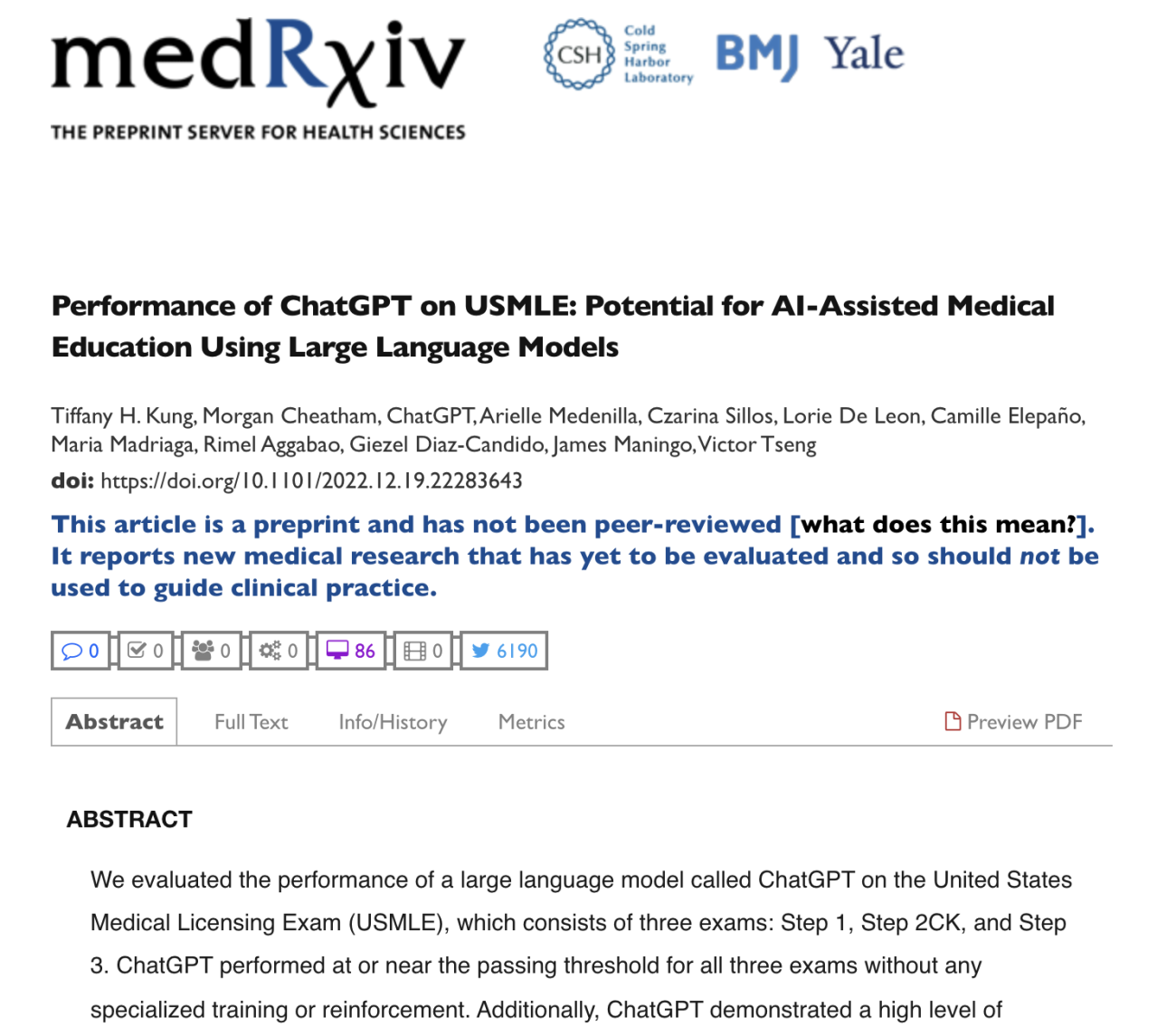
While ChatGPT has been getting the cold shoulder from the coders and the educational community, the healthcare industry is growing increasingly familiar with chatbots. The bot recently passed the US medical licensing exam while also getting credited as an author in scientific papers.
Generative AI tools like ChatGPT have often been accused of being ineffectual in core sectors. But it is time that an industry as indispensable as healthcare also reaped its benefits.
- Why AI is Eating Google Search’s Ad Revenue While Boosting Meta’s
- Anthropic Makes $2.08 in Revenue for Every $1 Spent on Compute — Here’s the Full IPO Story
- OpenAI Says AGI is Here. But Not Everyone is Buying It
- Why Oracle is Bringing Post-Quantum Security to Java
- What Really Happens When You Turn Your Selfie Into a 1980s AI Pic?
- AI Agents Are Making Data Security A Bigger Enterprise Problem