

Artificial intelligence today is influenced as much by capital and geopolitics as by technology. Control of GPUs has become a strategic lever for countries to maintain their sovereignty.
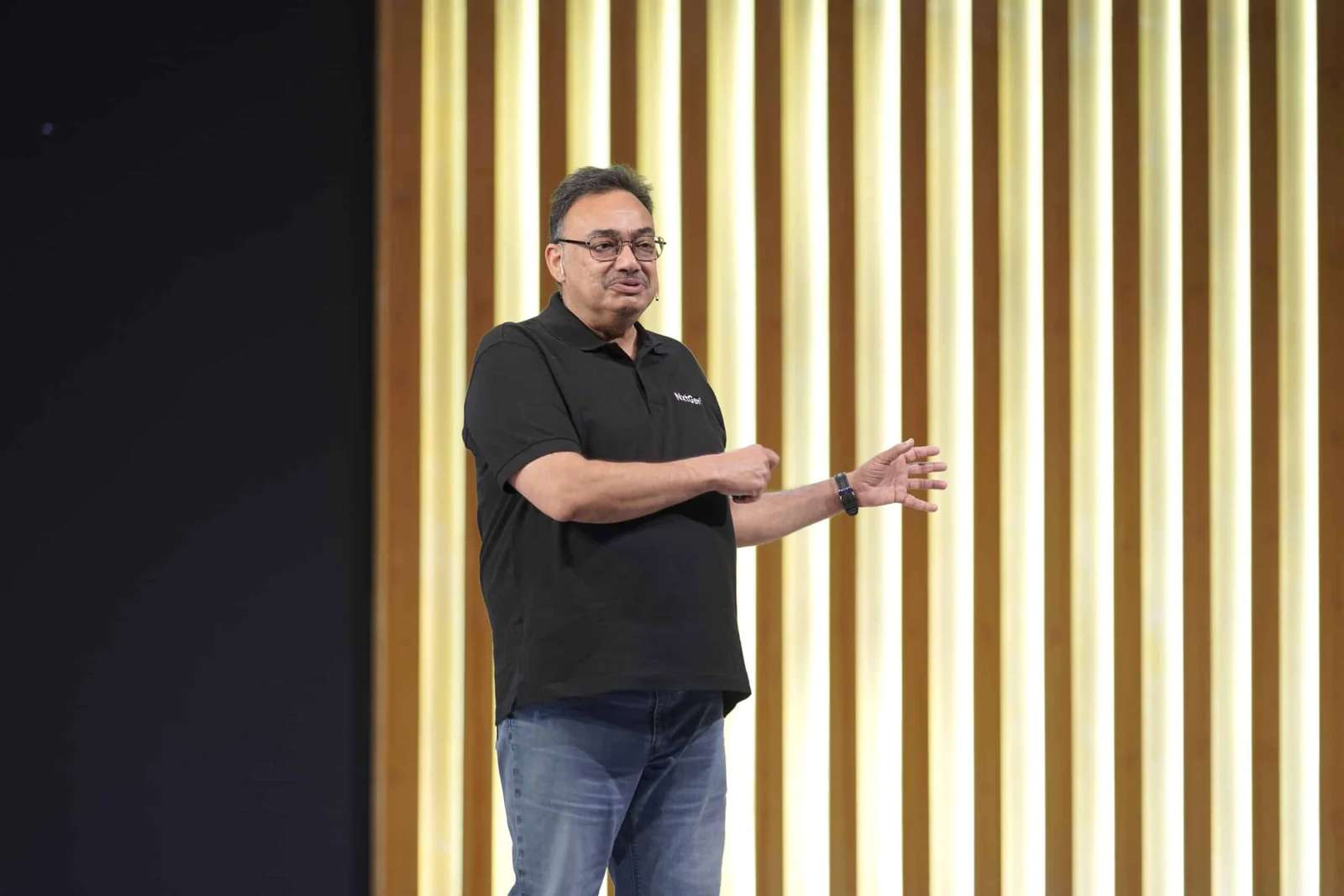
At Cypher 2025, India’s largest AI conference organised by AIM, AS Rajgopal, founder and CEO of NxtGen, built on this theme in his keynote. He said only a handful of countries can build frontier models, while almost 95% of GPUs come from companies such as NVIDIA.
“Over the last 10 years, big tech companies have doubled their operating profit, from 34% to 63%,” Rajgopal said. He pointed out that nearly ₹3 lakh crore is being spent this year alone on compute infrastructure.
Between AGI Dreams and Quantum Horizons
Rajgopal cautioned against conflating generative AI with artificial general intelligence. “GenAI is token prediction. It’s statistical pattern matching. Please don’t mistake it for creativity,” he said. “AGI, if it comes, is much farther away because humans themselves are still trying to understand consciousness.”
He described quantum computing as a force that could make GPUs redundant. He recalled visiting the IBM Watson Research Centre in New York to explore IBM’s System Two quantum computer. “Quantum is right on the horizon, and it will happen in my lifetime,” Rajgopal said.
IBM has since announced plans for the world’s first large-scale, fault-tolerant quantum system, the IBM Quantum Starling, to be developed at its new quantum data centre in Poughkeepsie, New York, by 2029.
India’s Edge Lies in Talent and Use Cases
Despite constraints in infrastructure and funding, Rajgopal sees India’s advantage in its talent base and adoption of open source. “India doesn’t have the kind of AI talent like Singapore proportionally, but in terms of AI awareness and usage, we are way ahead. This awareness will drive our leadership position,” he said.
NxtGen is building a cooperative platform called M, combining open-source models, GPU infrastructure, and India’s growing talent pool. Rajgopal stressed that the aim is not to make another large model, but to deliver real-world use cases that improve productivity and quality of life.
He invited Anil Porter, NxtGen’s partner, to share how ITQ is modernising the travel industry. Porter said legacy systems remain a bottleneck, but ITQ solved a 50-year-old problem around airline fare rules through work with Air India and other carriers. “Travel is intrinsic to human behaviour, and with 70% of India’s population under 30, these young consumers are real,” Porter said.
He added that agentic, hybrid AI platforms could reshape travel experiences within a single quarter, continuously adapting to consumer preferences.
A Balanced Path for India
Rajgopal argued that India’s position lies in blending global innovations with local strengths. “Perhaps India is evolving to be one where we will leverage what’s happening across the globe, and we will also leverage our own innovations, and then bring it together so that we do something pretty balanced for the world to understand,” he said.
He also warned that regions without infrastructure might become “neo-colonies” in the new AI order. Yet he praised the government’s seven-pillar India AI mission, spanning GPUs, startup financing, and data access, for creating a niche for the country.
Rajgopal underlined the need for tens of thousands of GPUs to scale fully but noted that open-source models are helping level the field. “Open-source models are now very, very good and can do stuff that is very comparable to frontier models from closed-source big tech companies,” he said.
He concluded with a reminder that the task ahead is massive, but India must play smart.
- Anthropic Makes $2.08 in Revenue for Every $1 Spent on Compute — Here’s the Full IPO Story
- OpenAI Says AGI is Here. But Not Everyone is Buying It
- Why Oracle is Bringing Post-Quantum Security to Java
- What Really Happens When You Turn Your Selfie Into a 1980s AI Pic?
- AI Agents Are Making Data Security A Bigger Enterprise Problem
- OpenAI is Getting Nervous About Reinforcement Learning