
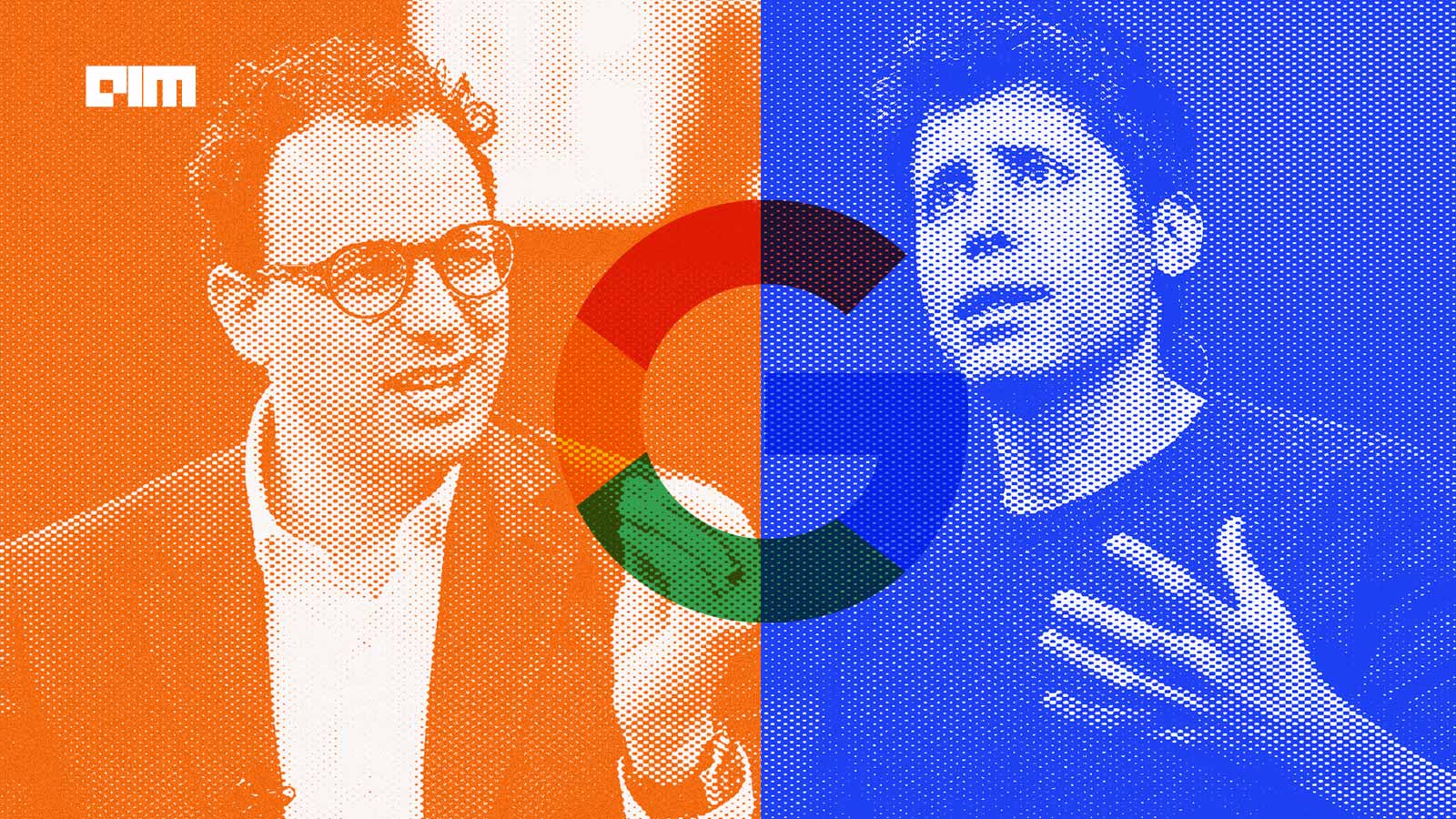
At the recently concluded India AI Impact Summit, a single awkward moment captured the deepening rift in the artificial intelligence ecosystem. As Prime Minister Narendra Modi stood alongside OpenAI CEO Sam Altman and Anthropic chief Dario Amodei for a group photograph, the two executives pointedly refused to hold hands. Instead, they raised clenched fists—a stark symbol of the ideological contest now shaping the global AI race.
Once colleagues at OpenAI, Altman and Amodei now lead their companies with increasingly irreconcilable visions for the future of artificial intelligence.
Over the past year, the industry’s two most influential model developers have begun to chart noticeably different paths. One is pursuing breadth across the technology ecosystem. The other is doubling down on enterprise.
The shift reflects a broader maturation of the generative AI industry. What began as a technological arms race after the launch of ChatGPT is now evolving into a contest over business models, customer segments, and long-term positioning.
Diverging Strategies
OpenAI has opted for scale.
The company is expanding aggressively across consumer tools, enterprise services, developer platforms and even hardware. Its strategy resembles a platform model, aiming to deploy AI across as many products and use cases as possible.
Anthropic, by contrast, has adopted a far more focused playbook.
The company has primarily targeted enterprise customers, particularly developers and knowledge workers. Its products, pricing models, and infrastructure partnerships are increasingly designed around corporate adoption rather than individual consumers.
That strategic divide is already shaping how the two companies generate revenue.
“Anthropic’s business model resembles traditional enterprise software, where organisations pay for access through subscriptions or licences. OpenAI’s approach is more mixed. While millions use its chatbot services, only a small proportion pay for premium tiers, meaning the company continues to explore multiple revenue streams, including enterprise contracts and potential advertising,” Jaspreet Bindra, Founder of AI literacy firm AI&Beyond, tells AIM.
Akhil Gupta, Founder of Convozen.ai and NoBroker, says the divide reflects fundamentally different ambitions.
“OpenAI is playing the volume game, aiming to build a massive consumer ecosystem—essentially the ‘everything app’ for AI. Anthropic is focusing almost entirely on enterprise, positioning itself as a highly secure and reliable B2B engine designed for complex professional workflows,” he adds.
Ads vs Advisors
This year, OpenAI announced plans to integrate sponsored content and advertising into ChatGPT. Altman defended the move as necessary for “democratising access”, arguing that an ad-supported tier could bring frontier AI to billions who cannot afford subscriptions.
But that was a live wire. Anthropic responded with a multimillion-dollar Super Bowl advertising campaign that did more than promote a product—it launched a moral critique. The adverts, featuring terms such as “Betrayal” and “Treachery”, framed AI as a “trusted adviser” whose integrity is compromised by the “extractive” logic of targeted advertising.
For OpenAI, however, the shift was driven partly by economics. The Information reported last year that the company is burning through nearly $8 billion annually as it builds infrastructure for next-generation models. With only around 5% of its 800 million weekly users paying for subscriptions, advertising IS a pragmatic attempt to offset costs.
Amodei disagrees. Advertising, he warned in a statement, creates “incentive drift” where systems become optimised to keep users engaged rather than delivering the most helpful answer quickly.
Two Paths to AI Safety
Safety is another area where the companies diverge—though perhaps less dramatically than public narratives suggest.
Dario Amodei and his sister Daniela were OpenAI researchers who quit the company to found Anthropic in 2021 after disagreements over the pace of AI development and the need for stronger safeguards. Antropic has since positioned itself as one of the industry’s most vocal advocates of responsible AI.
Amodei has repeatedly warned about the risks of advanced AI systems, including potential disruption to labour markets. That emphasis on safety has helped shape Anthropic’s reputation among policymakers and enterprise customers.
Altman maintains that the most effective way to make AI safe is to deploy it widely and learn from real-world usage. By releasing models such as GPT-5.3-Codex, OpenAI gathers large volumes of data to identify and fix failures.
“Society adapts through exposure,” Altman said during the India AI Impact Summit in New Delhi last month.
Amodei views that philosophy as risky. Anthropic relies on “Constitutional AI”, training models to follow a written set of principles, now reportedly spanning more than 23,000 words, so that safety is built into the system before deployment.
Analysts, however, argue that the difference is ultimately one of emphasis rather than ideology.
“The bigger distinction lies in market focus,” says Bindra. “Enterprise customers demand stronger compliance, security and reliability, areas where Anthropic’s positioning offers a natural advantage.”
The Battle for the Pentagon
The divide has also reached the realm of national security.
Earlier this year, the US Department of War designated Anthropic a “supply-chain risk” after the company refused to remove safeguards preventing its models from being used in mass domestic surveillance or developing fully autonomous weapons systems.
OpenAI moved quickly to fill the vacuum, signing a major agreement with the Pentagon.
The decision triggered an online backlash. The ‘Cancel ChatGPT’ campaign gained traction across social media, leading to a reported 295% spike in app uninstalls and a surge in one-star reviews. Over 2.5 million subscribers either already cancelled their plans or pledged to do so.
Anthropic’s Claude briefly overtook ChatGPT to become the most downloaded app on Apple’s App Store.
Yet analysts say the impact on OpenAI’s business remains limited. The company’s long-term growth depends far more on enterprise partnerships and infrastructure deals than consumer subscriptions.
Gupta elaborates on how the AI race has shifted from just building conversational chatbots to creating autonomous AI agents. “The dynamic is changing fast because Anthropic's laser focus (via Claude) on enterprise trust and safety is helping it win big corporate contracts and close the revenue gap, forcing OpenAI to constantly balance its huge consumer cash burn with the need to dominate that same high-paying B2B market,” he adds.
Google’s Gain?
As the rivalry between OpenAI and Anthropic intensifies, a third competitor may ultimately emerge as the biggest beneficiary: Google.
While OpenAI is pursuing scale across consumer and enterprise markets and Anthropic is focusing on enterprise deployments and AI safety, Google occupies a structurally stronger position across the AI stack.
The numbers illustrate the scale of that advantage.
Google’s Gemini assistant already has around 750 million monthly users, approaching ChatGPT’s roughly 800 million global users. ChatGPT itself still leads engagement with about 900 million weekly active users.
But Google’s true advantage lies beyond chatbots.
Parent company Alphabet generated more than $400 billion in revenue in 2025 and plans to invest between $175 billion and $185 billion in AI infrastructure in 2026. Its cloud division—a key channel for enterprise AI—has also surged, reaching an annual revenue run rate of roughly $70 billion as demand for AI workloads accelerates.
Unlike its rivals, Google controls nearly every layer of the AI ecosystem: proprietary data from search and YouTube, specialised chips, global cloud infrastructure, and deep research.
That “full-stack” control allows Google to embed AI across products from search and Android to Gmail and productivity tools while simultaneously selling the same capabilities through its cloud platform.
Bindra believes this structural advantage could prove decisive.
“The real dark horse is Google,” he says. “It controls the entire AI stack—data, compute, chips, and distribution. That full-stack advantage could become decisive as competition intensifies.”
More broadly, however, the industry faces a challenge that could overshadow corporate rivalry altogether: rising public scepticism about artificial intelligence.
Across the US and Europe, concerns over job losses, misinformation, and the environmental impact of data centres are fuelling growing political scrutiny. For companies racing to shape the future of artificial intelligence, navigating that backlash may ultimately prove just as important as technological leadership.

Your reaction
Discussion
What's your take on this story?
No comments yet — be the first to share your view.