
5 min
Machine learning may give a tough time to songwriters and musicians because the algorithms are definitely getting better at generating music. Composing music using artificial intelligence isn’t a new development as startups and researchers have been attempting it for a long time now. Remember the Chicago-based audio startup, Brain.fm? It promised to provide a new state of medication for the brain using AI-driven music. We also saw a collaborative album between artist Tayrn Southern and Amper software called I AM AI, which became the first album to be entirely composed by AI.
These are just two of the many developments that are flooding the space. Here we shall explore some of the popular use cases where ML and deep learning tools have been used to create music.
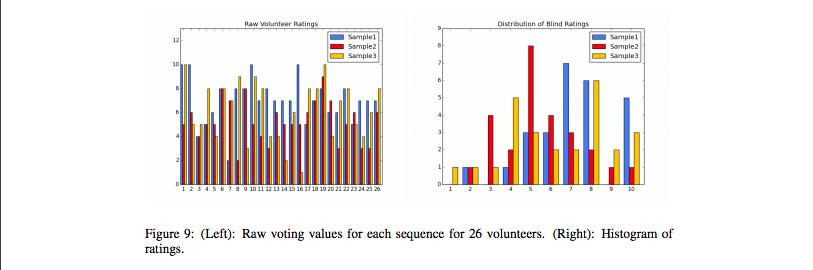 “We were able to show that a multi-layer LSTM, character-level language model applied to two separate data representations is capable of generating music that is at least comparable to sophisticated time series probability density techniques prevalent in the literature. We showed that our models were able to learn meaningful musical structure,” they noted.
Stanford Researchers Are Implementing Deep Learning For Music
Researchers from Stanford University built a generative model from a deep neural in an effort to create music that has both harmony and melody, and that can be compared to the music composed by humans. The researchers suggest that most of the previous work done in music mostly focused on creating a single melody. They focused on performing end-to-end learning and generating music with deep neural nets alone for which they used two-layered Long Short Term Memory (LSTM) recurrent neural network (RNN) architecture to produce a character level model to predict the next note in a sequence. The researchers explain the process as below: “We generate music by feeding a short seed sequence into our trained model, generating new tokens from the output distribution from our softmax, and then feeding the new tokens back into our model”, they said. They used a combination of two different sampling schemes:- Choose the token with maximum predicted probability
- Choose a token from the entire softmax distribution
- 10-second clip of the “Bach Midi” model
- 16-second clip of the “7 RNN-NADE sequence”
- 11-second clip of the “Piano roll” model trained on the “Muse-All” dataset
“We were able to show that a multi-layer LSTM, character-level language model applied to two separate data representations is capable of generating music that is at least comparable to sophisticated time series probability density techniques prevalent in the literature. We showed that our models were able to learn meaningful musical structure,” they noted.

Your reaction
Discussion
What's your take on this story?
No comments yet — be the first to share your view.