
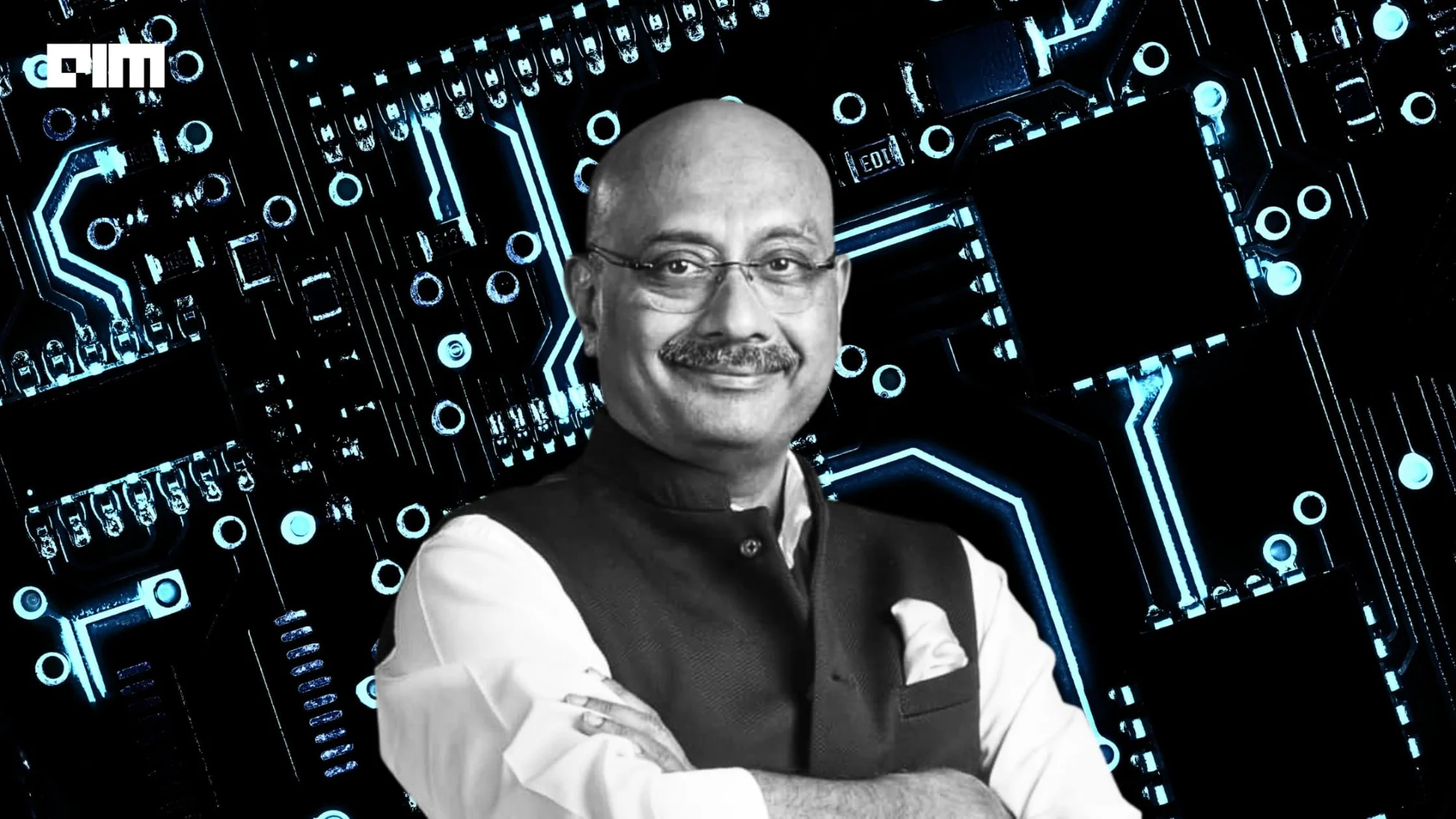
By the time Jagdish Mitra exited Tech Mahindra in April 2024, artificial intelligence—especially generative and agentic AI—had crossed a threshold.
What had once been a distant promise was now playing out in real time. Beyond experimentation, clients were now also deploying, testing limits, and rethinking how work itself could be done.
What struck him was the speed. “Earlier, technology maturity curves were long,” Mitra says. “This time, they were compressing much faster.”
AI was no longer something to “play around with”. It had reached a point where it could plausibly address the structural inefficiencies he had been seeing in enterprise IT delivery.
For him, the implications ran deeper than efficiency gains. AI, particularly generative and agentic systems, seemed capable of addressing a problem he had been wrestling with for years.
“This felt like the moment,” he says. “The technology was ready, but not many people were venturing decisively. That’s when you try to be a first mover.”
Friends and family reinforced the conviction. One line stayed with him: “If you want to swim, you have to get into the pool. You can’t swim by just dipping your toes in.”
Yet, by his own telling, the decision to leave was not driven by restlessness or ambition. It was driven by an idea he could no longer set aside.
“If the idea is powerful, so powerful that it makes you want to do that and nothing else, then it’s worth leaving everything,” Mitra says. “Otherwise, there’s no reason.”
The Discomfort Behind Quarterly Results
The unease, however, had begun quietly—inside quarterly earnings cycles.
From 2018 onwards, Mitra regularly represented Tech Mahindra’s enterprise business before analysts. “Every quarter was a difficult answer,” he recalls. Growth was stagnating. Margins were under pressure. Clients were pushing relentlessly for price cuts.
“It seemed like cost-cutting could only push us further into a deeper hole,” he says.
What worried him was not just cyclical pressure, but a structural flaw. Indian IT services remained deeply people-oriented, almost labour-dependent, at a time when the business model itself was being questioned.
“If we don’t challenge the paradigm, this becomes a downward spiral,” Mitra says.
He tried to address this from within. But large, publicly listed companies move cautiously.
“For a large company to make drastic changes that may impact quarterly revenue is not an easy decision,” he says.
Investments required to rethink delivery models would almost certainly depress profitability and growth in the short term. “That’s difficult to enforce in a large company.”
Leaving From the Top
This is what made the decision harder.
When Mitra quit Tech Mahindra in April 2024, he walked away from far more than a senior title. He left behind a three-decade career spanning sales, strategy, global expansion, and boardrooms across continents—what many in Indian IT would consider an end point.
Mitra had been heading the India business and corporate affairs at Tech Mahindra since January 2024. Before that, he served as Chief Strategy Officer and Head of Growth, overseeing large deals, global alliances, and enterprise business verticals that trace their lineage to Satyam.
Over the years, he had also led new growth businesses at Tech Mahindra and earlier served as CEO of CanvasM.
In a 31-year career, apart from India, he had opened markets across North America, the UK, the Middle East, Australia, New Zealand and South East Asia. He also sat on influential bodies, including the National Skill Development Corporation and the NASSCOM Executive Council, which shaped the strategy for India’s IT-BPM sector globally.
He is also a board member at Comviva, part of the Future Business Council and Startup Council at CII, a member of the National Committee on Skill Development and Livelihood, and an advisor to a MedTech startup incubated at Society for IIT Bombay’s Innovation and Entrepreneurship.
“It took me 30-31 years to get here,” Mitra says. “A sought-after role, a recognised position in the industry. Whatever I became professionally was because of the company and the brand.”
The emotional weight of walking away was real.
But two questions ultimately overpowered the hesitation: was the idea strong enough, and could it change something fundamental?
“I wanted to challenge two paradigms,” he says. “One, that deep-tech products can absolutely be built out of India. And two, that something created here can serve global customers.”
That belief led to the founding of humanizetech.ai, where Mitra is now building generative AI-led solutions with industry-specific use cases.
Fixing What’s Broken in Enterprise SaaS
At its core, humanizetech.ai targets a problem Mitra has watched for years.
“About 50-60% of enterprise SaaS programmes run over budget and over time,” he says. “These delays cost businesses billions, because value is time-sensitive.”
SaaS, he argues, has failed to live up to its promise in the enterprise world. “Ease of use and plug-and-play are far from reality.”
His platform uses proprietary agentic AI—Discover, Deliver and Decision agents—to cover the full journey from business requirement capture to development and testing. Industry-specific agents are planned next.
The key intellectual property lies in context. “Large language models don’t understand enterprise-specific context,” he says. “They also hallucinate. In business, you can’t take that risk.”
humanizetech.ai’s patented algorithm addresses that gap. The patent cleared without objections and has since been granted globally.
Under the hood, the platform uses a swarm-agent architecture working across multiple large language models, with Mitra’s proprietary algorithm sitting above them.
Why ‘Human’ Sits at the Centre
The name sounds almost contradictory in an age of autonomous agents. Mitra insists it is deliberate.
“Human-in-the-loop is a matter-of-fact statement,” he says. “We believe the human will be at the centre.”
AI, he believes, will continue to absorb more work. But the humans who remain must be exceptional, capable of synthesis, judgement, and context. “The ability to put pieces of the puzzle together, that’s still human.”
The second layer is values. “Empathy. Listening. Humility,” he says, emphasising the last. “If you’re humble, you listen better. You ask for advice.”
Even typography carries meaning. “Our name is in small letters, not capitals,” he explains. “Small letters are more humble.”
Those ideas are operationalised deliberately within the company. Every fortnight, Mitra hosts internal conversations where he shares learnings, mistakes, and examples of human behaviour, from listening better to admitting error.
“It can’t just be a logo or a mission statement,” he says. “You have to practise it.”
From CXO to Knocking on Doors
The personal shift has been stark.
“It’s a complete 180-degree change,” Mitra says. No executive assistant. No buffer. “You make the calls yourself. You seek appointments. You knock repeatedly.”
Ego is the first thing to go. “Your recognition is very quickly shattered,” he says. “You realise how much of it came from the brand you represented, not just you.”
Learning to ask, without hesitation, became central.
Early Traction, Global Intent
In its first year, humanizetech.ai has signed 12 clients across India, the Middle East, the UK and the US, spanning manufacturing, aviation, logistics, telecom, defence, insurance and banking. All remain active users.
The company expects to close its first financial year at just over $1 million (approximately ₹10 crore) in revenue.
Five years out, Mitra is clear about ambition: 500-700 clients and revenues between $70 million and $200 million.
Advice to Those Watching Quietly
For senior leaders quietly considering a leap, Mitra offers realism, not romance.
“You can never be 100% sure,” he says. “Don’t over-analyse. If you believe in the idea, there’s no better time.”
Startup life, he adds, “is not cool. It’s stressful. It keeps you on edge.” Then he smiles. “But it’s way more fun than I imagined. Way more adrenaline-pumping.”
The real adjustment, he says, is humility—starting from zero, recognising smarter people, and asking for help.
Outside work, Mitra is a sports enthusiast, an avid football follower and squash player. He founded the Jishnu Mitra Foundation, which trains and awards scholarships to talented children from underprivileged backgrounds, and volunteers with the Tech Mahindra Foundation to support education and youth empowerment. He holds a Master’s degree in Computer Applications from Birla Institute of Technology and an MBA from the University of London.
But for now, the focus is elsewhere.
“There’s nothing to be afraid of,” he says. “Why be afraid of what you don’t know? That’s exactly what you get to explore.”

Your reaction
Discussion
What's your take on this story?
No comments yet — be the first to share your view.