Key takeaways
- A new AI system can analyse food images to predict ingredients and generate recipes.
- Humans use multiple senses to identify food, while machines rely solely on visual data.
- The challenge lies in the AI's ability to interpret images accurately for recipe generation.
- This technology represents a significant advancement in the intersection of AI and culinary arts.
Challenges With Picture Only Input
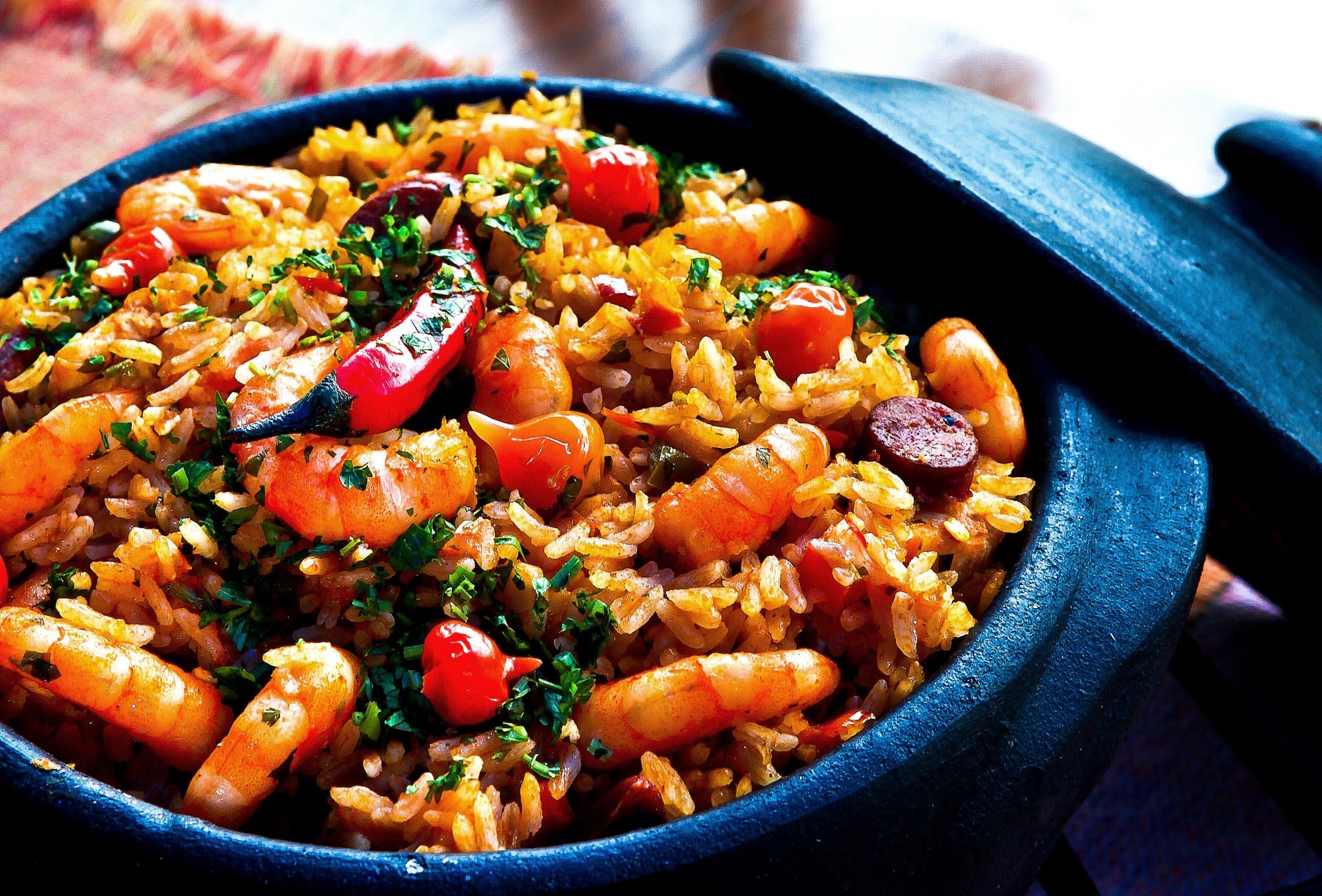 The high-quality food pictures online often distort reality. The contents can be misrepresented and pose a challenge to recognition systems. Few challenges include:
- When compared to natural image understanding, food recognition poses additional challenges, since food and its components have high intra-class variability and present heavy deformations that occur during the cooking process.
- Ingredients are frequently occluded in a cooked dish and come in a variety of colors, forms and textures.
- Visual ingredient detection requires high-level reasoning and prior knowledge.
Formulating Inverse Cooking
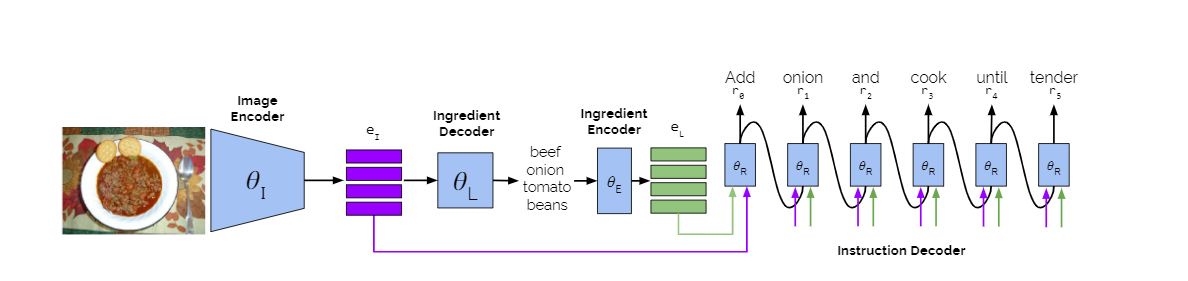
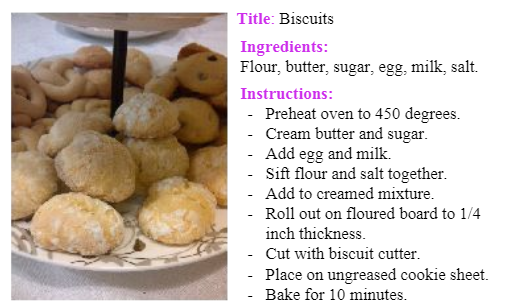 Recipe generation for Biscuits via paper by Amaia Salvador et al.,
This system was evaluated on the large-scale Recipe1M dataset that contains images of 1,029,720 recipes scraped from cooking websites.
The dataset contains 720,639 training, 155,036 validation and 154,045 test recipes, containing a title, a list of ingredients, a list of cooking instructions and (optionally) an image.
For the experiments, authors have used only the recipes containing images, and have removed recipes with less than 2 ingredients or 2 instructions, resulting in 252,547 training, 54,255 validation and 54,506 test samples.
Future Direction
The food patterns have changed over the centuries. Unhealthy eating habits and diet-conscious culture have grown simultaneously. People have formed their own communities around the diet they follow. People are serious about what they put into their mouth. A prepared meal at the restaurant can have many ingredients. And, a curious customer can fire up an app on their smartphones that runs inverse cooking machine learning model and comes up with the ingredients. These innovations are not an end in themselves but are a platform to serve more such ideas. Download the pre-trained model here. Read the full paper here.Spotted an error? Tell our editors. Read our editorial standards and corrections.
Selling to AI teams? Put your brand in front of the 5M+ people who read AIM every month. Plan a campaign