Key takeaways
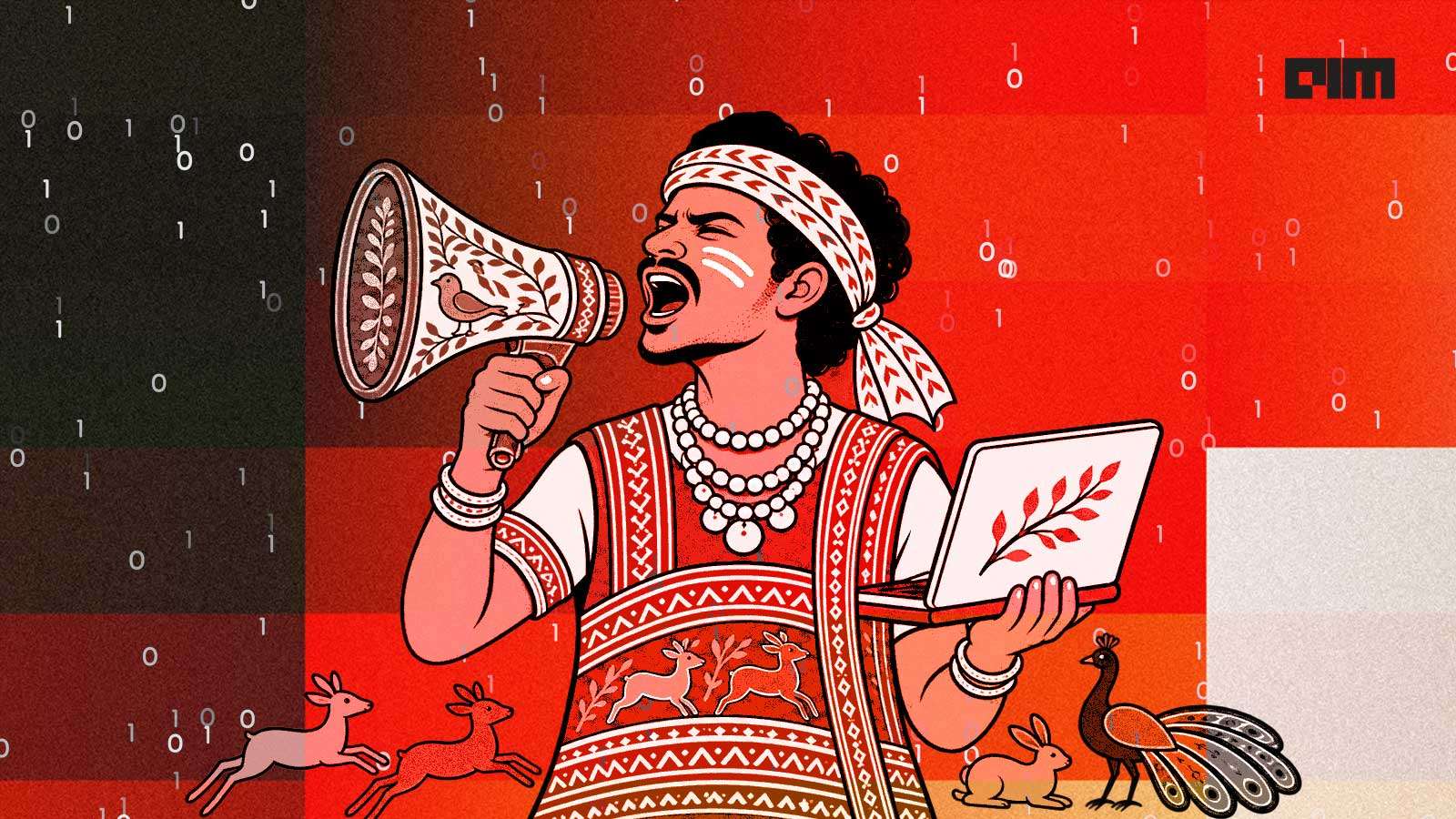
- Adivaani is an AI platform developed for tribal languages, created in collaboration with IIT Delhi and the Ministry of Tribal Affairs.
- The initiative aims to enhance communication and support marketing for tribal artisans through various language processing tools.
- The project has expanded from four to ten languages, addressing a gap in AI systems for underrepresented languages with limited digital data.
- Approximately 48,000 users have downloaded the app, although some dialects remain unrepresented, raising concerns within communities.
- The team is working to improve translation accuracy by expanding datasets to better reflect the diversity of tribal dialects.
The Gond tribe in Chhattisgarh is vulnerable to various genetic diseases, particularly sickle cell disease, and members often have to visit the All India Institute of Medical Sciences (AIIMS) in Delhi for treatment. However, many find it difficult to explain precisely what they're going through as they speak Gondi—a Dravidian language different from the Indo Aryan languages spoken in the north.
"Many are not able to communicate what they are facing or suffering from," Pooja Singh, a PhD student in the Department of Electrical Engineering at IIT Delhi, tells AIM.
But now they have an AI tool.
Adi Vaani, built at IIT Delhi with support from the Ministry of Tribal Affairs and Tribal Research Institutes (TRIs), offers a speech-to-speech tool that people from the tribe can use to record conversations and send to their doctor, who can then explain the diagnosis using the same app.
AI-Powered Tribal Language Platform
The Adi Vaani project began last year under IIT Delhi's Bhagwan Birsa Munda Cell, a nodal initiative to support tribal communities with modern engineering and research. A core group of 10–15 professors worked with the team on the project for two years.
The initial goal was to help tribal artisans market their products through voice-based forms and product cataloguing, says Singh, the Lead PhD Scholar and Researcher at Adi Vaani. The tools include text translation, speech-to-speech, optical character recognition (OCR), video subtitling, voice cloning, and a browser extension.
It started with four languages—Bhili, Mundari, Gondi, and Santali. "Existing AI systems were not suitable for the tribal languages because digital data is scarce. So, for us, it is like a national mission," says Sandeep Kumar, Principal Investigator of Adi Vaani and Faculty Member at IIT Delhi.
It now serves 10 languages. Some languages have only 4,000–5,000 speakers, and a few have 10 or 15. About 48,000 people have downloaded the app so far.
The Data Challenge
Building an AI language model for low-resource languages with around 20,000 speakers runs into the issues of data scarcity, clean language dictionaries, dialects, and code-switching, which makes calibration through standard pre-training difficult.
So, the Ministry, the Centre for Indian Languages (CIL) and the TRIs first asked the communities to create datasets—primers, dictionaries, and alphabets. Contributors translated a Hindi or English sentence plus a supporting language they know, such as Odia for Kui speakers, into their own language.
For audio, researchers stayed 20–25 days in Chhattisgarh and Madhya Pradesh (MP) and recorded speakers reading out sentences into an offline phone tool. "There is no noise in our data because nothing is outright filtered," Singh says.
Text translation runs on the transformer-based models—AI4Bharat's IndicTrans2 for Indic-to-Indic translation and Meta's No Language Left Behind for global coverage. Audio uses a separate set: AI4Bharat's IndicF5 for text-to-speech (TTS) and IndicConformer for speech-to-text (STT), OpenAI's Whisper, and Meta's wav2vec for low-resource dialects.
The first four languages needed no new script, Kumar says. Bhili, whose contributors came from MP's Jhabua region, uses Devanagari, and Santali uses Ol Chiki. The next phase was about covering more dialects.
The team uses character n-gram F-score (CHRF), CHRF++, and bilingual evaluation understudy (BLEU) to evaluate translations. But in a Hindi-to-Bhili test, Kumar recalls the CHRF score was "pretty bad" while the community said the translations were fine. Speakers accept borrowed words like 'office', while a missing diacritic dot (bindi) is penalised heavily.
"The metrics are somehow not doing justice to the translation," Kumar observes.
Community-Driven
The team fine-tunes the AI model and takes it back to the community for approval. It checks the model on 100 sentences using both established metrics and speakers, who score the output from one to five. Higher agreement means the output is "more validated".
The same test checks the data. If four contributors translate the same sentence, the wording will differ, but the meaning must stay close, Singh says. The team follows no single standard. "They are humans, and it's not possible to be consistent all the time," Singh comments.
But the feedback has sometimes been tricky to handle. Some villages complain their dialect is not covered, and others ask why their language was excluded.
Some Gondi speakers cannot read their own language. "They only know how to talk, but they have never seen how Gondi is written," Singh notes.
Some sounds cannot be written in the borrowed script, so the team built a Kui keyboard with four Kui PhD students, and it goes public only if senior community members approve, she says. Translation still needs the internet. "There's no offline mode right now; you still need the connection for translations," she says.
On the Google Play Store, some users complain that the translations pull incorrect words, raising concerns about the app's reliability. The errors come from dialects and domains that do not correspond to each other; Singh aims to address this by expanding its datasets.
To improve its benchmarks, the team is building dashboards where speakers correct data or model predictions, rate output, and rank which model's output they prefer. The team is also designing a new metric that covers issues such as tone. It will be validated through speaker ratings.
The recordings are open-source and are uploaded on AdiKosh—a tribal language dictionary, word bank, and oral archive the team built. AdiKosh holds text, audio, video, stories, dictionaries, and primers, with sources such as CIL cited and linked. "Folklore and lullabies stay in an archive," quips Singh.
AdiKosh content will also feed training for future AI projects, and the Ministry is also planning rewards for contributors.
Connecting Tribal Languages
Anyone can paste a video link or upload an MP4 on the Adivaani website and get back the video subtitled in a tribal language, without requiring any licence. The platform has so far subtitled speeches by the President and the Prime Minister. It is most used for sports commentary.
"Entertainment is something where people invest their time," she observes.
The first use case, however, is education. The platform helps schools translate books for classes one to five into tribal languages. Teachers and professors from the communities build those primers that combine sentences and dictionaries. The team has 27 dictionaries across more than 13 languages.
"Everyone has a right to get their education in their own native language," Singh says, referring to how Adi Vaani aligns with the National Education Policy 2020.
More primers are planned for the National Council of Educational Research and Training books and National Programme on Technology Enhanced Learning lectures using OCR.
Adi Vaani is also being positioned in healthcare. Its website offers information on sickle cell and anaemia for tribal community members. When translating medical phrases, the AI model retains terms such as 'insulin' and 'Hepatitis B'.
Everyone has a right to get their education in their own native language
Two pilots in education and health are planned for December or January.
Spotted an error? Tell our editors. Read our editorial standards and corrections.