
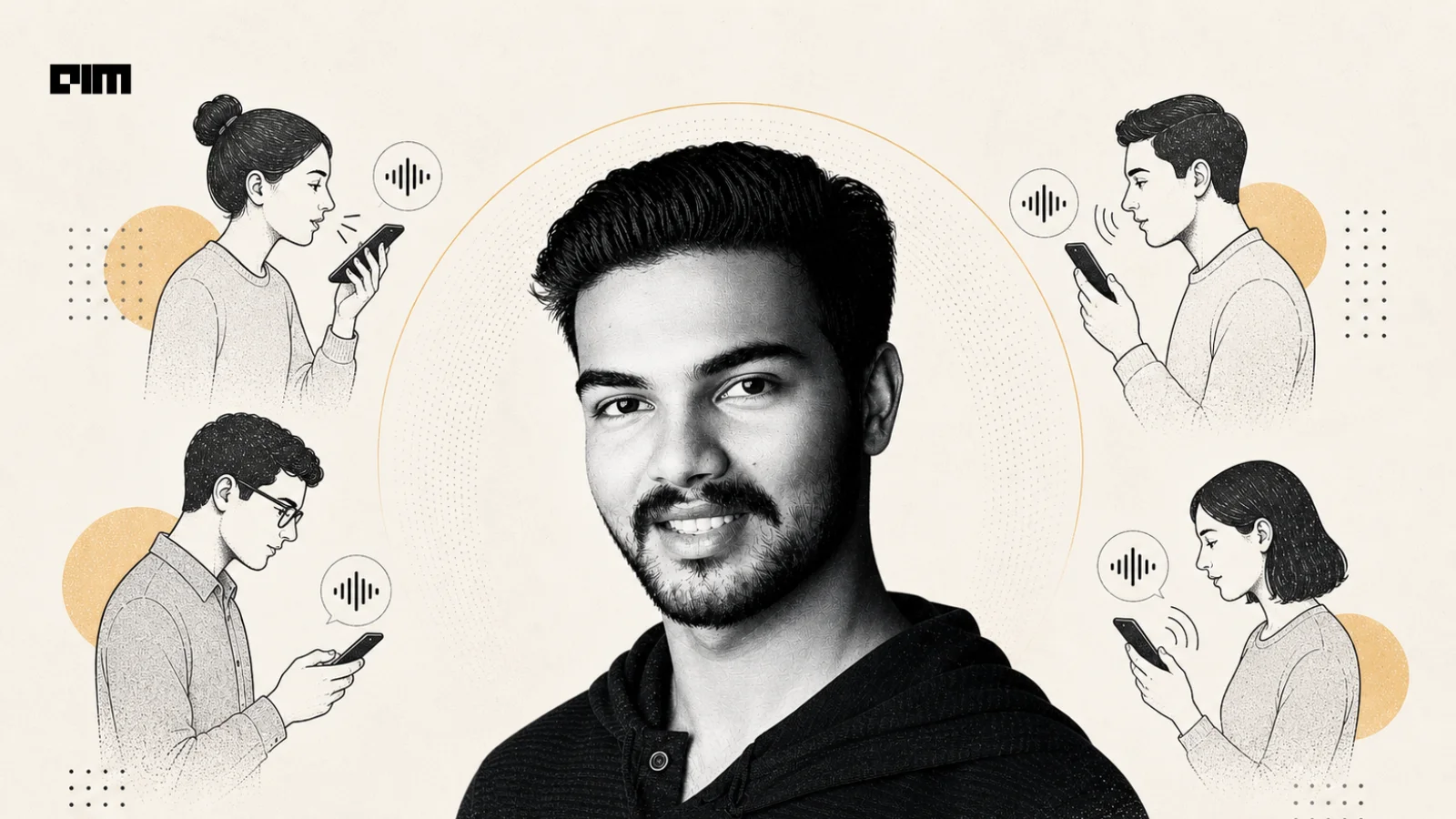
On the streets of Bengaluru in April, around 100 autorickshaws zoomed around with a peculiar ad—an AI-powered diction tool. Wrapped in lavender hues, the autorickshaws caught the eye of commuters, social media users, founders, and investors alike, and that’s exactly what the founder of Wispr Flow was hoping for.
Founded and led by Indian-born Tanay Kothari, Wispr Flow has become Silicon Valley's talk of the town. Reid Hoffman, Marc Andreessen, and even Apple co-founder Steve Wozniak have all publicly praised it.
It is built on what appears to be a simple premise: replacing typing with voice.
But replacing typing turns out to be far harder than it sounds, and solving it has already led to the company’s valuation shooting over $700 million, with more than $80 million raised from investors.we just discovered a hidden marketing opportunity no one is paying attention to. and it's happening in the streets of bangalore.
US tech companies are burning millions on digital ads to reach bangalore. but the entire city is sitting in traffic, looking at the back of an auto… pic.twitter.com/iblwGnvCte
— Tanay Kothari (@tankots) April 27, 2026
Wispr Solves a Small, But Hard, Problem
“If you want to build a Wispr Flow clone, it takes you two hours,” Co-founder and CEO Kothari tells AIM. So where does it break down?
Voice AI, as it turns out, is riddled with small failures that unintentionally destroy user intent. A missed word that flips the meaning of a sentence. An English speaker with, say, a Russian accent confuses the model into writing it in Russian.
“All of these are really small problems that you start seeing which need a fix,” says Kothari. “At the end of it, I think about what my mom or dad would want to use. They want products that just work.”
Wispr Flow, Wispr’s speech-to-text keyboard application, operates at the system level, working across every app on a device rather than within a single interface. It runs continuously in the background, supports both push-to-talk and hands-free usage, and it's designed for whisper-level speech, not loud voice commands.
The result is sub-second latency, automatic formatting into lists and structured text, and the ability to correct itself inline, mid-speech. It doesn't transcribe what you say, but interprets your intent and outputs polished writing.
That’s what got people swooning.
As of April, the platform has experienced a 200x increase in its user base over the year, a 70% retention rate after 12 months, and 150x revenue growth over the last year. While Wispr Flow was available for iOS and Mac since its launch in June 2025, the Android version was released in February and has gained over 500,000 downloads in just three months.
Is Wispr Big Tech Proof?
Another praise Wispr has earned online is that it's a distinctly ‘Apple-esque’ product, with its microinteractions, design, and obsessive attention to detail. Fans have urged Apple to acquire the platform, partly because of Siri's well-documented shortcomings and the way Wispr could fit naturally within the Apple ecosystem. But why can't Apple just build it themselves?
Kothari ponders if Big Tech companies posing a threat to Wispr are willing to make the efforts a priority. “If not, it’s very hard for you to match the quality of Wispr,” he says. “These companies have half a trillion dollars; they can do whatever they want. But it is about prioritisation and the organisation structure.”
He points to Anthropic, which is focusing largely on software development. Started from a barebones version of Claude Code, today it has an array of Claude Code features and adjacent products targeting numerous use cases across the software development lifecycle.
“If by the end of the year, the voice dictation platform is the only thing that Wispr has—it will probably die. We did something with Wispr once, and that is a playbook that we need to rise and repeat,” Kothari says.
Wispr’s Product Building Culture
However, one of the core reasons that Wispr has had a high user retention rate is the product design and the detailing at the lowest levels.
Unlike most software teams where product managers talk to users, relay findings to engineers, who then hand off requirements to an ML team chasing benchmarks, at Wispr, everyone talks to users. “Our ML team is talking to users, building things, and shipping things themselves every week,” says Kothari.
This philosophy extends throughout the stack. Kothari notes that there is a high level of ownership among engineers, and Wispr currently works with a small team of engineers. For instance, Wispr’s apps for Android and iOS were the result of a single developer working on each platform.
Kothari cites the example of an iOS developer running five Claude Code agents. “At Wispr, <1% of the code is human-written... assuming someone writes a line or two by mistake,” says Kothari.
How to Scale in India?
But the culture that arguably matters most is harder to hire for: taste.
Kothari calls it the ability to look at a product interaction and instinctively know when something is off. He believes whatever one would naturally explain to a confused user in person, the product should do so when you're not there.
For example, iOS users were hitting a screen that required them to swipe back to enable the mic. The UX copy explaining it was there, but “there was too much text on the screen,” some users told him. He asked the team to build an animated thumb that moves along the bottom of the screen, showing exactly what to do. “Even my father can do it. He doesn't need to read anything,” he says.
San Francisco-based Wispr's next big goal is to expand internationally, and the company is aggressively pushing into India. That’s where the autorickshaw campaign comes in. Its Indian user base has already organically tripled over the past three months, making it the platform's second-largest.
A key part of that growth has been rethinking pricing from the ground up. Wispr dropped its price from $12 (~₹1,100) to ₹300 per month for Indian users, and conversions jumped to levels the company had never seen in the US.
Looking ahead, Kothari wants to structure an even more nuanced pricing model to expand beyond metros.
“The tier-2 user will buy a ₹100 plan and keep doing ₹10 top-ups because they want zero wastage. So they wouldn't buy ₹300 of Wispr Flow, and a single flat subscription won't work there,” the entrepreneur illustrates.
But the deeper insight Kothari returned with after a decade in the US is about trust—or the lack of it.
India, he argues, is a low-trust society. With so many people in such close proximity, transacting and interacting constantly, trust is harder to extend to strangers or new brands. “But once you get somebody's trust, you have them loyal to you forever,” he says.
Ultimately, Kothari's ambition isn't just to build the best voice app, but it's to make it feel personal everywhere.
“If you're a person in France living in Paris, I want you to feel the same about Wispr as a person living in Delhi or Odisha does,” he says.
Not Free from Challenges
Having said that, the company is still in its early stages, and even as Kothari admits, there is huge room for growth and learning.
For instance, the campaign in Bengaluru earned the company praise for its creativity in targeting commuters stuck in traffic, but also faced backlash for failing to include a message in Kannada, the region's native language, alongside Hindi and English.
Besides, Apple is under tremendous pressure to improve its AI features, and it wouldn't be a surprise if it significantly upgraded the speech-to-text capabilities on its keyboard, which will certainly keep Wispr on its toes as it looks to iterate and build the next versions of its products.
Then there is also the competition with Google, which is steadily building an advantage in small language models through its Gemma series, particularly Gemma 4, a multimodal, open-weight model capable of running efficiently on-device with native audio support and over 140 languages. Google also recently launched AI Edge Eloquent, a dictation app designed to turn natural speech into structured, polished writing, much like Wispr.
But Kothari’s philosophy is that of owning mindshare. “It’s just harder for everybody else to try and compete with you when you already own that space in people’s minds,” he says. “That to me is basically the core philosophy of what it takes to build a software company in 2026.”

Your reaction
Discussion
What's your take on this story?
No comments yet — be the first to share your view.