
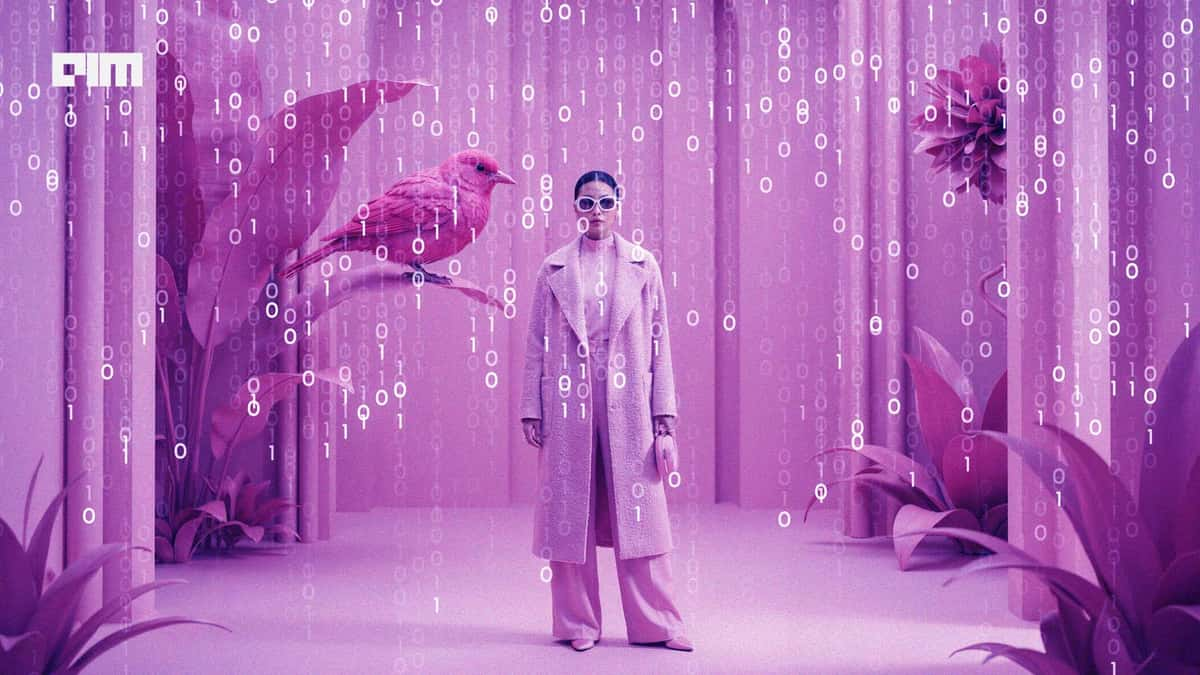

There was a time when a fashion shoot meant controlled chaos. Stylists rushed between racks of clothes. Makeup artists worked against the clock. Photographers adjusted lights while assistants moved props across the studio floor. Models would cycle through dozens of looks daily.
An agency would then call with details of the next assignment—a catalogue shoot, an e-commerce campaign, or a seasonal collection.
Lalita (name changed), a 24-year-old model, would pack her outfits and head to a studio. It wasn't glamorous every day, but it was steady work. "Modeling wasn't an overnight success,” she says. “It was a slow build, but it was consistent. And it became my main source of income.”
Over five years, she built a portfolio working with brands including Savana, Bonkers Corner, StyleCast, Libas, Nykaa Fashion and Ajio. The work was predictable enough to make modelling a career rather than a side hustle.
Then the assignments began disappearing.
At first, agencies blamed postponed campaigns or changing creative briefs. Soon, the cancellations became routine. Instead of eight or 10 shoots a month, she was getting three or four.
Then came the explanation.
"Agencies began mentioning AI-generated campaigns directly," Lalita says. "Brands were saying they were replacing physical shoots with digital visuals. That was the first time she realised AI wasn't just a concept people talked about. It was becoming real.
The hardest part, she says, wasn't losing work overnight. It was watching it slowly disappear. "It felt like being gradually removed from the system without anyone explicitly saying it."
Lalita's experience reflects a much larger shift sweeping through the fashion industry. For decades, creating a campaign meant hiring models, booking studios, arranging lighting, coordinating photographers and stylists, and spending days producing a handful of final images.
Today, many of those images begin with a prompt instead of a camera.
Generative AI can create photorealistic models, change outfits, swap backgrounds, alter facial expressions and produce entirely new campaign visuals in hours. Instead of organising another photoshoot, brands can recreate the same scene with a few text instructions.
Why Brands Are Embracing AI
For fashion companies, the attraction is obvious.
According to AI fashion platform StyTrix's 2026 report, AI-generated content can reduce production costs by 80–95%, cutting the cost of creating model imagery from $500–$2,000 per look to as little as $10–$50. Production cycles that once took two to five days can now be completed in a matter of hours.
The savings extend beyond production.
According to a Dentsu India case study on Myntra's AI-powered Google Search campaigns, the company recorded a 27% improvement in return on ad spend (ROAS) and 10% incremental business growth while significantly scaling campaigns. AI, in other words, is increasingly becoming a growth tool rather than just a cost-cutting exercise.
For brands operating in fast-moving e-commerce, where collections change every few weeks and marketing campaigns are constantly refreshed, the economics are difficult to ignore.
Across India and globally, retailers are rolling out AI-powered virtual try-ons, personalised styling assistants and recommendation engines that allow shoppers to see how garments might look on their own bodies before making a purchase.
But every efficiency gained by software reshapes someone else's work.
The Impact Goes Beyond Models
Not just the models. The photographers, makeup artists, stylists, editors, production assistants and studio teams who make fashion photography possible are beginning to feel the shift, too.
Dattatraya Dutta, an independent photographer and founder of a content agency, says AI has fundamentally changed client expectations.
"Earlier, elaborate sets and heavy post-production meant bigger budgets," he says. "Now many clients expect us to use AI for backgrounds, props and image enhancements, so budgets have come down."
The technology isn't replacing photographers outright. Instead, it is changing what clients expect of them.
"I've had to learn prompting because clients now expect AI-generated edits," Dutta says. "Almost every photographer I know is learning AI workflows to stay competitive."
The transition mirrors what has happened across several creative industries. Designers are learning image-generation tools. Writers are experimenting with AI-assisted drafting. Video editors are adopting generative workflows. In fashion, photographers are becoming prompt engineers almost as quickly as they once became digital editors.
Inside fashion companies, however, AI looks less like disruption and more like an overdue productivity upgrade.
Sreya Simlai, Associate Experience Designer at one of India's largest fashion and lifestyle e-commerce platforms, says AI has dramatically compressed creative workflows.
“Earlier, if we wanted to change a garment, hairstyle, facial expression or accessories, we had to go through lengthy editing or sometimes organise another shoot,” she says. “Now those changes can happen with a single prompt.”
The speed matters because modern fashion marketing rarely involves producing a single campaign.
Brands create different versions for websites, mobile apps, social media platforms, regional festivals, language preferences and customer segments. Producing those variations through traditional photography requires multiple shoots and significantly higher costs.
“AI's biggest advantage is speed,” Simlai says, adding that creating, editing, and testing different campaign versions is now faster than before. Customising content for customers in various cities, regions, and backgrounds has also become easier.
The technology is already moving from experimentation to production.
Earlier this year, Reliance's Ajio launched its first AI-generated campaign for the All Stars Sale, with over 2,000 images, 200+ videos, and a 22-scene ad made in four days—work that normally takes weeks.
A Global Shift
The shift is far from unique to India. Across the global fashion industry, brands are testing how much of the creative pipeline AI can absorb.
Rainbow Shops, a US fast-fashion retailer, faced legal action after model Francheska Pujols alleged the company created AI-generated versions of her likeness without consent. H&M has announced plans to create AI-generated digital twins of selected models for marketing campaigns, while Levi Strauss drew criticism after introducing AI-generated models as part of an initiative to improve representation in product photography.
These examples show the debate has expanded beyond image generation to include ownership, consent, employment, and intellectual property.
Who owns a person's digital likeness? Should models receive royalties if their AI twins continue appearing in campaigns? Can a fashion brand claim diversity by generating people instead of hiring them?
The technology may be advancing faster than the industry's answers. Even so, AI's rise does not necessarily mean human creativity is becoming obsolete.
Simlai, however, believes the industry is evolving rather than disappearing.
That view is echoed by consumer research.
According to a recent Vogue Business AI Consumer Perception Survey, only 24% of consumers believe AI-generated fashion content is as valuable as work created by humans. More than half say they would view luxury brands less favourably if they relied heavily on AI-generated campaigns.
Luxury fashion, after all, has always sold more than clothes. It sells craftsmanship, aspiration and authenticity—qualities that remain closely associated with human creativity.
Academic research points in a similar direction. A 2023 study by Michelle Lins de Lima found that AI is most effective as a creative assistant, helping designers explore ideas, forecast demand and improve production efficiency rather than replacing creative judgement altogether.
That distinction may ultimately define fashion's AI era.
Commercial catalogues, product listings and high-volume e-commerce campaigns are likely to become increasingly automated because speed matters more than artistic expression. Luxury brands, editorial campaigns, and celebrity-led storytelling may continue to rely heavily on real people because authenticity remains part of the product itself.
For Lalita, however, those industry distinctions feel distant. She still believes there will always be demand for real models. "There will always be demand for real faces and real emotions, especially in luxury and storytelling campaigns," she says.
But she also believes something fundamental has changed.
AI is no longer another editing tool tucked away in post-production. It is becoming part of fashion's production line, quietly changing who gets hired, what skills matter and how images are created.
The fashion industry has been constantly evolving, moving from sketches to digital tools, film to smartphones, and print to social commerce. AI might just be the exciting next chapter in this journey.
The difference this time is that the technology is not merely changing how fashion looks. It is changing who gets to make it.
- The AI Slowdown Narrative Doesn’t Reflect Enterprise Reality
- India’s Enterprises are Scaling AI. Is the Infrastructure Ready?
- Industry Wants Faster Approvals and Cheaper Power in India’s Data Centre Policy
- Inside Jio Platforms: Its Tech Bets, Loss-Making Subsidiaries and Hidden Risks
- India’s GCCs to Add 1.4 Million Jobs, Drive 170 Million Sq. Ft. Office Demand by 2031
- AI Can Be Cyborg or Centaur. But Can Enterprises Monetise It?