
A single detail buried on Page 11 of DeepSeek V3's technical report, published in December 2024, cost NVIDIA a fortune. The model had been trained on just 2,048 NVIDIA H800 GPUs, a fraction of the 100,000-scale clusters that US frontier labs had come to rely on, yet it achieved comparable or superior results.
The release of DeepSeek R1, a reasoning model built on top of DeepSeek V3, in early 2025 wiped $589 billion from NVIDIA's market cap in a single day.
However, the long-anticipated DeepSeek V4 family, contrary to expectations, did not create as much of a splash on the bourses. Not does it carry the same seismic weight as its predecessor. But is it even fair to expect a similar release?
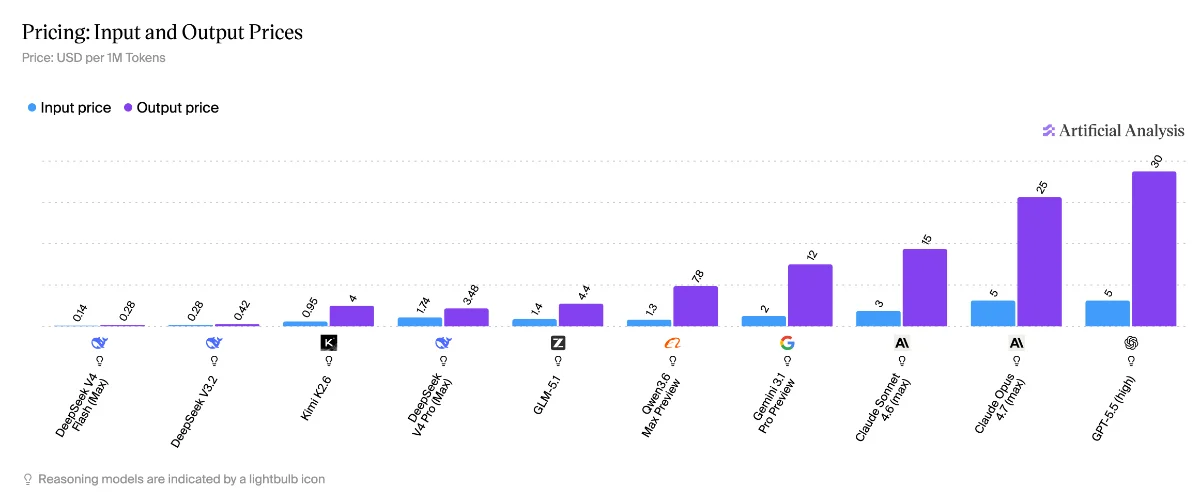
DeepSeek is now dealing with an entirely new ecosystem of competition both locally and globally. It is also 5–10x cheaper than frontier US AI models, but investors have grown accustomed to low-cost models.
Performance Gains Without a Breakout Moment
DeepSeek v4 does comes with a fair share of achievements. Yet again, it introduces key architectural innovations that optimise how the LLM processes information and input tokens, resulting in significant cost reductions for long-context inputs.
When reading a 1-million-token document, V4-Pro only uses 27% of the computing power (FLOPs) and 10% of the memory compared with its predecessor, V3.2. The Flash version uses just 10% of the compute and 7% of the memory.
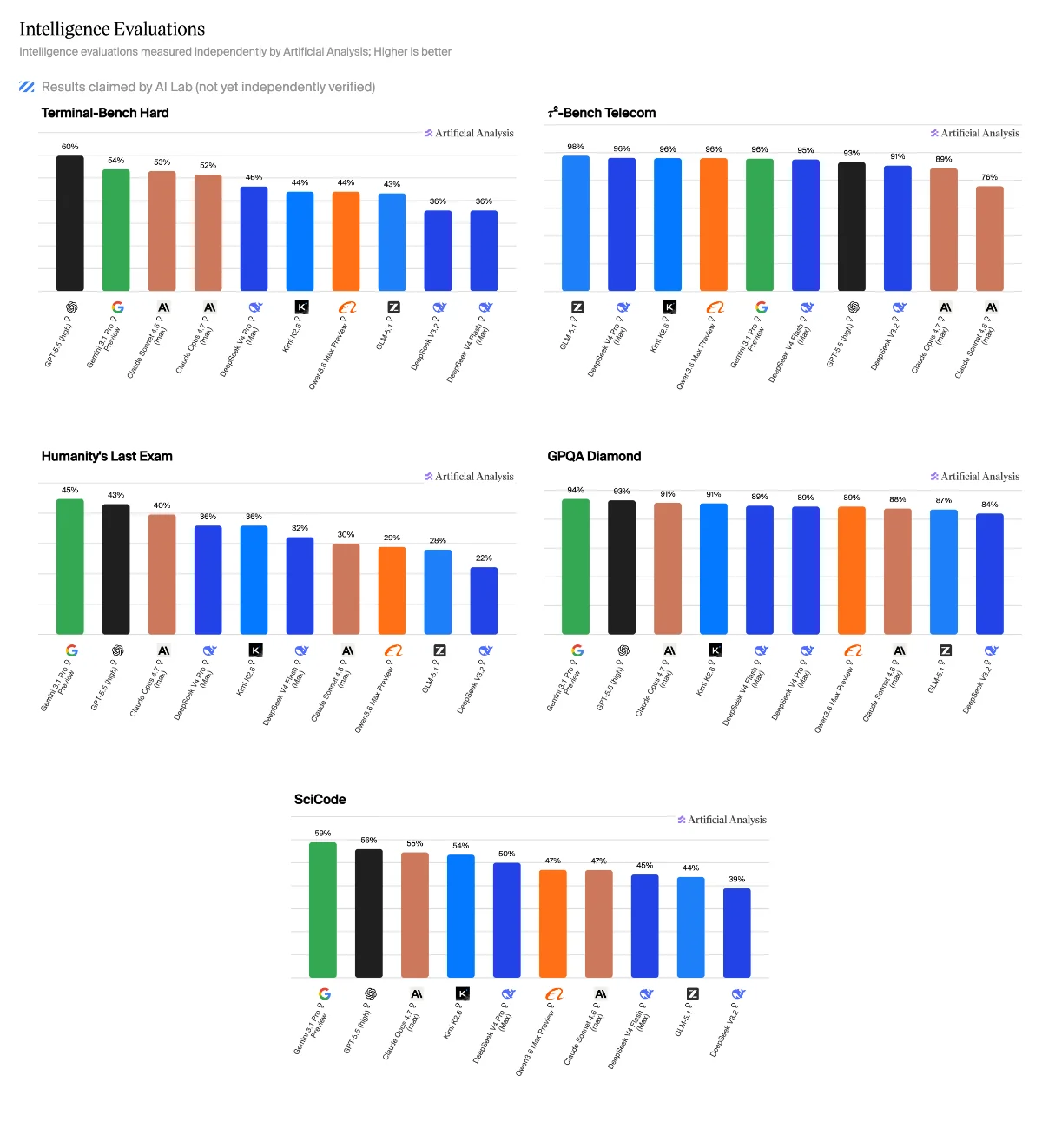
DeepSeek-V4-Pro is the first open model to match top-tier closed models (like GPT-5.4) in coding competitions, ranking 23rd among human candidates on Codeforces. It also achieved a perfect 120/120 score on the highly difficult Putnam-2025 formal math benchmark.
On both general knowledge and agentic benchmarks, it achieves competitive results, albeit not as good as DeepSeek-R1's top spots last year.
Rising Competition Within China
One reason behind its whimper is the way competition has emerged locally in China—something DeepSeek did not have to deal with before.
“There is no ‘DeepSeek moment’ this time,” Kyle Chan, a fellow at the Brookings Institution in the John L Thornton China Center and an analyst of the Chinese tech and AI ecosystem, tells AIM.
“The original DeepSeek moment with the release of R1 happened because of low expectations about China’s ability to catch up in AI. But since then, the world has updated its views and sees both the US and China as being the two major AI leaders.”
After DeepSeek's release, Chinese Big Tech companies Alibaba, ByteDance, and Tencent, along with other startups such as Moonshot AI (Kimi), MiniMax, and Z.ai, released high-performance open-source models. Their approach was similar to DeepSeek’s, relying on software and architectural innovations to work around GPU export controls that make model development easier in Western labs.
In several cases, these models outperformed Western counterparts such as OpenAI, Anthropic, and Meta.
“They have shown that there’s a depth to China’s AI playing field beyond just DeepSeek itself,” Chan remarks.
Moreover, some Chinese Big Tech companies, such as ByteDance and Alibaba, have considerably more resources than DeepSeek. Not only did Alibaba invest heavily, commiting around $53 billion through 2028 to scale AI models, but the company, along with Tencent, is also reportedly planning to make investments that would value DeepSeek in excess of $20 billion.
So this time around, DeepSeek is dealing with attention distributed among its Chinese peers.
Even developers aren’t as excited about DeepSeek V4 because they already have plenty of options to work with, which wasn’t the case last January. “I hate to say it, but as soon as I saw DeepSeek V4, I just went back to optimising my Qwen3.6-27B local setup,” says John Leimgruber, a software engineer who specialises in local hosting of DeepSeek models.
DeepSeek-V4 released within a week of other high-performing models that run at home or on private servers, such as Alibaba’s Qwen (which passed 1 billion cumulative downloads on Hugging Face) and Moonshot AI’s Kimi. Leimgruber states that, for example, the Kimi-K2.6 1 Trillion model fits in less than 600GB RAM/VRAM and that “the small, but very powerful Qwen3.6 models, which a home user with 24GB VRAM can run quite well.”
Based on OpenRouter, a platform that aggregates real-world LLM usage, Moonshot AI’s Kimi models have surged ahead, with K2.6 ranking as the most-used model by token volume in recent weeks.
In 2025, after the release of DeepSeek V3 and DeepSeek R1, the two together represented more than half of all open-source token traffic on the platform. However, this dominance peaked around mid-2025 and then declined.
New releases from Qwen, Moonshot AI, MiniMax, and others captured production traffic within weeks. And by late 2025, no single open-source model accounted for more than 20–25% of token share.
Will DeepSeek Threaten NVIDIA?
DeepSeek also did not reveal any information about the compute it used to build the new model, the metric which was core to the market disruption last year.
A real opportunity would have been for DeepSeek to disclose how much of its compute infrastructure is domestic. That would have clarified China’s dependence on NVIDIA, especially as the government pushes mandates for homegrown labs to adopt local compute.
However, what DeepSeek did reveal is that its architecture is optimised both for NVIDIA GPUs and Huawei Ascend chips. Huawei also confirmed that its Ascend 950 AI chips will fully support DeepSeek V4.
DeepSeek's technical report also says the V4-Pro model's throughput is limited by the supply of high-end compute, and prices will drop significantly once the Huawei Ascend 950 super nodes ship at scale in H2 2026. This may also answer the persistent question of why it took DeepSeek so long—around 16 months—to release a new model.
“DeepSeek’s delayed V4 launch may have been due to its efforts to work with Huawei Ascend chips,” Chan surmises.
While Huawei chips do lag behind NVIDIA, this is a signal that cannot be ignored, at least according to NVIDIA boss Jensen Huang.
“The day that DeepSeek comes out on Huawei first, that is a horrible outcome for our nation,” said Huang in a recent podcast with Dwarakesh Patel.
Despite the harsh export controls, 13% of NVIDIA’s total revenue from FY25 came from China.
DeepSeek’s Dormant Potential
Chan highlights another reason for the delay: “DeepSeek also faces less pressure to iterate quality on new models given its unique funding structure.”
For context, DeepSeek was founded in 2023 by Liang Wenfeng, who is also the co-founder of High-Flyer Capital Management, a highly successful $14 billion Chinese quantitative hedge fund.
Instead of raising external capital, High-Flyer single-handedly underwrote DeepSeek's compute, talent, and training runs using its own trading profits, including a reported 56.6% financial return in 2025.
Because DeepSeek bypassed the traditional venture capital route, it avoids the pressures that come with it.
Having said that, the sense of competition is also unique in China. For one, Tencent and Alibaba, both of which have released open-weight models, could technically consider DeepSeek a competitor, but are both vying for an investment in DeepSeek.
Tencent and Alibaba have also invested in other competing AI startups such as Zhipu, MiniMax, and Moonshot, while continuing to build their own models. Even WeChat, Tencent’s popular messaging app in China and globally, is integrated with DeepSeek AI models, along with Tencent’s own Hunyuan model.
While CEOs of US AI labs may hesitate to even hold hands for a photo op, Chinese AI labs actively build on each other’s architectural secret sauce. Kimi, for instance, built on elements of DeepSeek V3.2’s architecture, while DeepSeek V4 adopts Kimi’s Muon optimiser to improve model training stability.
Innovation in China is not as proprietary as it is in the US, and so, DeepSeek is not in a position to single-handedly disrupt competition at home. For that to happen, it needs to ensure its models are the default choice for developers.

Your reaction
Discussion
What's your take on this story?
No comments yet — be the first to share your view.