
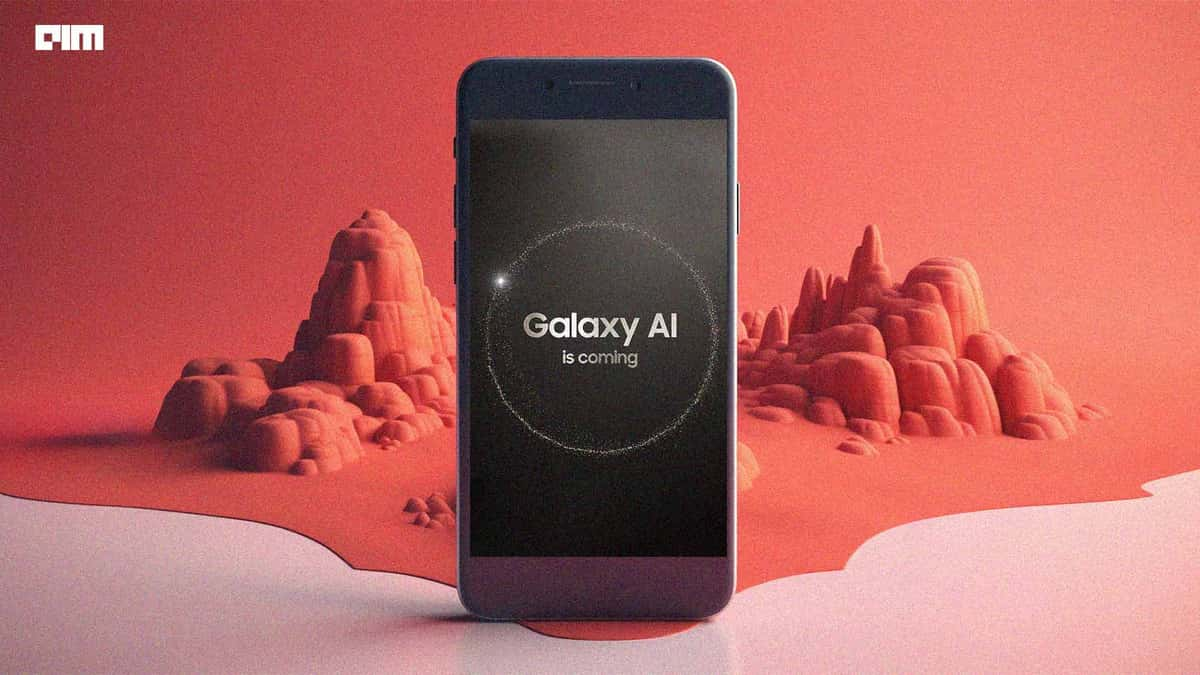
This is probably the first time a smartphone manufacturer is advertising their upcoming phone launch with ‘AI’ as the central theme. Samsung teased Galaxy AI, announcing its readiness to unveil the new series of Galaxy S24 phones at the Galaxy Unpacked event to be held on January 17, in San Jose, terming it the ‘new era of mobile'.
The race towards bringing generative AI to phones has thus gained steam.
The True AI Phone?
Samsung’s flagship Galaxy series looks to push ahead of its competitors with its newest S24. As the name suggests, the series is expected to be packed a many AI features. A new feature called ‘AI Live Translate Call’ will act as a personal translator. The feature will allow audio and text translations in real-time, as the user speaks on call.
While Google Pixel has a ‘Live Translate’ feature, Samsung’s version is AI-powered. Interestingly, the absence of a live translation feature on iPhones is something that Google had mocked recently.
A couple of months ago, Samsung announced its generative AI model, Samsung Gauss, at the Samsung AI Forum 2023. It consists of three tools: Samsung Gauss Language, Samsung Gauss Code and Samsung Gauss Image. The generative AI language model is aimed at boosting work productivity by assisting in tasks such as composing emails, summarising documents, code development and many other features to enhance consumer experience.
Google has its AI-enabled Google workspace suite and even a new search generative experience that will probably be part of its flagship Pixel phones. Apple also has AI and generative AI capabilities integrated into its products, but doesn’t like to flaunt as much as its counterparts.
With the closed ecosystem that the company has built for itself, the chances of collaborating to utilise other big tech companies’ AI-powered features are almost NIL.
Read: When Apple meets OpenAI
Season of Sparkles ✨
The teaser video of Galaxy AI featured the image of sparkles, synonymous with another tech giant. Google’s AI chatbot, Bard, is also symbolised by sparkles. However, it is not surprising that Samsung has embraced the same.


At the ‘Made by Google’ event held in New York last October, the company unveiled AI features and their latest phone Pixel 8 and Pixel 8 Pro. The company also announced ‘Assistant with Bard', a personal assistant with generative AI features, which would be available first on Pixel phones, followed by Samsung Galaxy S24 series.
The partnership is peculiar as both the tech players directly compete with each other in the mobile segment. Giving exclusive access to their AI chatbot to their competitor might just be a win for both parties.
Considering how Samsung’s AI assistant Bixby wasn’t note-worthy, the collaboration with Google will benefit its users. Plus, it seems like a viable combo to take on Apple, which is also looking to bring generative AI to their iPhones and iPads by the end of 2024.
Unmatched Hardware
While Samsung did not reveal all the details of the AI features it is looking to unveil, hardware updates are expected. Samsung, a traditional user of Qualcomm chips for US smartphones, is likely to utilise Qualcomm’s Snapdragon Series 8 Gen 3 for the Galaxy series.
These are already powering Android phones such as Xiaomi 14, and allow generative AI applications to be directly run on these phones.
Interestingly, Samsung is also working towards building 2nm chips, which can provide a 25% increase in power efficiency, and can also provide a boost of 12% in performance when compared to the second-generation 3nm chips released this year.
However, Samsung will only start mass production of these 2nm chips in 2025, probably hinting at Samsung’s reliance on in-house chips in the long-term future. Also, setting a promising roadmap that sets it apart from Apple.
- AI Can Be Cyborg or Centaur. But Can Enterprises Monetise It?
- AMD’s Server CPU Business Faces a New AI Boom
- How an Engineer Is Using AI to Bridge the Accessible Education Gap
- AI Agents are Making Human Customer Service a Specialist Job
- Why Nandan Nilekani-Backed F2A Believes India's Investment Opportunity Lies in Edge AI
- India Needs to Build the AI 'Brain' for Robotics, Not Just Import Hardware