
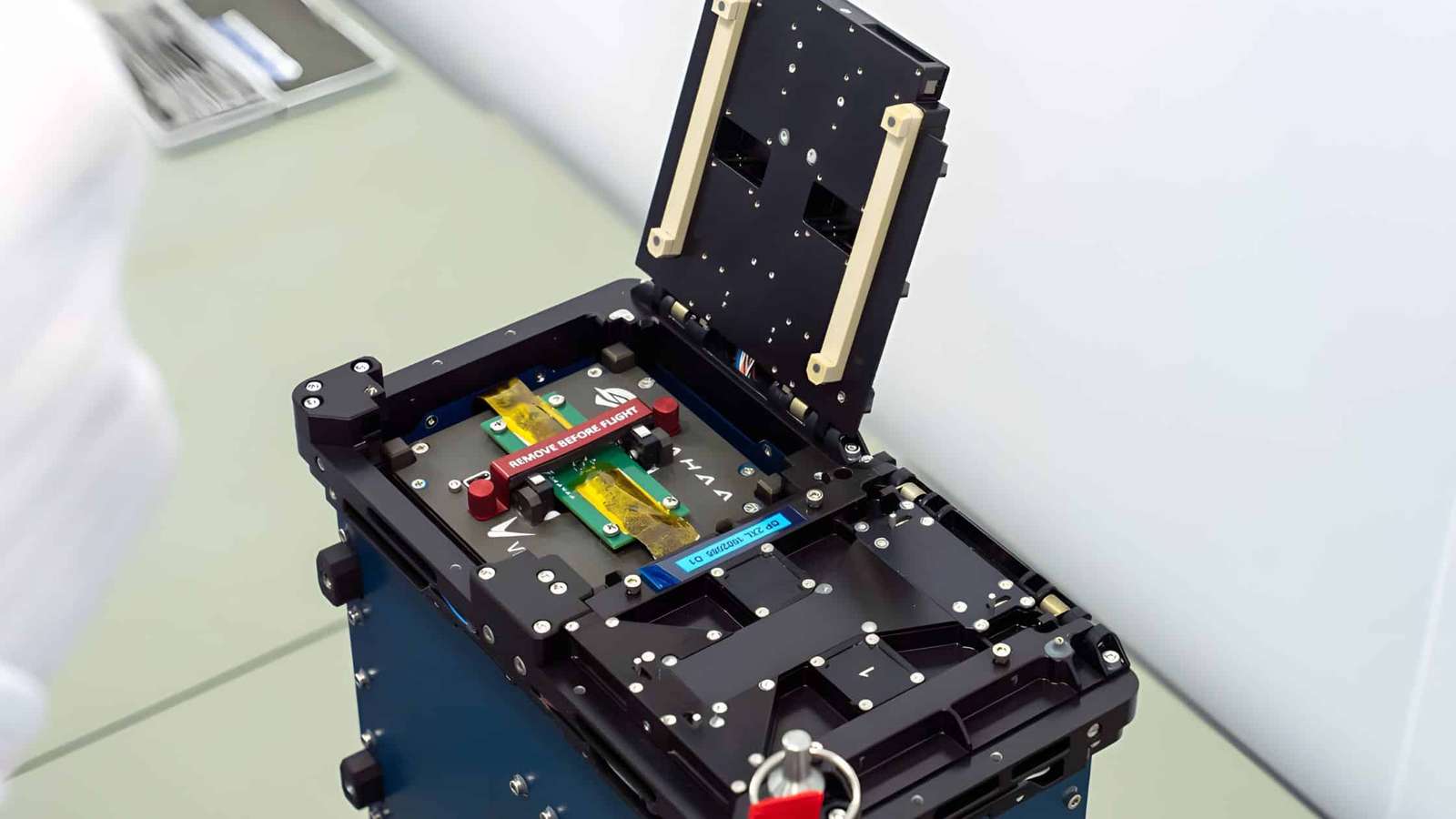
Bengaluru-based space tech company Grahaa Space announced it will launch its Solaras S2 nano-satellite by the end of November, following authorisation from the Indian National Space Promotion and Authorisation Centre (IN-SPACe).
The company plans to send the satellite from the Alcântara Space Centre in Brazil on the Hanbit-Nano rocket built by Korea-based Innospace. The mission will demonstrate the company’s satellite systems and mark its first orbital launch.
Solaras S2 is part of Grahaa Space’s plan to build a constellation of nano-satellites for near-real-time earth observation. The company signed an agreement with Innospace in 2024 for this technology demonstration mission. It aims to qualify its bus, platform and other subsystems before moving to later missions.
Founder and CEO Ramesh Kumar V said the Solaras S2 mission will help the company validate key systems. “It is a focused technical step that confirms our readiness for the next phase,” he said.
He added that support from STIIC at IIST Trivandrum and IN-SPACe has been central to the company’s progress. Grahaa Space is backed by the Viskan Group and incubated at the Space Technology Incubation and Innovation Centre (STIIC) at IIST.
The company said its subsequent missions are planned for early 2026 with Skyroot Aerospace.
These launches will test the communications module, collect geospatial data through the optical payload, and establish inter-satellite links. Kumar said the goal is to build “a reliable nano-satellite capability that can support various on-ground applications using near-real-time geospatial data.”
Grahaa Space builds payloads, inter-satellite links and onboard processing systems to support live geospatial data. Solaras S2 will serve as a qualification step before the company moves to a full constellation rollout.
- Coforge Revenue Rises 54% as AI Engineering and Deal Bookings Gain Momentum
- Tech Mahindra Partners With SpaceXSI to Bring AI Into Software Engineering
- Infosys AI Revenue Rises 29% in Q2, FY27 Growth Guidance Cut
- LTM Launches BlueVerse Industrial AI Lab in Chennai
- Chariot Launches Speech Recognition Model for 10 Indian Languages
- Meta Expects Up To $145 Billion In Capex As AI Investments Expand