
5 min
 In a mission to democratise artificial intelligence and make it available for all businesses, global search giant Google introduced Cloud AutoML on 17 January.
Cloud AutoML may strike a familiar chord with many due to its relatively low-key launch at the company’s I/O conference last year. The Google Cloud Machine Learning Engine, was essentially built to help developers with machine learning expertise easily build ML models that work on any type of data, of any size.
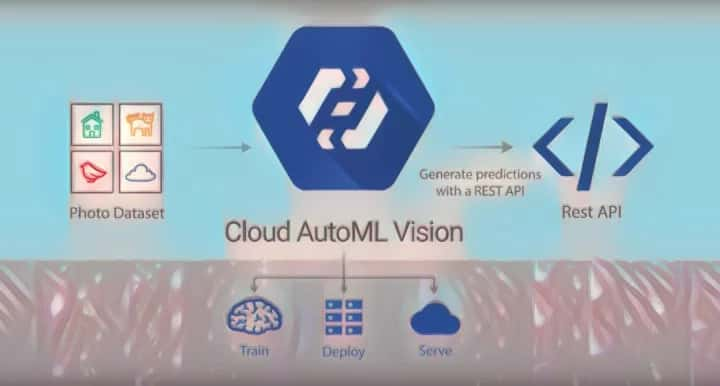
Google's first step towards the same will be Cloud AutoML Vision -- a service that makes it faster and easier to create custom ML models for image recognition. Its drag-and-drop interface the user easily upload images, train and manage models, and then deploy those trained models directly on Google Cloud. Google's official statement released on 17 January said that early results using Cloud AutoML Vision to classify popular public datasets like ImageNet and CIFAR have shown more accurate results with fewer misclassifications than generic ML APIs.
They also listed the three key features about Cloud AutoML Vision and what it has to offer:
- Increased accuracy
- Faster turnaround time to production-ready models
- Ease of use
- AI Productivity to Add $28 Billion to $84 Billion to India's GDP: Cognizant Study
- OpenAI's Codex Helps in Aerodynamic Engineering for Mazda
- Bengaluru Accounts for 34% of India's FDE Talent: Report
- 84% See AI Productivity Gains, but Only 10% Allow Agent Autonomy: TCS Study
- Snowflake Introduces Business Ontology, Cortex AI Gateway to Bring AI Agents Into Enterprise Workflows
- Three Members Behind Claude Code Leave Anthropic Within 10 Days