
Physical Intelligence, a robotics artificial intelligence start-up, announced that it has raised $400 million in a funding round led by Jeff Bezos, Amazon’s executive chairman.
This investment, which also saw participation from Thrive Capital, Lux Capital, OpenAI, Redpoint Ventures, and Bond, has brought the company’s valuation to approximately $2 billion.
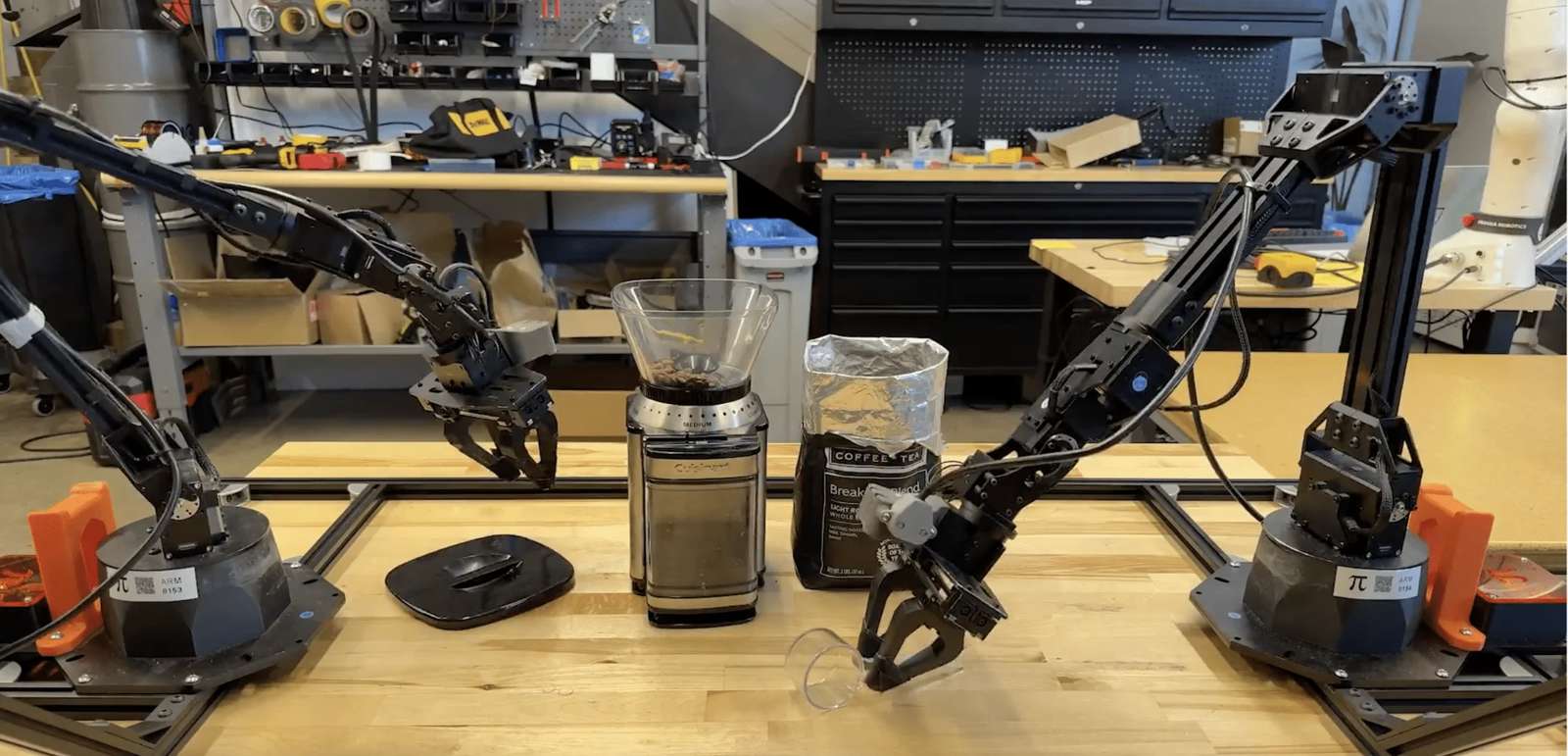
Founded this year, Physical Intelligence’s mission is to bring general-purpose AI into the physical world. The company has developed a general-purpose robotic foundation model, π0 (pi-zero), as a first step toward its long-term goal of developing artificial physical intelligence.
The company is led by co-founder and CEO Karol Hausman, a former Google robotics scientist. Other co-founders include Sergey Levine, a professor at the University of California, Berkeley, and Lachy Groom, an investor and ex-executive at Stripe.
The company sees a future where users can easily direct robots to perform various tasks—similar to how people currently interact with large language models and chatbot assistants.
“Like LLMs, our model is trained on broad and diverse data and can follow various text instructions. Unlike LLMs, it spans images, text, and actions and acquires physical intelligence by training on embodied experience from robots, learning to directly output low-level motor commands via a novel architecture,” the company said in its blog post.
Its recent research has demonstrated the software’s capabilities, showcasing robots performing diverse tasks such as folding laundry, clearing tables, and flattening boxes. According to the company’s executives, the software’s versatility positions it as a “true generalist,” setting it apart from more task-specific robotics A.I. software.
As competition in the robotics industry heats up, other companies are also pursuing ambitious goals. Skild and Figure AI are developing multi-purpose robotic intelligence systems, while Sanctuary AI is focused on creating humanoids with human-like intelligence.
Tesla recently joined the fray, with CEO Elon Musk showcasing Optimus, a humanoid robot which can perform everyday tasks such as dog-walking, lawn-mowing, and household chores, even interacting in Gen Z slang with expressive hand gestures.
Amazon, meanwhile, sees robotics as a way to streamline operations and cut delivery times, signaling the growing interest in applying robotics across various industries.
- Coforge Revenue Rises 54% as AI Engineering and Deal Bookings Gain Momentum
- Tech Mahindra Partners With SpaceXSI to Bring AI Into Software Engineering
- Infosys AI Revenue Rises 29% in Q2, FY27 Growth Guidance Cut
- LTM Launches BlueVerse Industrial AI Lab in Chennai
- Chariot Launches Speech Recognition Model for 10 Indian Languages
- Meta Expects Up To $145 Billion In Capex As AI Investments Expand