Key takeaways
- Establish an indigenous AI ecosystem with BharatGen and L&T's new sovereign AI compute alliance.
- Develop custom AI chips and infrastructure tailored to India's linguistic and sectoral needs.
- Reduce reliance on imported AI hardware through local silicon design and data center capabilities.
- Support diverse applications across governance, education, and industry using locally optimized AI models.
- Highlight national significance with collaboration endorsed by the Indian government's scientific advisers.
BharatGen has signed a memorandum of understanding with L&T Semiconductor Technologies and Larsen & Toubro-Vyoma to jointly design, build and deploy what the partners describe as an end-to-end sovereign AI compute platform for India.
The collaboration seeks to integrate three foundational elements of a domestic AI ecosystem: Indian-designed silicon, sovereign data centre infrastructure and locally optimised AI models.
Under the agreement, L&T Semiconductor Technologies will develop custom AI application-specific integrated circuits (ASICs) and xPU chips tailored to BharatGen’s workloads. These chips are expected to be optimised for large language models, small language models and multimodal systems aligned with India’s linguistic and sectoral requirements.
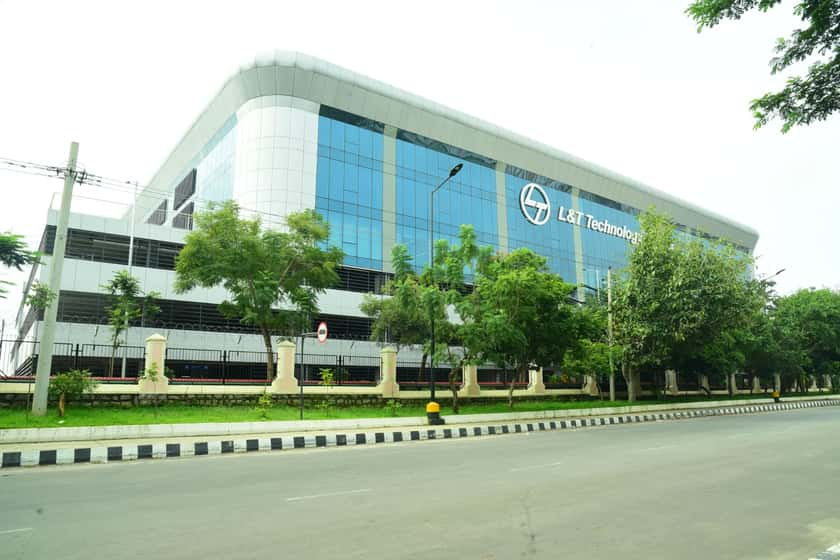
Infrastructure support will come from Larsen & Toubro-Vyoma, which will provide AI-ready data centre capacity, including its 30 MW facility in Kanchipuram. The companies said the infrastructure would be designed to support high-density AI compute and scalable deployments across public and private-sector use cases.
BharatGen will define and co-optimise the AI workloads, focusing on foundational models built for India’s 22-plus official languages and diverse application needs spanning governance, education and industry.
The MoU was signed in the presence of Prof Ajay Kumar Sood from the Office of the Principal Scientific Adviser to the Indian government and Dr Parvinder Maini, Scientific Secretary at the same office, underscoring the initiative’s national significance.
The partners said the alliance represents a step towards reducing reliance on imported AI hardware and cloud infrastructure at a time when countries are increasingly prioritising technological self-reliance.
By combining silicon design, data centre capacity and indigenous model development, the consortium aims to establish a vertically integrated AI stack built in India, for India.
Spotted an error? Tell our editors. Read our editorial standards and corrections.