
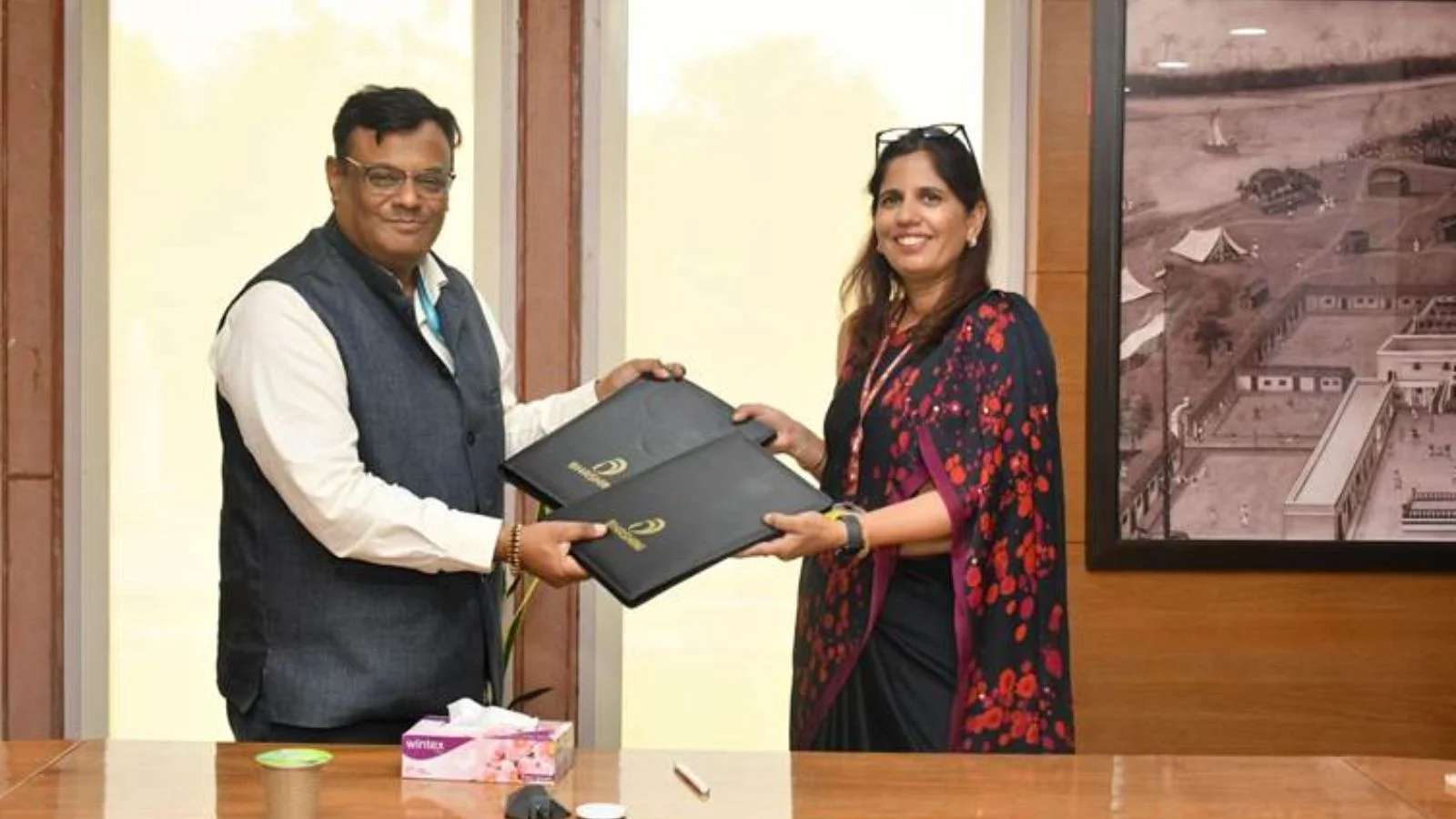
The Department for Promotion of Industry and Internal Trade (DPIIT) and the Digital India BHASHINI Division (DIBD) have signed a Memorandum of Understanding (MoU) to strengthen multilingual digital access across India's investment and industrial ecosystem.
The collaboration, signed under the "BHASHINI Seva/Sanchalan – A BHASHINI Sahayogi Program," seeks to integrate multilingual capabilities into DPIIT's digital platforms using the BHASHINI platform, India's national language digital public infrastructure.
Under the agreement, entrepreneurs, startups, investors, businesses, and citizens will be able to access government information, services, and policy resources in any of the 22 languages recognised under the Eighth Schedule of the Constitution, helping reduce language barriers in India's rapidly expanding innovation and investment landscape.
The initiative will focus on enabling multilingual governance and service delivery through a range of BHASHINI-powered solutions, including Udyat, Mitra, AppMitra, and Pravakta. The partnership will also support the integration of translation APIs, development of domain-specific language models, creation of multilingual glossaries, deployment of voice-enabled technologies, and expansion of linguistic datasets.
According to the government, the collaboration is aimed at making India's investment ecosystem more inclusive by ensuring that access to startup services, industrial schemes, policy communication, and citizen engagement is not limited by language.
The two organisations will also work on strengthening multilingual AI models tailored to sectors such as investment promotion, industrial development, entrepreneurship, and innovation. The focus will be on building voice-first and AI-enabled experiences that can serve users across India's diverse linguistic landscape.
Officials noted that multilingual technologies are becoming increasingly important in expanding participation across India's startup, manufacturing, and innovation ecosystems. The initiative is expected to improve access to economic opportunities for users who may not be comfortable engaging with digital services in English or a limited set of languages.
Beyond technology deployment, the partnership will encourage language data contributions, awareness programmes, capacity-building initiatives, and broader adoption of multilingual AI tools among institutions and stakeholders connected to DPIIT.
- In a Stunning Fall, Jensen Huang Resigns as NVIDIA Chief After 33 Years
- Space Tech Startup Astrome Bags ₹64 Cr RDI Fund for AI Satellite Network
- Siemens Wants to Continue NVIDIA Partnership Even If Jensen Huang is Ousted
- LTM Integrates AI Tool to Fix Quantum Computing Errors on IBM
- Chariot Launches Multilingual TTS Model with Support for 11 Indian Languages
- Lenovo Unveils New AI, HPC Servers With AMD’s 6th Gen EPYC Processors