Key takeaways
- IBM has successfully connected two cryogenic modules to support the scaling of future quantum computers.
- The modules are designed to link hundreds of quantum chips, advancing IBM's roadmap for a fault-tolerant quantum computer by 2029.
- Each module offers significantly more wiring space, enabling increased connections between quantum chips.
- The innovative box-shaped design allows for efficient connection of multiple quantum processors using L-coupler technology.
- IBM plans to install Quantum Nighthawk processors in the modules for further testing and expects to house thousands of qubits by 2029.
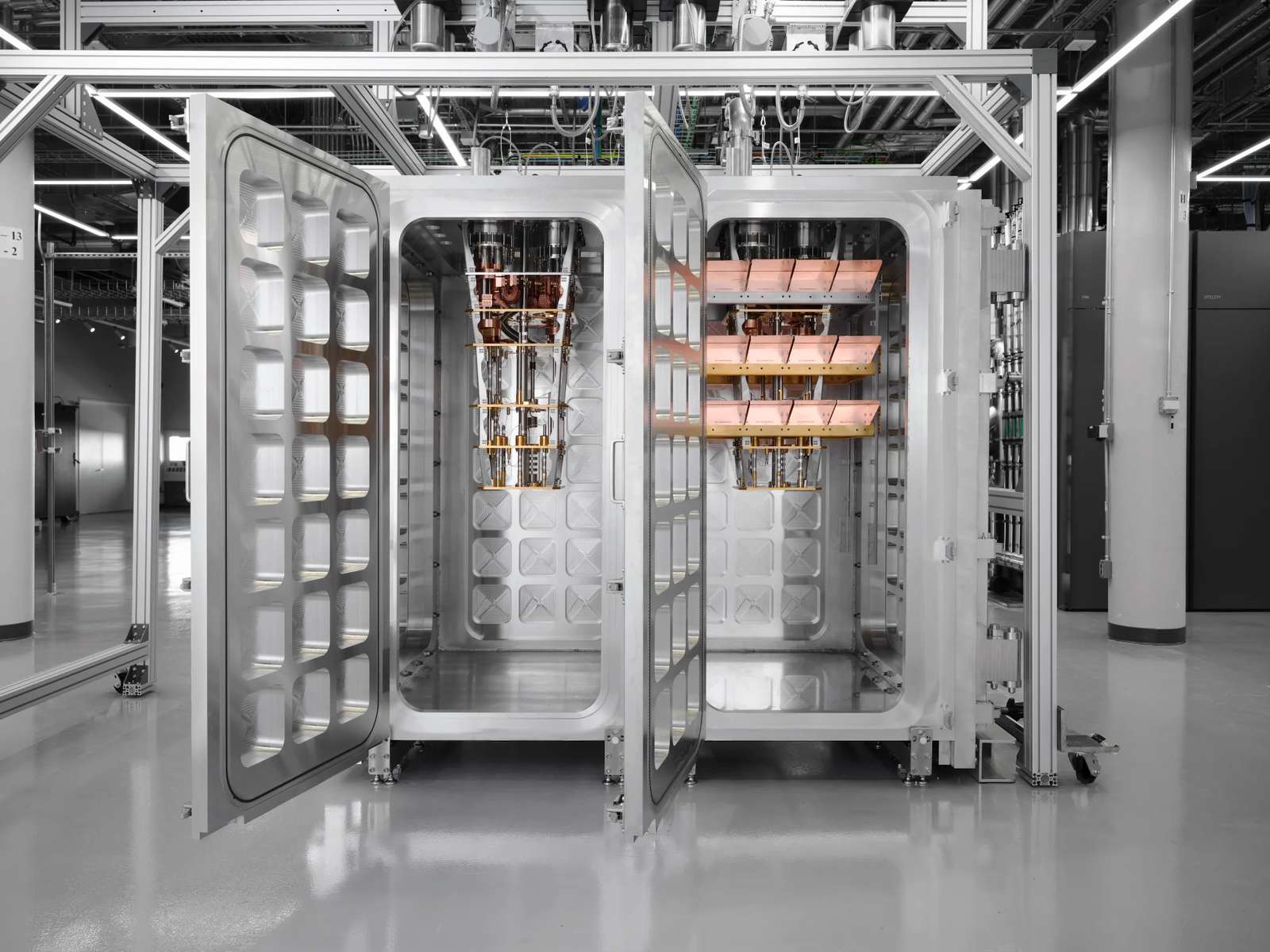
IBM has connected and cooled two modular cryogenic systems into a single environment. The modules are designed to link hundreds of quantum chips and support the scaling of future quantum computers.
The company said the development advances its roadmap for IBM Quantum Starling, which it plans to deliver in 2029 as a fault-tolerant quantum computer.
The two modules reached temperatures below 15 millikelvin after cooling to 4 kelvin in under five days. Together, they stand more than eight feet tall and eight feet wide. Each module provides up to 12 times more wiring space than IBM’s most widely used quantum systems.
This space will enable more connections between quantum chips.
IBM’s new box-shaped design allows the modules to connect in a row. The company will use its L-coupler technology to connect separate quantum processors. L-couplers allow processors to share information and operate as part of a larger quantum computer.
It plans to use L-couplers by 2027 to connect multiple processors into a system with at least 1,000 programmable qubits. The company will install its Quantum Nighthawk processors in the cryogenic modules later this year for further testing. By the time Starling is delivered, IBM expects each module to house thousands of qubits.
It also said the new architecture allows key components of its Quantum System Two environment to operate independently. This could let the company test, improve and iterate each component separately.
IBM introduced its plans for Starling last year alongside a new error-correction code. The company said the code reduces the physical resources needed for fault-tolerant quantum computing. It has since demonstrated hardware components and made progress in error-correction decoding.
“Bringing fault-tolerant quantum computers to industries depends on several fundamental advances,” said Jay Gambetta, Director of IBM Research and IBM Fellow. “The successful connection and operation of these cryogenic modules signals a leap forward in that direction.”
IBM said the new modules address another engineering challenge on its path towards fault-tolerant quantum computing. The company expects the scalable architecture to speed development as it works towards Starling’s planned 2029 delivery.
Spotted an error? Tell our editors. Read our editorial standards and corrections.