
In a major push to strengthen Karnataka’s innovation ecosystem beyond Bengaluru, the state government has approved four strategic initiatives worth over ₹27 crore spanning startup acceleration, industry-academia collaboration, medical robotics, and advanced genome-editing research.
The projects, approved through the Department of Electronics, IT, Biotechnology and Science & Technology (ITBT), Karnataka Innovation and Technology Society (KITS), Karnataka Digital Economy Mission (KDEM), academic institutions, and ecosystem partners, are aimed at accelerating entrepreneurship, enhancing employability, and strengthening Karnataka’s leadership in deep-tech innovation.
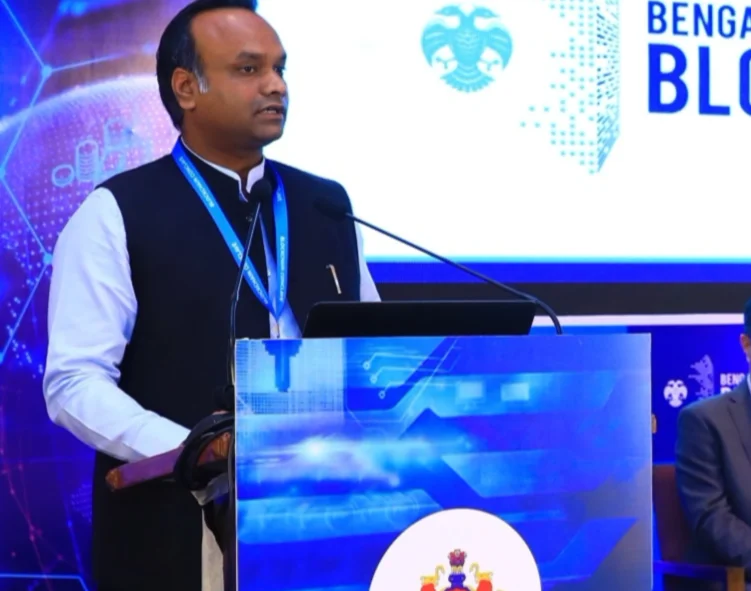
“These approvals reflect Karnataka’s commitment to investing across the full innovation spectrum—from startups and talent development to frontier research in biotechnology, genomics and medical robotics. By strengthening regional innovation ecosystems, industry-academia partnerships and deep-tech research capabilities, we are creating the foundations for the next generation of jobs, enterprises and scientific breakthroughs,” said Priyank Kharge, Karnataka Minister for Home, IT and BT, and e-Governance.
The largest allocation includes ₹9.26 crore over five years to establish the K-Combinator Startup Accelerator in Mangaluru in partnership with TiE-Mangaluru under the Local Economy Accelerator Programme (LEAP). The accelerator will support startups in the Udupi-Mangaluru region through mentorship, access to funding, market linkages, and ecosystem support, with a focus on helping early-stage ventures achieve product-market fit and scale.
The government has also sanctioned ₹7.47 crore for the Super 100 Industry-Academia Adoption Programme, which will create one-to-one partnerships between 100 industry partners and 100 higher education institutions, particularly across tier-2 and tier-3 cities. Implemented through KDEM, the programme aims to bridge the gap between academic curricula and industry requirements through mentorship, faculty development, research collaboration, and real-world projects.
On the deep-tech front, Karnataka has approved ₹3.66 crore for the development of an Advanced Surgical Assistive Robot, an indigenous collaborative robotic platform designed for neurosurgical applications. The project will be jointly developed by IIIT-Bengaluru and NIMHANS and aims to improve precision, safety, and accessibility in complex surgical procedures through advanced imaging, sensors, real-time monitoring systems, and software-assisted interventions.
Further strengthening the state’s biotechnology ambitions, the government has sanctioned ₹6.8 crore to expand infrastructure at the Centre for Human Genetics, Bengaluru. The expansion will support the newly established Institute of Advanced Genome Editing and Gene Therapy and create nearly 1,500 square metres of advanced scientific infrastructure, including clean rooms, tissue culture laboratories, and next-generation sequencing facilities.
Two of the four initiatives fall under the state’s LEAP programme, which seeks to create stronger innovation ecosystems outside Bengaluru and unlock new opportunities for entrepreneurship and economic development across emerging regional hubs.
The latest approvals come as Karnatakafaces increasing competition from states such as Telangana, Tamil Nadu, and Maharashtra in attracting startups, research investments, and deep-tech innovation. By focusing simultaneously on startup growth, talent development, biotechnology infrastructure, and indigenous technology development, the state is seeking to reinforce its position as India’s leading innovation and technology hub.
Collectively, the initiatives represent a strategic investment of ₹27.19 crore aimed at building stronger regional innovation ecosystems, promoting industry-academia collaboration, advancing healthcare and biotechnology research, and supporting the development of globally competitive startups and deep-tech solutions.

Your reaction