
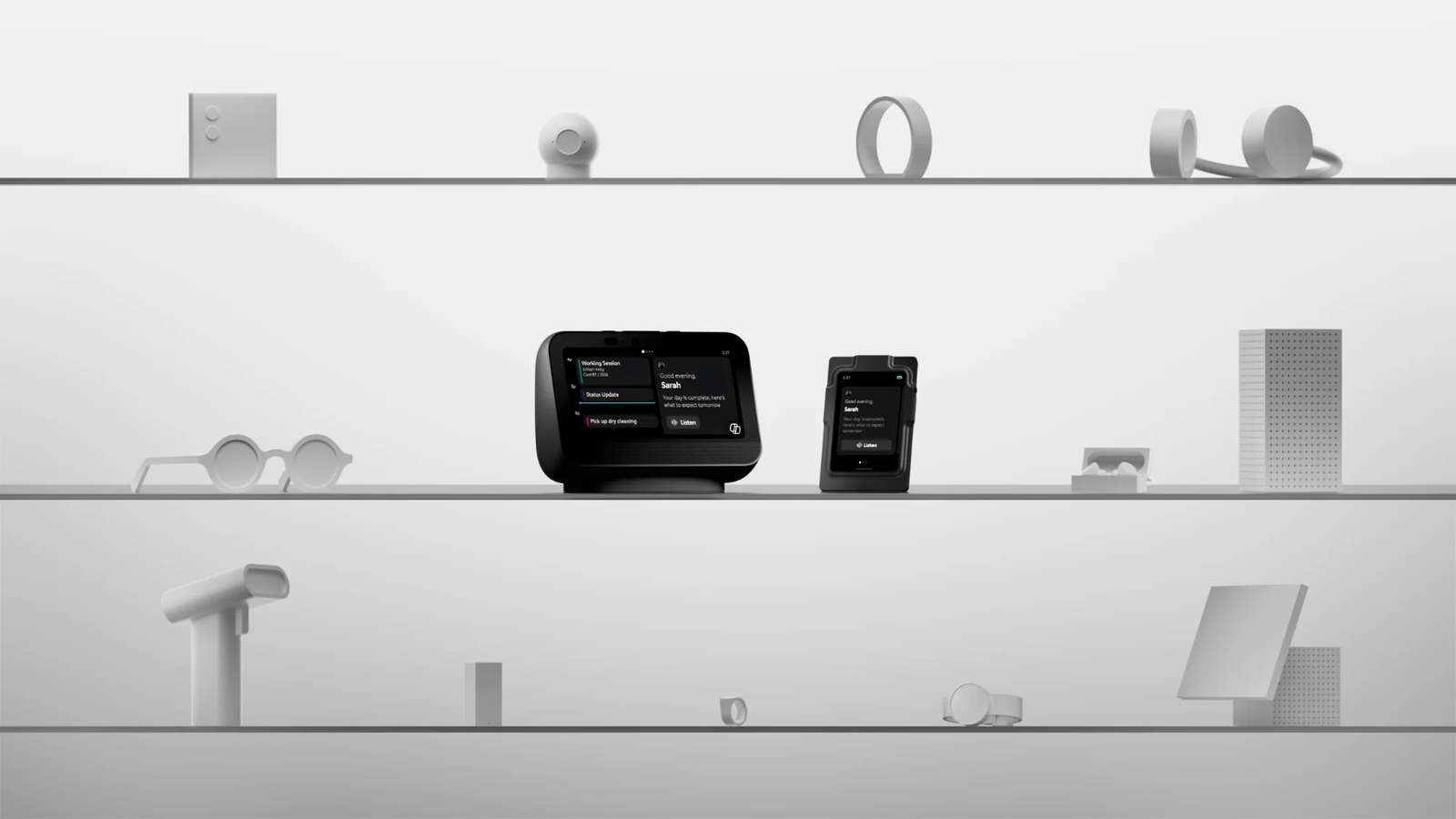
At Microsoft Build 2026, Microsoft introduced Project Solara, a platform for a new generation of AI devices in form factors beyond smartphones, as it pushes computing beyond traditional apps.
Built on Microsoft’s Device Ecosystem Platform (MDEP), which is based on the Android Open Source Project (AOSP), the platform allows AI agents to understand requests, access information, and take actions across services on behalf of users.
“Agents enable us to create new types of computers that are more specific, more contextual, and closer to where they add value, without rebuilding the entire stack every time. This is the mission of Project Solara,” Microsoft said in a statement.
The company added that MediaTek and Qualcomm are the first chip partners for Project Solara, supporting initial device concepts and future form factors.
As part of the launch, Microsoft showcased two reference devices built on the platform.
One concept is a desk device that looks like a smart display. It includes facial recognition, a touchscreen, microphones, and a camera. The device sits on a table and uses AI agents to help with everyday tasks. It is powered by MediaTek chips.
The second concept is a wearable badge for work. This small device has a display, 5G connectivity, a camera, microphones, and a fingerprint scanner. Workers can use it for hands-free assistance, such as transcribing conversations or taking quick actions with a single button press. It runs on Qualcomm silicon. Both devices are still early reference designs and are not yet available for sale.
Several large organisations, including AccuWeather, Best Buy, CVS Health, Levi’s, and Target, have already shown interest and plan to test the platform in areas such as retail and healthcare. With this launch, Microsoft is moving quickly in the race to build hardware for the agent era.
OpenAI, which acquired former Apple designer Jony Ive’s startup io in a $6.5 billion deal in 2025, is also preparing its first AI hardware product. Earlier this year, OpenAI Chief Global Affairs Officer Chris Lehane said the company is on track to unveil its first device in the second half of 2026.
- ReNew Pledges ₹80,000 Cr for Green Data Centre to Fuel India’s AI Push
- Mars Opens Hyderabad GCC With Genpact to Expand Digital, AI Capabilities
- Shield AI Opens Bengaluru Engineering Office to Build Defence Autonomy Software
- Adobe, Google Expand AI Partnership Across Creative and Productivity Tools
- Google Launches Gemini 4 Hydrogen for Faster Coding and AI Workflows
- Kalshi to Develop Trading Platform for Compute Futures: Report