
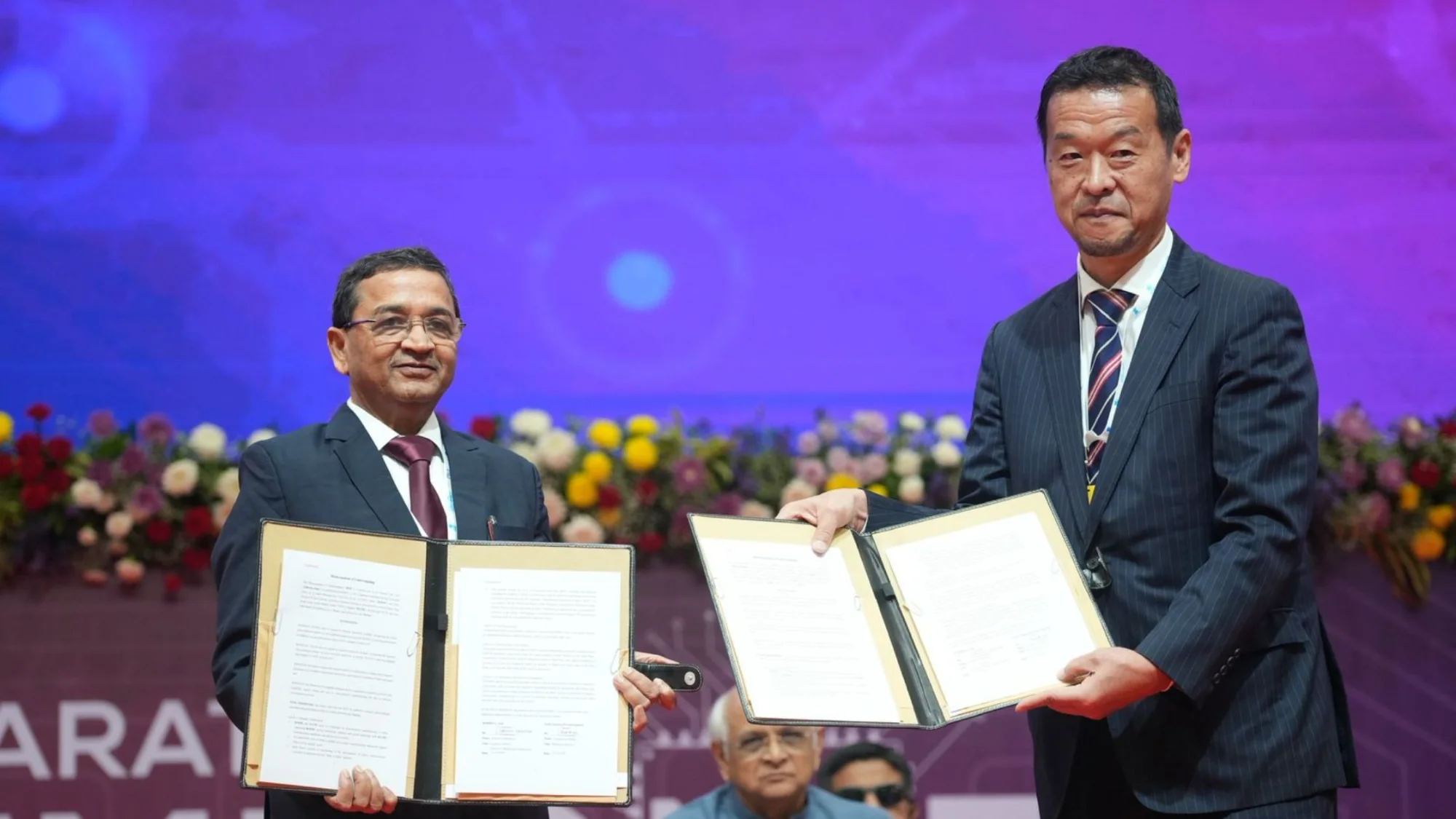
Japan’s ROHM Semiconductor and Gujarat’s OSAT company, Suchi Semicon, have announced a partnership for semiconductor manufacturing in India. The companies said the collaboration will strengthen India’s manufacturing capabilities and serve domestic and global markets.
The development was announced at the Gujarat SemiConnect Conference 2026, held in Gandhinagar, with a key focus on India’s gateway to silicon.
ROHM said that it will consider outsourcing back-end processes for power devices and IC products to Suchi Semicon. It has started technical evaluations and may begin mass production shipments in 2026.
The companies said the partnership aligns with India’s “Make in India” objective. They aim to support industry demand and build a scalable manufacturing framework in the country.
ROHM plans to work with Suchi Semicon to create an early-stage manufacturing base in India. The move comes as the semiconductor industry prepares for higher demand in the coming years.
The companies will also share a roadmap to expand the production of locally manufactured semiconductor packages. They said the partnership will go beyond manufacturing. Both firms will explore new business development opportunities to meet the growing demand for locally produced semiconductors in India.
Suchi Semicon will support joint marketing initiatives using its local expertise. The companies said they intend to build a long-term alliance that supports the sustainable growth of India’s semiconductor industry.
Earlier in an interaction with AIM, Shetal Mehta, Founder of Suchi Semicon, said, “Gujarat is actually becoming the hub of semiconductor manufacturing, where the hub exists, talent, suppliers, and ecosystem players will naturally develop.”
Based in Surat, the company has started manufacturing and shipping devices to the United States. “We are the first company on Gujarat soil to start operations, manufacture a device, and actually ship it to the US,” Mehta said.
Suchi Semicon’s pilot line in Surat has a capacity of 1.3 lakh chips per day. For now, it is running sample batches for customers across the US, Europe, Japan, Singapore, and India, with mass manufacturing expected to follow customer qualifications.

Your reaction