Key takeaways
- Highlight the challenges faced by AI startups in 2025, leading to several closures.
- Identify lack of investor interest and poor product-market fit as key reasons for failures.
- Emphasize the disconnect between marketing claims and operational realities in some startups.
- Note the swift financial decline of companies like Builder.ai due to operational debt and disputes.
- Acknowledge the competitive nature of the AI industry and the importance of scalability for success.
2025 has been a pivotal year for AI, with technology finally moving from hype to actual deployment and models becoming more capable. However, a few AI startups couldn’t keep up with the race and had to shut shop due to lack of investor interest, poor product-market fit or other internal bottlenecks.
Here are seven AI startups that closed in 2025.
1. Builder.ai
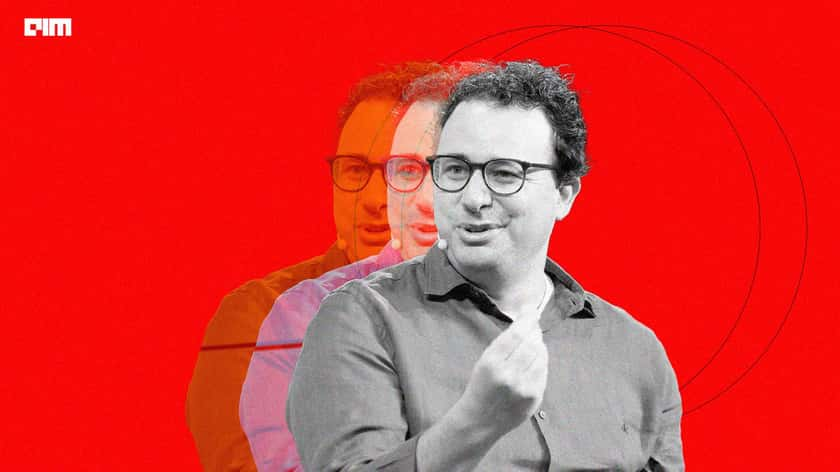
Builder.ai entered insolvency in 2025 after nearly a decade of promising AI-powered app building. Founded in 2016 by Sachin Dev Duggal and Saurabh Dhoot, the company began as Engineer.ai. It was headquartered primarily in the United Kingdom and the United States, with subsidiaries in India, Singapore, and other locations.
The company positioned itself as a platform that could assemble fully functional applications with minimal human involvement, but investigations later revealed that much of the development work was handled manually by offshore teams. This mismatch between marketing claims and operational reality began eroding trust.
The financial unravelling came quickly, with revenue inconsistencies, increasing operational debt, and a major creditor dispute eventually pushed the company into insolvency proceedings.
2. CodeParrot
CodeParrot, a YC-backed AI developer-tool startup, shut down in mid-2025 after struggling to scale its flagship product. The startup, founded by Vedant Agarwala and Royal Jain in 2022, had raised $500,000.
The company focused on converting design elements, such as Figma screens and interface mockups, directly into React components or full-stack code. While the concept was strong and early demos impressed developers, the product failed to generate production-grade code that teams could confidently deploy. It struggled with a long period of ‘pivot hell’, frequently changing its product for a viable business model, resulting in diluted focus and confused investors.
As heavier competition emerged—including from GitHub Copilot, Vercel, Replit, and several LLM-powered coding agents—CodeParrot’s niche advantage began to shrink.
3. Astra
Astra, an AI-powered sales intelligence startup founded in Bengaluru, closed operations in late 2025 after being active for just a year. Backed by Aravind Srinivas, co-founder of Perplexity AI, the company aimed to solve one of the biggest problems in enterprise SaaS by improving slow and inefficient sales pipelines. Its platform analysed calls, emails, and CRM data to provide deal insights and automate outreach workflows.
However, internal differences among co-founders Supreet Hegde and Rajan Rajagopalan and a lack of market readiness led to an organisational split and delayed key product milestones.
It also faced challenges around working with large enterprises and navigating lengthy sales cycles, especially at a time when data privacy concerns and hallucination risks were receiving more regulatory attention.
4. Subtl.ai
Subtl.ai, a Hyderabad-based GenAI knowledge-automation startup, shut down in July 2025 after failing to raise additional funding. The company built tools that allowed employees to query internal documents, SOPs, and databases using natural language, speeding up workflows across support, ops, and sales teams.
While subtl.ai had strong early traction and a compelling problem statement, it struggled with product-market fit at scale. Many companies experimented with the tool but did not convert to long-term paid plans, often citing accuracy issues or complexities in integrating large document bases. Funding conditions tightened in 2025, and without renewed capital, the founders decided to shut down operations.
5. Humane
Humane, the highly hyped consumer AI-hardware startup founded by ex-Apple veterans, effectively shut down operations in 2025 after discontinuing its AI Pin device. The startup sold its AI Pin business to HP Inc. for $116 million, including most of its employees, software platform, and intellectual property, after poor reviews and dwindling sales.
The company imagined a future beyond smartphones, one in which an AI wearable could answer questions, project an interface on the user’s hand, and serve as a personal assistant.
Despite an enormous wave of publicity, the AI Pin faced problems immediately after launch: short battery life, overheating, inconsistent responses, and an unclear use case.
Reviews were overwhelmingly negative, and return rates soared. The hardware-AI integration proved far more complex than anticipated, requiring real-time inference that the device couldn’t reliably support.
6. Wuri
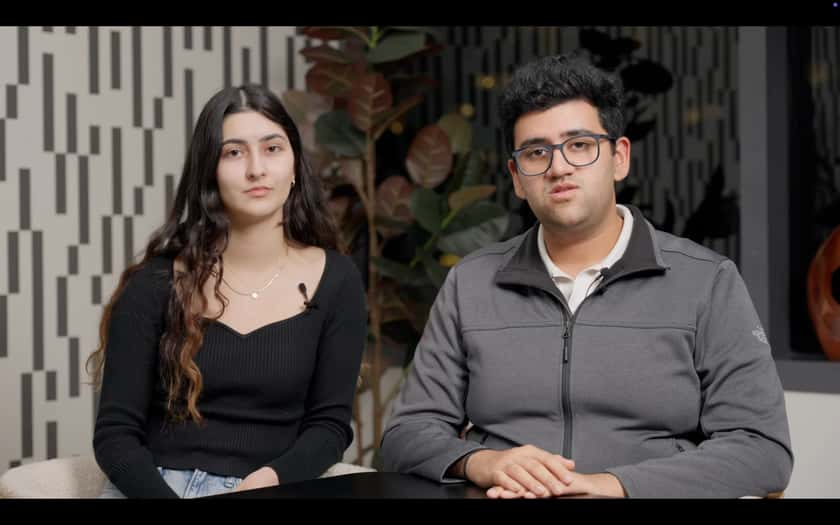
YC-backed AI startup Wuri shut down after struggling to achieve sustainable growth. Founded as an enterprise AI startup, Wuri faced intense challenges, including high customer acquisition costs, difficulties in scaling products, and fierce competition from similar AI wrapper applications that lacked strong differentiation or proprietary technology.
The startup’s founder, Akshay Megharaj, described the fast pace of AI development as a major hurdle, noting that rapid change made it impossible to rely on past experience or traditional strategies.
7. Locale.ai
Locale.ai, an operations-intelligence and geospatial analytics startup, ceased operations in 2025 after struggling to scale its enterprise pipeline. The company built AI tools that helped businesses analyse logistics, supply chain anomalies, and rider or delivery patterns in real time.
Founded by Aditi Sinha and Rishabh Jain in 2019, the company faced critical challenges despite generating decent revenue and securing international customers.
After raising about $5 million and navigating several difficult economic periods, including the COVID-19 slowdown, the co-founders became severely burned out after years of nonstop work. Even though they saw new AI opportunities in sales automation, they chose to close the company responsibly by returning money to investors and helping customers move to other options.
Spotted an error? Tell our editors. Read our editorial standards and corrections.