Key takeaways
- Image classification is crucial for businesses to enhance efficiency and automate processes involving visual content.
- Rapid advancements in computer vision enable automated image tagging, improving search and filtering capabilities for users.
- The creation of ImageNet has significantly impacted research in image classification, fostering competition and innovation in the field.
- E-commerce businesses benefit from image classification techniques to manage large volumes of product images effectively.
- Ongoing research continues to push the boundaries of image classification, driving further developments in AI applications.
 With images becoming the fastest growing content, image classification has become a major driving force for businesses to speed up processes. Rapid advances in computer vision and ongoing research has allowed enterprises to create solutions that enable automated image tagging and automatically add tags to images to allow users to search and filter more quickly.
Enterprises that want to add more value to existing visual content or e-commerce businesses that deal with multiple product photos in a digital asset management (DAM) system or a web content management (WCM) environment used by an editorial staff on daily basis rely on image classification techniques to speed up business processes.
It all started with Google Cloud’s Fei Fei Li and Director of the Stanford Artificial Intelligence Lab and the Stanford Vision Lab who built ImageNet – a dataset originally published as a research paper in 2009 which evolved into an algorithmic competition to find out which algorithms could identify objects in images with the least error rate. The paper presented a new online database, a large-scale ontology of images that offers offers unparalleled opportunities to researchers in the computer vision community and serves as a catalyst for the AI boom. The annual ImageNet (image recognition) competition has improved the accuracy of classifying images and its winning researchers have donned on senior roles at Google, Baidu and Google-owned London-based DeepMind.
Given the explosion of image data and the application of image classification research in Facebook tagging, land cover classification in agriculture and remote sensing in meterology, oceanography, geology, archaeology and other areas -- AI-fuelled research has found a home in everyday applications.
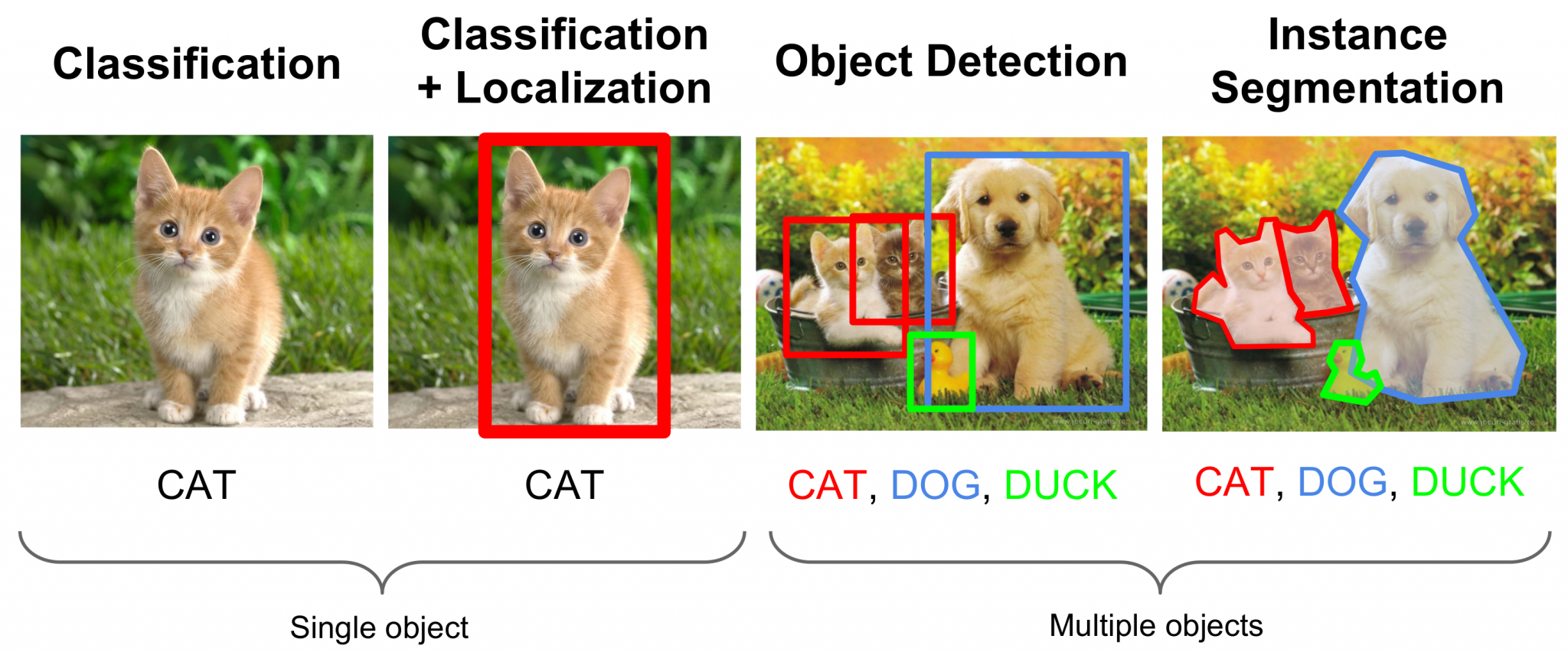
In this article, we list down top research papers dealing with convolutional neural networks and their resulting advances in object recognition, image captioning, semantic segmentation and human pose estimation.