

The seat may have been a little too high the first time he tried. He hesitates, misjudges, and steps back. On his second attempt, he mounts the bicycle. The road ahead stretches wide and patient. He pushes off. The bicycle responds instantly—wobbling for a moment, almost gently, before settling into a steady hum.
The breeze brushes against his face, awakening something his body hasn’t felt in a long time. His legs remember before his mind does. He leans forward, adjusts his posture with one hand, and the handlebar obeys. A quiet surge of joy rises within him. At a distance, his wife and two daughters mirror it—jumping, unable to contain their delight.
For most people, balancing on a bicycle is instinctive, something learned early and rarely forgotten. But for Azeem Akbar Patel, this moment carries a different weight.
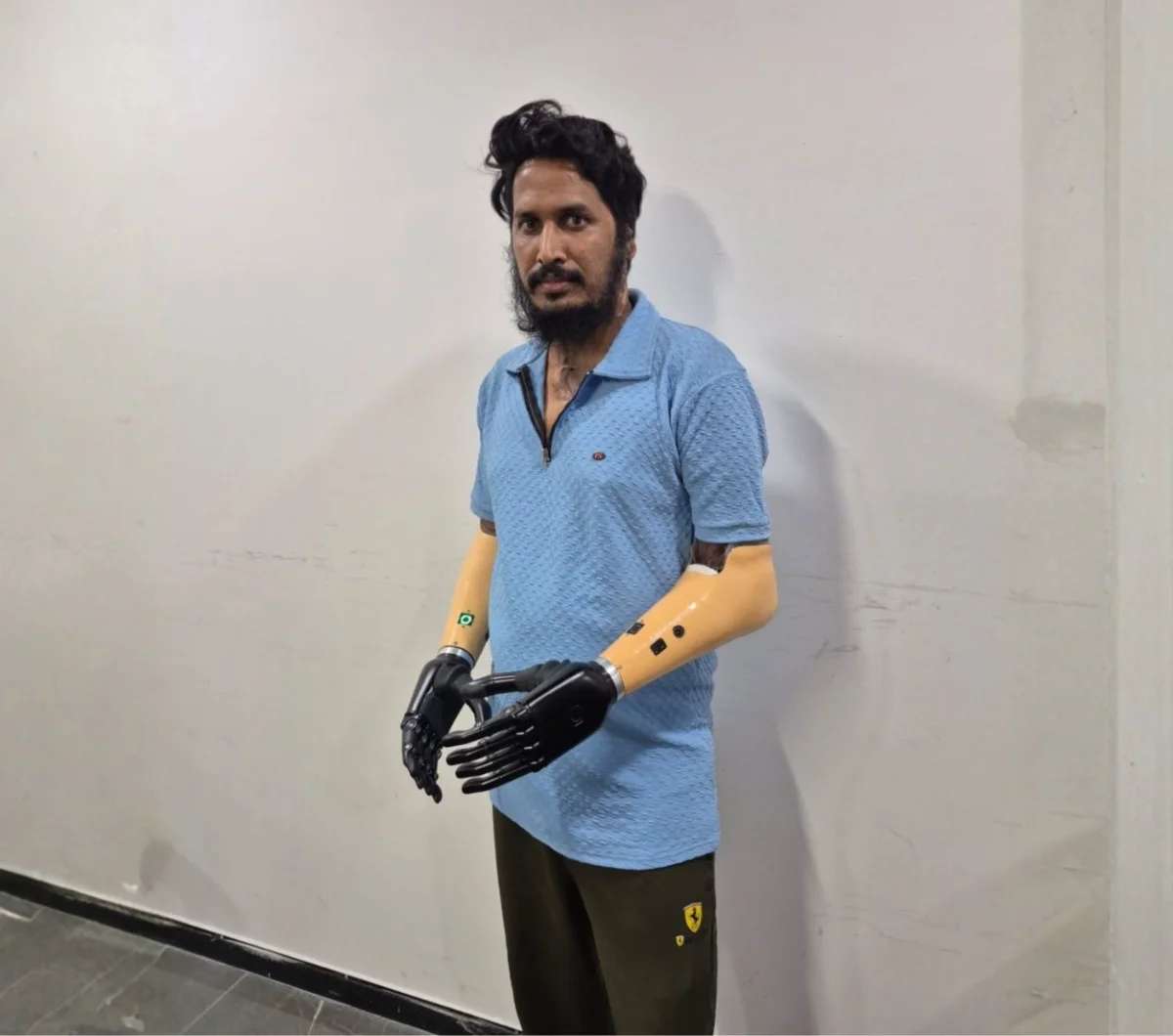
He stops, dismounts, and lifts his arm. There is no sensation of skin, no warmth. Only a silent, precise machine.
This is not a man relearning a childhood skill. This is a man who once lost both his hands, and is riding again with one returned.
At 34, Patel lives in a small, happy home in Pune with his wife and two young girls—one in Grade 2, the other still in nursery. Their life had been simple. He used to work as an auto-driver, ferrying schoolchildren every day.
In May 2023, during the school holidays, a friend invited him to take up temporary work at an IT park in Nigdi, a bustling residential and commercial locality in the Pimpri-Chinchwad region of Pune. It seemed like a small detour from routine.
It changed everything.
One day, while working, Patel suffered a severe electric shock. He was immediately rushed to the hospital. What followed, Patel explains, could’ve been avoided. If the doctors had carried out better emergency care, “cut a nerve ending, even one finger, I wouldn’t have lost both my hands.”
According to Patel, delays and negligence in emergency care allowed infection to spread through both arms. He recalls being kept in the intensive care unit longer than necessary.
He details that due to negligence, the infection spread throughout both his arms. He received this information while consulting with a doctor at the Sassoon General Hospital much later. Ultimately, the hospital had to amputate both his arms to prevent the infection from spreading further.
People around him began to believe he was “a dead man walking”. They took leave of him and his family.
Then came the aftermath.
Patel stayed home for one and a half years to recover from the injury. The wounds closed, but recovery did not feel like a return to life. He stopped stepping outside.
People stare, he says. “You feel they are looking only at that.”
He ruminates, “Without my hands, you know, I felt like I had been broken in half.”
Still, he did not give up. For hours, he would sit with his family, scrolling through YouTube and Google. Somewhere online, he believed, there had to be something that could help him live again.
“I didn’t want to sit like this,” he says. “[After] three years at home… the mind also stops working.”
Then, one day, a woman arrived at his home carrying what she claimed was a viable prosthetic solution. At that point, Patel’s family was already trying to raise money. Friends were contributing what they could. Small amounts were coming together with difficulty.
The offer arrived at the most vulnerable time. The woman assured him that if an accident were to happen, he would not be harmed. “The arm will just simply detach and break.”
Something about that did not sit right with him. What unsettled him especially was how quickly the conversation turned to money. Then came the evasions. The woman would not pick up her phone for days.
Patel stepped back. So did his family and friends. In hindsight, it was a narrow escape.
By then, the medical bills had already crossed ₹15 lakh from all the hospital visits. There was no insurance. The money had come from friends, the mosque community and the neighbours. “Whatever I am today,” he says, “is because of public support.”
But the search did not end. During another late-night search, Patel came across a phone number online. He called it. That call led him to Makers Hive, an Indian startup.
Enter Makers Hive
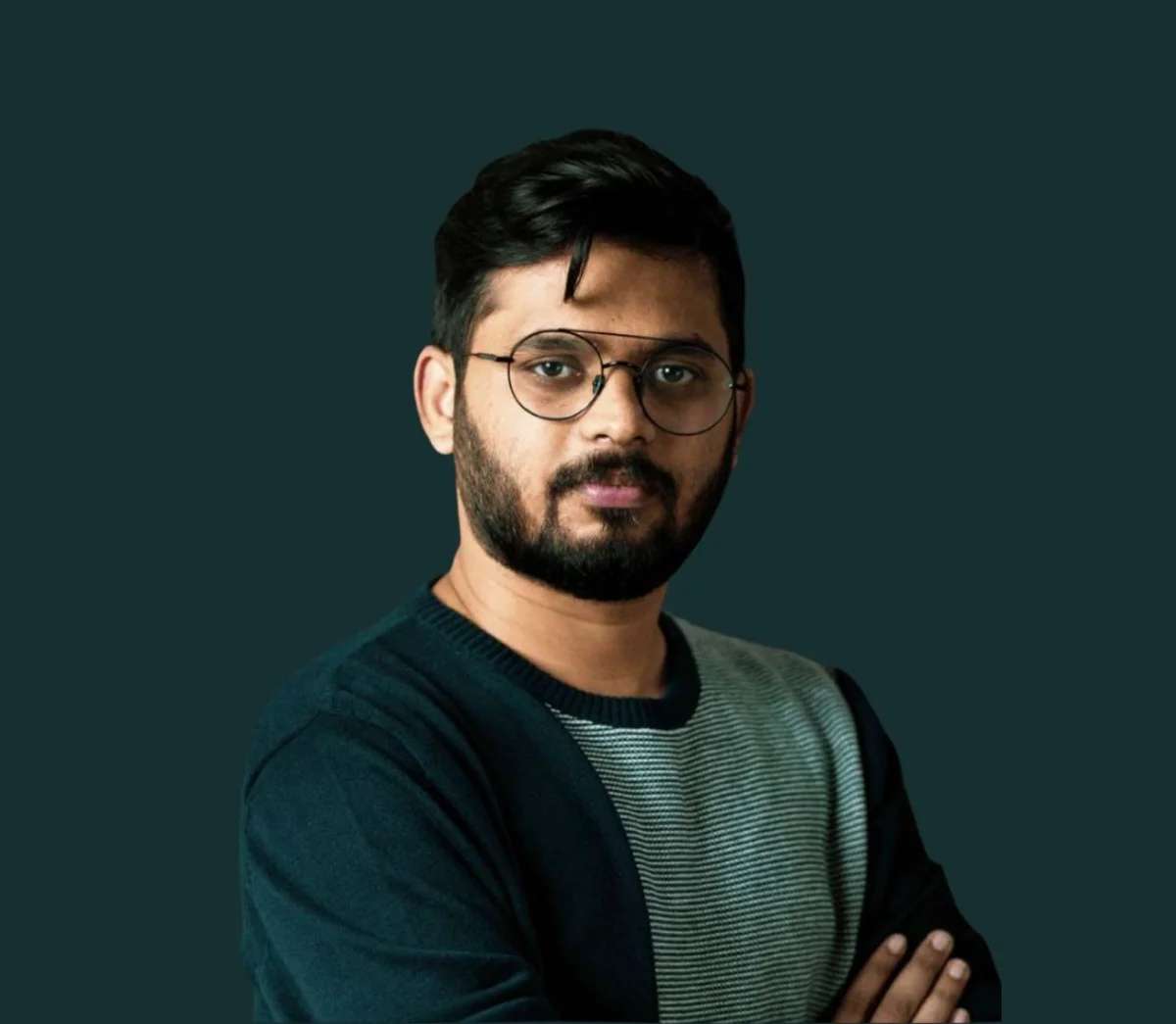
Years earlier in Hyderabad, Pranav Vempati, Founder and CEO of Makers Hive, had asked a bilateral amputee a simple question: “What is your dream?”
The man answered, “Dream? If I have to go to the washroom, my mother has to clean me. I don’t even have basic dignity.”
That answer shook Vempati. It changed the trajectory of his work. He had spent time with MS Swaminathan, often referred to as the father of India’s Green Revolution, who spoke about the four pillars on which a developing nation stands: agriculture, education, health and nutrition.
If technology were to have real impact, it would have to strengthen one of these pillars, Vempati says. Assistive devices, particularly upper-limb prosthetics, represented an obvious gap. “Affordability is not cheapness. It is accessibility.”
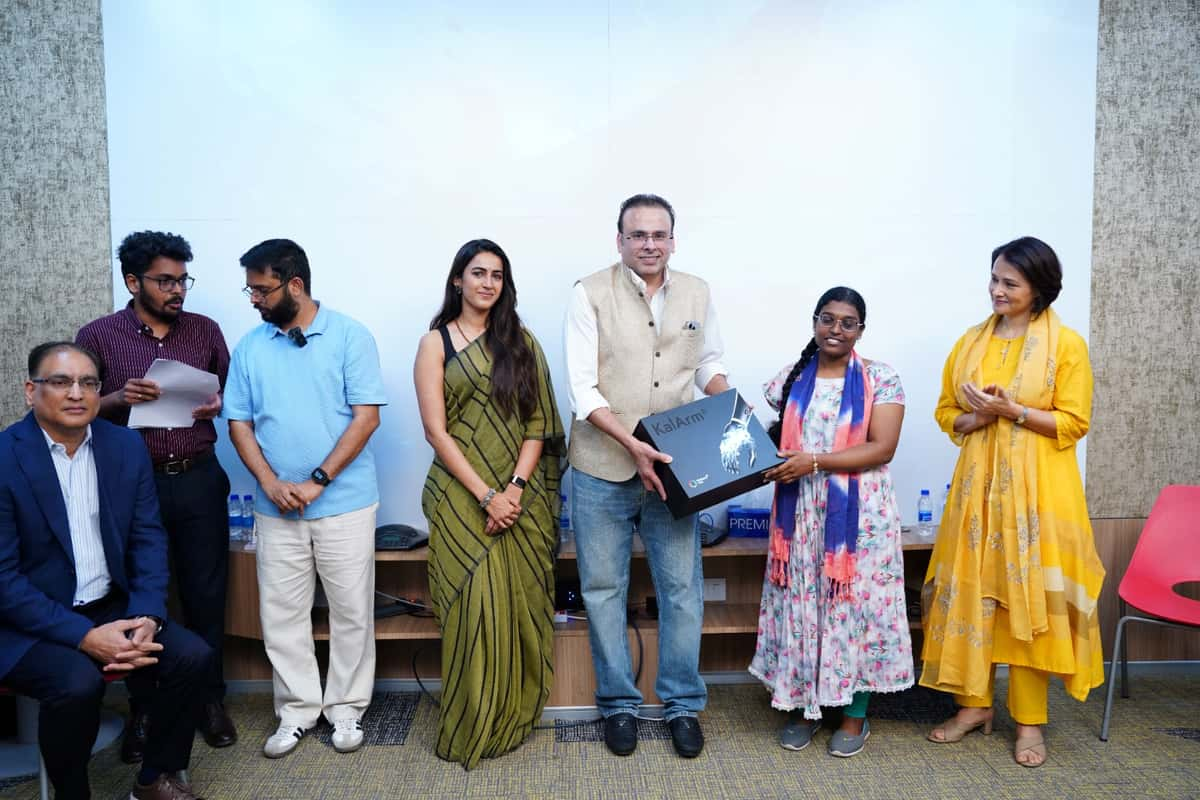
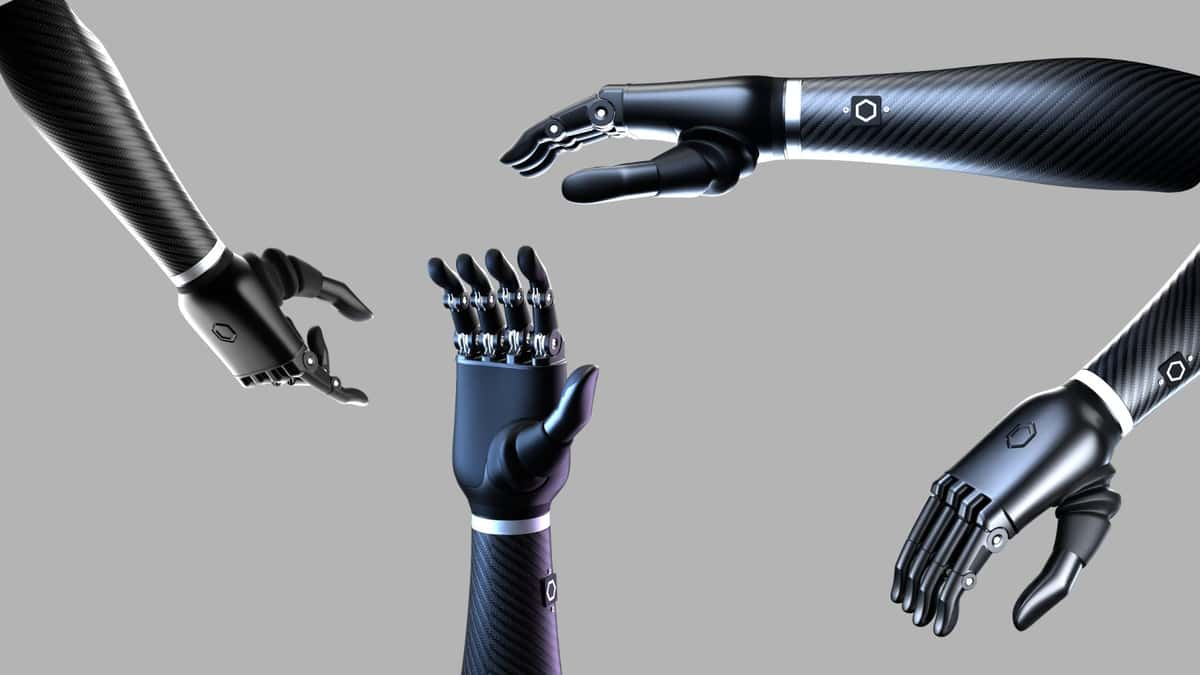
It took seven years, six product iterations and close to ₹30 crore in funding to build KalArm, a myoelectric bionic arm priced between ₹4.5 lakh and ₹6 lakh, significantly lower than imported alternatives. A lighter version, KalArm Lite, is also slated to launch for under ₹3 lakh.
“Six months from now, we have KalArm Lite out in the market, eight to nine months from now, we have KalArm entering the international markets, and probably nine to 12 months from now, we’ll have KalArm X out in the market,” Vempati adds.
Instead of importing EMG sensor pairs costing ₹1.4 lakh, Makers Hive engineered its own for under ₹20,000. Today, the hand comprises 113 components sourced from vendors across India. Apart from microchips, nearly everything is domestically manufactured.
Vempati says their bionic hand is already being tested as an end effector, and that this early experiment has sparked interest from ISRO as well. These expansions mark one of India’s first attempts to use a domestically built bionic-hand platform to power industrial robotics, humanoid systems, and future mobility-assist devices.
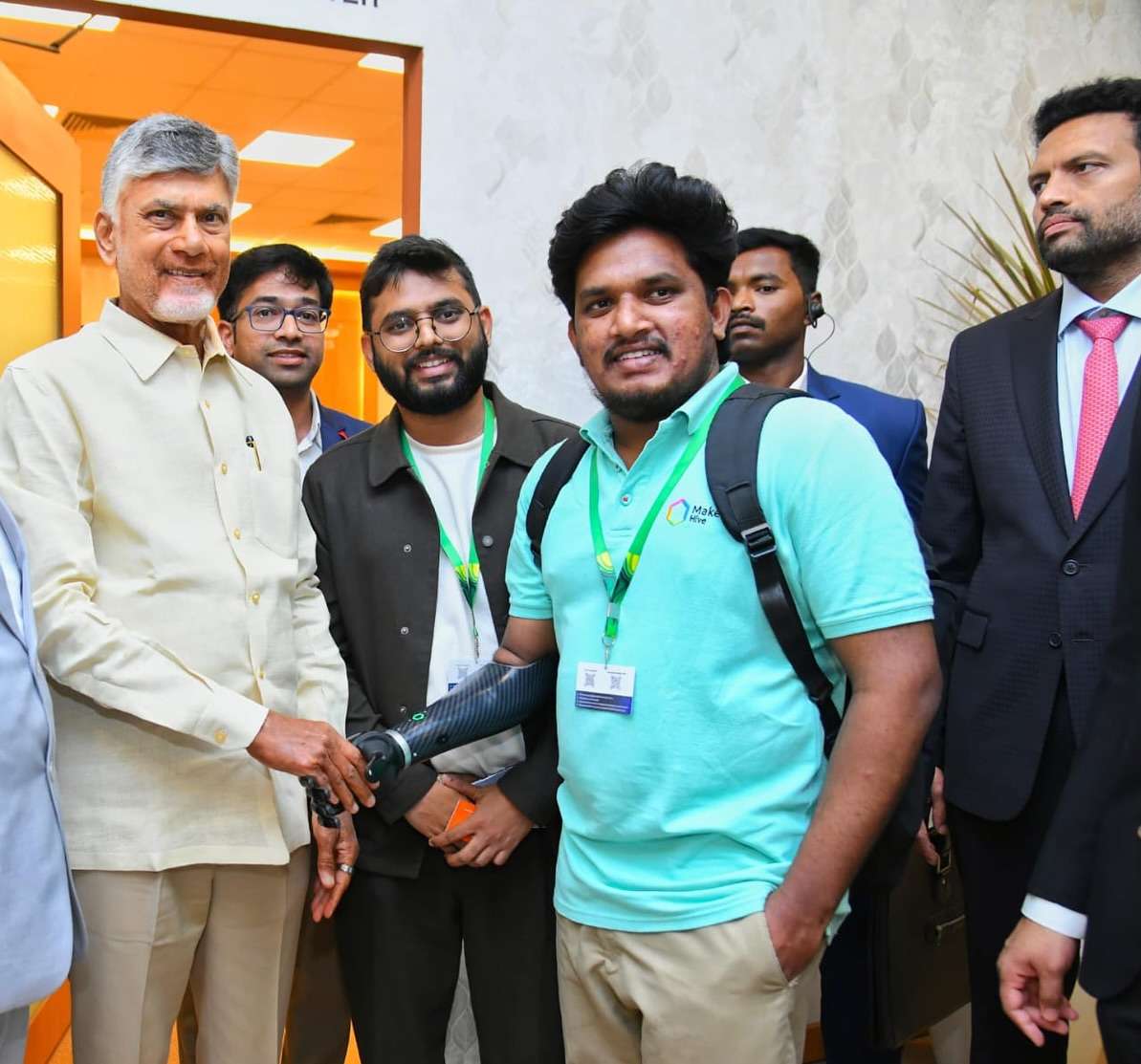
For Patel, the arm cost nearly ₹2.6 lakh for one. He has been using it for almost a year. Makers Hive reduced the price after hearing his circumstances, and generous donations filled the gap. Today, Patel can withdraw money from an ATM, hold and use a mobile phone, sign his name, and, most recently, even vote in the municipal elections.
“When I signed, the officer was looking only at the hand,” he says, laughing.
From the front, he says, the hand looks almost normal, especially under a full-sleeve shirt. The company is now working on a more cosmetic, human-like version.
What the State Offers
India has an estimated five lakh upper-limb amputees, according to rehabilitation studies. Access to prosthetics, however, remains sharply unequal.
Basic body-powered prosthetics are available through government hospitals and camps, often at subsidised rates. Advanced myoelectric limbs, the kind that respond to muscle signals, remain highly expensive due to imported components, sensors, and customisation.
India has a policy framework for situations like these. Under the Assistance to Disabled Persons (ADIP) scheme, the Ministry of Social Justice and Empowerment subsidises assistive devices, prosthetics included. Government hospitals run camps where basic body-powered limbs are available at subsidised rates, sometimes even free. For a country with five lakh upper-limb amputees, this matters.
But the scheme was designed for a different era of technology.
A body-powered hook and a myoelectric bionic arm with 27 grip modes exist in different universes, and the state has not fully caught up. Coverage caps for high-end devices remain low. Insurance reimbursement is inconsistent.
The gap between what policy imagines and what a bus accident survivor or an auto driver actually needs is still wide. What fills that gap, for now, is a patchwork: NGO support, community fundraising, hospital tie-ups, doctors writing handwritten notes requesting assistance for their patients.
It works, sometimes. It is not a system.
The One Who Didn’t Wait
Another customer, Alluri Dhanush Varma, doesn’t tell his story the way most people would. He is 23, and works in database management for Deloitte from his home in Vijayanagaram, Andhra Pradesh.
He had just completed his new joinee training at Deloitte and was on a bus going home. The bus overshot a bend and skidded into the mud on the left side of the road. Of everyone on that bus, he was the only one with major injuries.
But it wasn’t just the accident that led to the severity of the wounds. The ordinary mud carried bacteria that began consuming everything it touched. When he was taken to hospital, only his wrist was initially amputated. But the infection moved faster than the doctors expected. By the time they could stop it, they had to amputate four inches below his right elbow to prevent it from spreading further.
He was back at his keyboard within 14 days.
Before coming to Makers Hive, Varma had surveyed the field. A bionic arm from the United States was quoted to him at around ₹36 lakh, and options from Germany weren’t far behind.
“Cheap and reliable,” he calls KalArm. “It might not have as many features as the ones abroad, but for that price ratio, it’s a great device.”
The arm has 27 grip modes. He charges it two or three times a day, the same way he charges his phone. If something feels off, he opens the companion app on his phone, connects via Bluetooth, and reconfigures the mode himself.
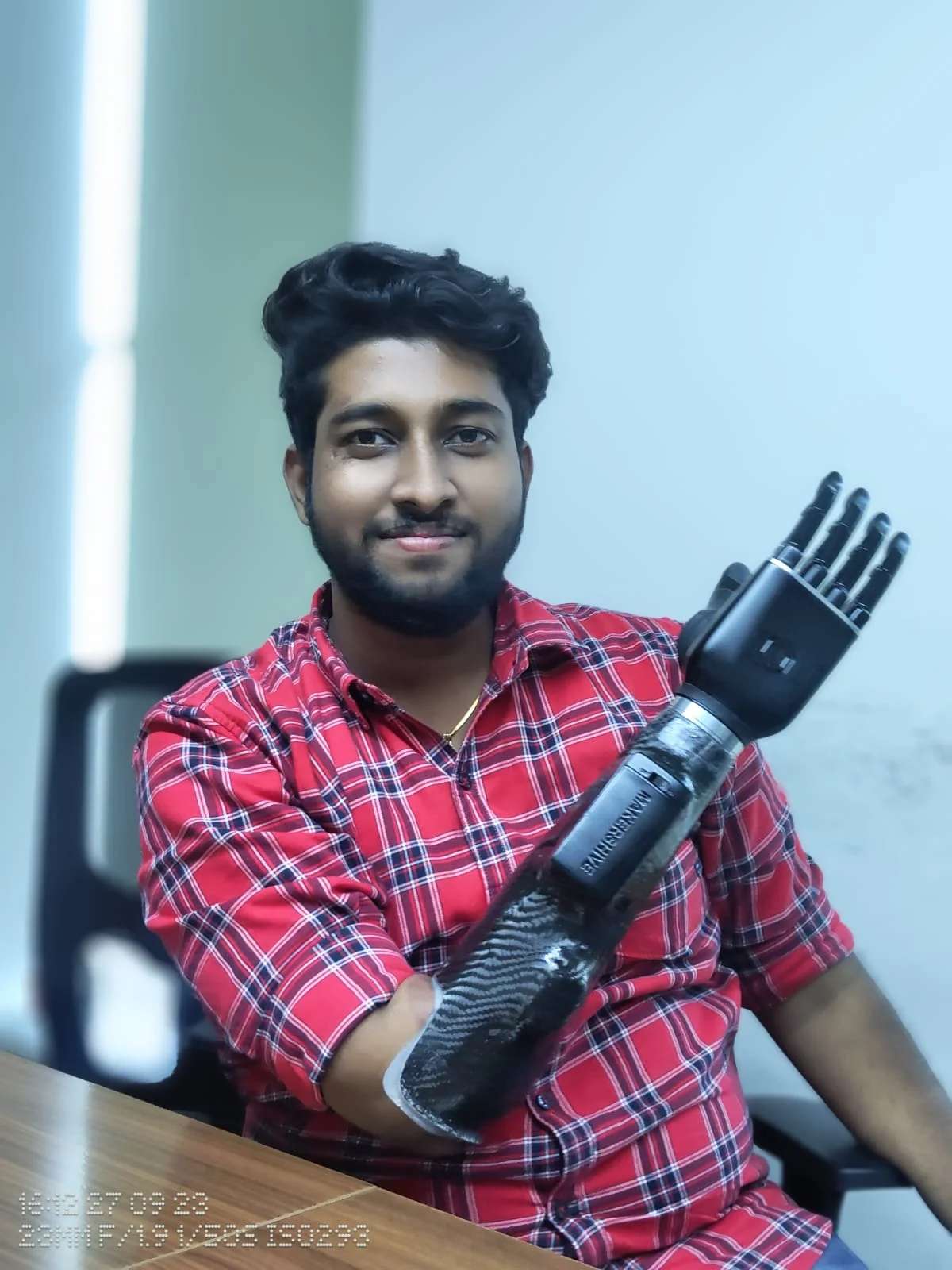
In his case, his parents took care of the payment for the device. He doesn’t know the exact price, only that it was upwards of ₹5 lakh. What he does know is that nothing else in the market came close for that price.
But there is something else Varma carries, something more unsentimental than bitterness and more honest than optimism. It is a view of the world that the accident sharpened rather than created.
“People asked me how I could work after 14 days of my accident,” he says. “It’s your life. No one would come after you. Only money matters. If you have money, irrespective of face or anything, people will come. If there is no money, even if you have good health, no one will come to you.”
He does not say this with anger. He says it the way someone states a law of physics, as if the way of the world still holds true, regardless of what tragedy one has endured.
What the Doctors Say
Dr Nikhil Tandon, an orthopaedic oncologist at Yashoda Medicity, a hospital in Ghaziabad, says the decision to amputate is never casual. “In traumatic amputations, there is often a crush injury where the limb is non-salvageable. Life comes before the limb.”
Patients are rarely prepared. Road accidents, electrical shocks, and industrial injuries happen suddenly. The questions that follow often arise from a society that treats disability as a rupture in the idea of a “perfect” body.
“How will I manage daily life?”
“Will I become a burden on my family?”
“What will people say?”
“There is a huge psychological impact,” Dr Tandon says. “Some believe life ends after amputation. That is a myth.”
In oncology cases, he amputates to save a life from cancer. In trauma cases, the limb may simply not be salvageable. In either scenario, the psychological rupture is profound.
Dr Rajeev Reddy, Consultant for Ortho Oncology at Apollo Cancer Centre Hyderabad adds that amputation may still be necessary in specific situations, such as very large tumours involving critical neurovascular structures, recurrent disease after prior surgery, uncontrolled infection, or cases where limb salvage would not provide a functional hand or leg.
“The primary goal of an orthopedic oncosurgeon is complete removal of the tumour while giving the patient as functional a limb as possible. If achieving this safely requires removal of the affected limb, amputation can be a life-saving procedure,” he says.
Immediate counselling is not always feasible, especially in emergency settings. Government hospitals are often overcrowded, and decisions sometimes need to be taken swiftly. But, Dr Reddy says, independence remains possible with support.
Before any prosthetic is fitted, doctors wait eight to 12 weeks for the stump to heal, while a physiotherapist evaluates the residual limb. Only then is a prosthetic considered.
Dr Reddy also explains that prosthetic rehabilitation plays a crucial role in restoring independence and quality of life. Early physiotherapy helps maintain muscle strength and balance, enabling the patient to walk well.
“The first question patients ask is about cost,” Dr Tandon says.
Government hospitals often rely on NGOs to bridge the financial gap. Doctors sign notes requesting assistance, and corporate hospitals may have in-house tie-ups. Yet, advanced prosthetics, particularly myoelectric arms, remain inaccessible for many. Imported devices can cost upwards of ₹30-35 lakh.
Dr Tandon has not personally seen many of his patients opt for bionic arms, primarily due to cost barriers. That is why, he says, “an Indian product priced at ₹4 lakh to ₹6 lakh changes the conversation”.
Insurance coverage is inconsistent. Public schemes like ADIP subsidise assistive devices, but high-end bionic limbs rarely fall fully within reach.
For a daily wage worker like an auto driver, even ₹2 lakh is insurmountable without collective help. “The world runs on money,” he says quietly. “Some people can afford. Some cannot.”
A Student Who was Supposed to Leave
For many amputees, support comes from NGOs or hospital tie-ups. For Sai Krishna Kandukuri, a 23-year-old from Kodad in the Suryapet district of Telangana, it came from parents who refused to let him withdraw into isolation.
In 2023, he had cleared his entrance exams, IELTS, and even the visa processes. The University of Texas had sent him an acceptance letter. But on February 19, he and his grandfather were returning from a temple visit during Shivratri when their vehicle crashed on National Highway 65.
Doctors found necrosis spreading through his right arm.
“They said if we don’t amputate, it will spread all over the body,” he recalls. Two surgeries and then 12 months of recovery followed. He lost his right arm. “It felt like everything collapsed,” Kandukuri says. “I didn’t go outside for one year. I stayed in the room.”
His father works in the Kodad municipality, while his mother is a nurse. They told him to keep moving. “We cannot bring back the things that happened,” they told him. “We have to go with the flow.”
Like Patel, Kandukuri found Makers Hive through YouTube. Instagram then led to a consultation. He messaged them, and a man named Vijay replied, explained everything, and asked him to come to Hyderabad. Two weeks in Hyderabad—muscle testing, socket fitting and sensor calibration—and he was ready.
“Having it easy makes us lazy,” he says. “When life becomes harder, it tastes different.”
Texas is no longer certain, but neither is defeat. For now, he is preparing actively for state competitive exams, still dreaming of making something of himself.
When he first arrived at Makers Hive, he could barely activate the bionic arm. Eight hundred grams of unfamiliar technology pulling at skin that had only recently healed. The socket scratched his skin. The muscles had to be built back up, the way one might train after a long illness.
But they built.
In the first few days, the team mapped his muscle signals. “They checked where my nerve was stronger,” he says. “For closing or for opening.”
He went from lifting a cloth bag to a water bottle to a 1 kg dumbbell. He can now, he says with a laugh, lift up to 15 kilos. The arm is matte black and cost about ₹4.5 lakh. He charges it for an hour and gets five to six hours of use. He does not stress about charging.
He says once stressed, the arm feels heavier. If he does not overthink it, it becomes easy. He lives a normal life now. He goes for a walk in the morning, runs short distances of one to two kilometres, and sometimes cooks for himself in the mornings when he is living alone.
Writing is still awkward, but he now relies more on his left hand to write his exam papers—a hand he already knew how to use before the accident.
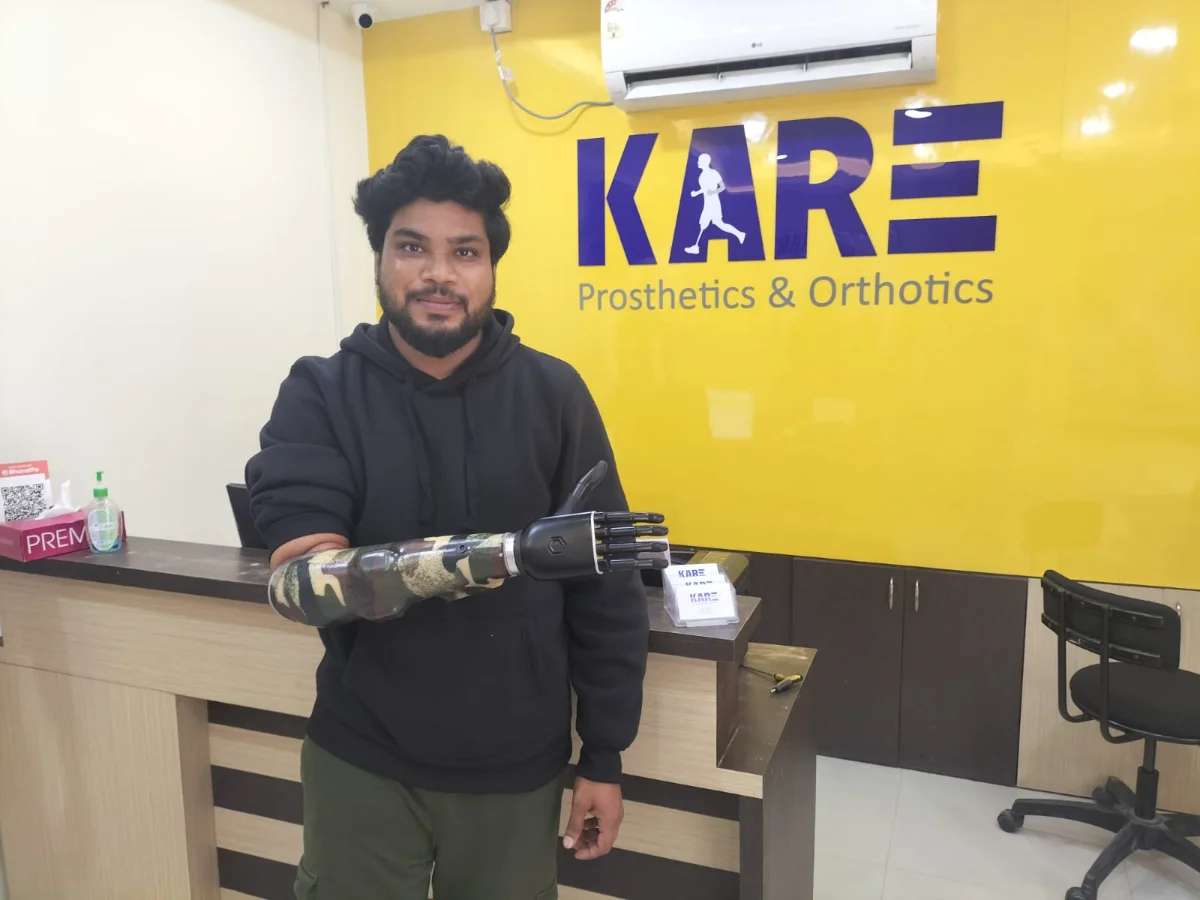
He now prepares for state competitive exams every day, wakes up early, runs one to two kilometres, and sometimes cooks for himself in the mornings when he is living alone.
Three men. Three accidents. Three different versions of the same morning they all lost.
Back in Pune, Patel adjusts his grip once more. His wife and daughters are still watching. The bicycle wobbles, then steadies. The road ahead is wide, patient and waiting.
The man who once stopped stepping outside because of the way people looked at him, now looks ahead and says, “I will drive an auto again.”
- From Humanoid Robots to Telecom Trials, 12 Major Announcements at NVIDIA GTC Berlin 2026
- Anyone Can Make a Robot Move, Few Can Make It Stop
- After ISRO’s PSLV Failure, TakeMe2Space Looks to SpaceX for Reliable Launch
- Why AI Agents are the Next Frontier in Quantum Security
- Physical AI Squeezes Labour Market, And Low-Skilled Immigrant Jobs May Be First to Fall
- Rocket Math Isn’t Mathing: Why India’s Space Launches are Expensive