
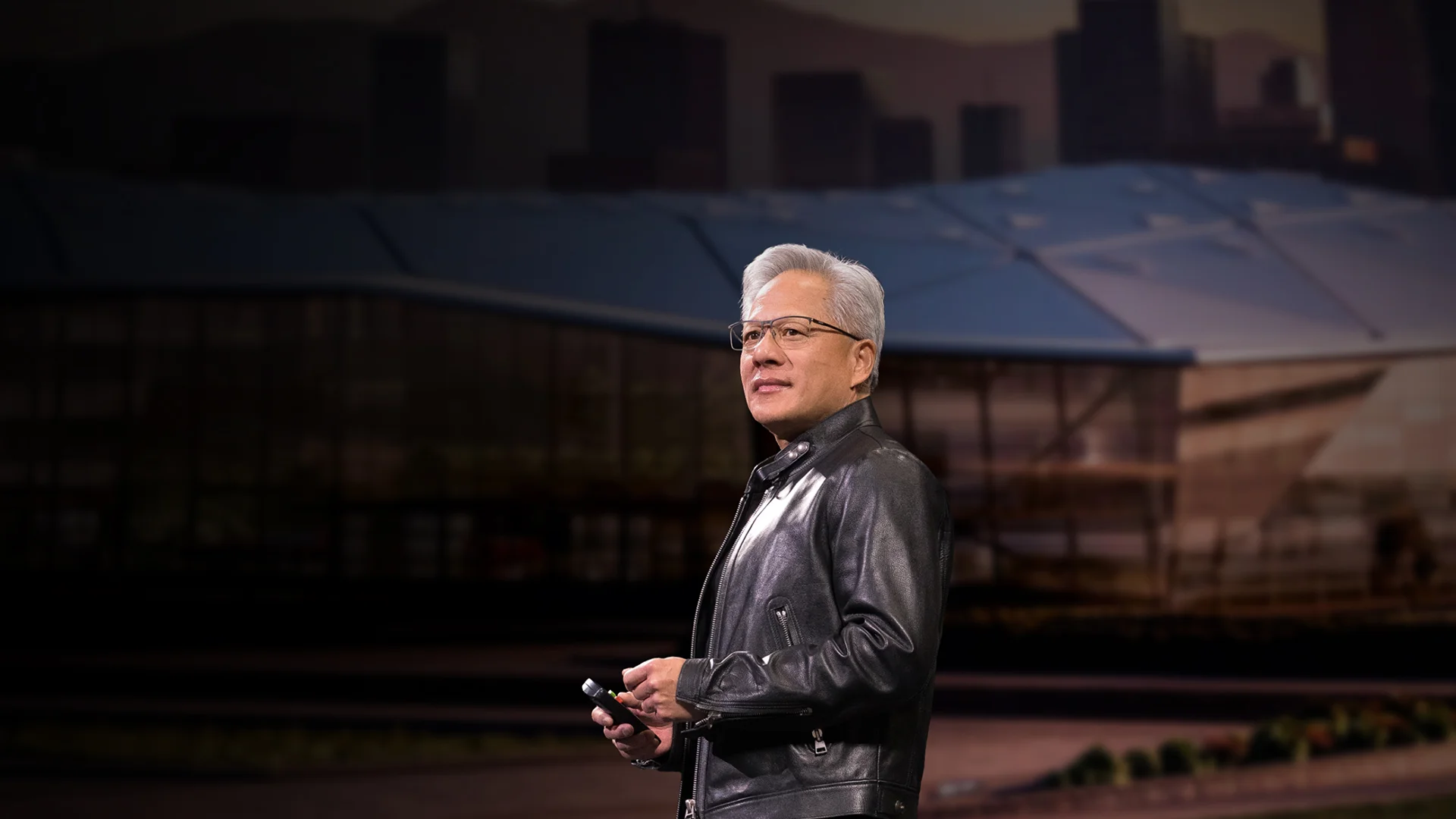
At the 2026 GPU Technology Conference (GTC) in Berlin, NVIDIA outlined plans to expand AI across infrastructure, software, and physical systems.
The announcements span AI factory deployment, semiconductor manufacturing, telecom networks, enterprise agents, robotics and autonomous vehicles. It also included new models for business data, scientific research and quantum computing.
On infrastructure, NVIDIA announced agreements to expand manufacturing capacity across substrates, advanced packaging, semiconductor testing and optical connectivity.
In telecom, T-Mobile completed what NVIDIA described as the world’s first AI-RAN call on a commercial network. The company also expanded its Agent Toolkit and introduced a reference architecture for securing enterprise AI agents.
Its physical AI announcements covered robotics, autonomous driving and simulation tools. NVIDIA also introduced new open models for enterprise data, protein design and quantum computing.
Here are 12 key announcements from NVIDIA GTC Berlin 2026:
DSX POD to Speed Up AI Factory Deployment
NVIDIA introduced DSX POD, a reference design for complete Vera Rubin AI factories built inside modular containers. Partners integrate and validate the systems before delivery.
The company says it could reduce deployment time from six months to as little as 14 days. The giant’s partners plan to deliver the modular systems worldwide in early 2027.
“An AI factory creates value when it starts producing tokens, not when construction is complete,” said Jensen Huang, NVIDIA’s Founder and CEO. The design aims to help operators bring computing capacity online sooner and start serving production workloads.
Targets Lower Power and Water Use in AI Factories
NVIDIA expanded its DSX AI Factory platform with software and reference designs for improving infrastructure efficiency. DSX MaxLPS aims to deliver the same AI output using up to 30% less power. DSX Flex adjusts power consumption based on grid conditions.
The company also outlined a cooling design that combines closed-loop liquid cooling with dry coolers. This approach avoids the evaporation used by conventional cooling towers.
The chipmaker estimates that its design could save 54 million litres of water daily at a 2 GW deployment. That figure compares its approach with conventional cooling-tower systems.
NVIDIA also introduced SimReady Central, which provides simulation-ready models of physical equipment. Its DSX OS software aims to automate infrastructure management and improve resilience.
These figures represent NVIDIA’s estimates. Actual savings will depend on each facility’s design and operating conditions.
New Agreements to Expand Semiconductor Capacity
NVIDIA announced agreements with suppliers to expand manufacturing capacity across substrates, advanced packaging, semiconductor testing and optical engines.
The company plans to increase substrate capacity by 2.5 times over the next three years. The expansion involves IBIDEN, Samsung Electro-Mechanics and Unimicron Technology.
NVIDIA and Amkor plan to increase advanced packaging capacity by more than 300% by the end of 2028. The expansion targets interposer wafer capacity. King Yuan Electronics (KYEC) will build new testing facilities in the United States. NVIDIA is supporting the expansion with a $1.1 billion capacity-reservation advance.
“We are in the midst of the largest infrastructure buildout in human history,” Huang said. “Demand is extraordinary. Capacity is the constraint.”
The company expects its total semiconductor testing capacity to double between 2026 and 2027.
Telecom Operators Move Towards AI-Powered Networks
NVIDIA announced new deployments that combine AI computing with radio access network infrastructure.
T-Mobile completed what NVIDIA described as the world’s first AI-RAN call on a live commercial network. The trial took place in Bellevue, Washington, with NVIDIA and Nokia.
Finnish telecom player Elisa completed Europe’s first field trial of AI-RAN, running voice, mobile data and vision AI on one accelerated computing platform over 5G. BT is preparing live trials in the UK, while Deutsche Telekom is advancing its own deployments.
NVIDIA also introduced new Aerial RAN Computer configurations for high-capacity sites. Nine telecom operators across Europe, the Middle East and Africa are building or expanding NVIDIA-powered infrastructure.
Nokia and Cisco are incorporating NVIDIA Nemotron open models into software for autonomous network operations. “Telecom networks were built to carry the world’s conversations. Now, they will also carry the world’s intelligence,” Huang said.
The strategy aims to turn telecom infrastructure into distributed computing platforms that run AI applications closer to users.
Expands Agent Toolkit for Enterprise Data
NVIDIA expanded its open-source Agent Toolkit with tools that help AI agents use company data, make predictions and operate within defined boundaries.
A key addition is the Agent Knowledge Foundation, which combines CUDA-X libraries, open models and data-processing tools. Its Auto-Ontology library maps raw company data to business concepts and relationships.
The foundation includes Nemotron Retriever models and the Kumo family. Kumo Tabular, Kumo Relational, Kumo Time Series and Kumo Forecast support predictions from structured business data.
The company also expanded NemoClaw, which provides reference blueprints for specialised agents. The toolkit includes NeMo Relay and NeMo Compass for agent development and workflows.
The announcement focuses on a central enterprise challenge: enabling agents to work with company knowledge rather than relying solely on general-purpose models.
OpenShell Architecture for Secure AI Agents
NVIDIA introduced the OpenShell Reference Architecture to help enterprises build, monitor and control AI agents. The architecture combines Vera Rubin infrastructure for running models, Vera CPUs for agent operations and BlueField-4 data processing units for security enforcement.
OpenShell provides a controlled runtime environment. NVIDIA Sentry, running on BlueField, monitors agent behaviour and can stop actions that violate security policies.
The system aims to limit which files, tools, credentials and applications an agent can access. It also supports edge deployments, including in manufacturing, retail and telecommunications.

Companies working with the architecture include Cisco, CrowdStrike, Dell Technologies, Google Cloud, IBM, Microsoft, SAP and ServiceNow.
“AI capability and safety must advance together,” Huang said. He added that enterprises must build safety and control into computing architecture as they prepare to deploy AI agents.
The announcement addresses the risks of giving autonomous systems access to sensitive data and business applications.
Open Models for Business & Language Tasks
NVIDIA expanded its open model portfolio with new models for language, vision, information retrieval and structured business data.
The Nemotron 3.5 family includes Super VL and Bolt models. NVIDIA also introduced Nemotron Retriever models for embedding, reranking and document parsing.
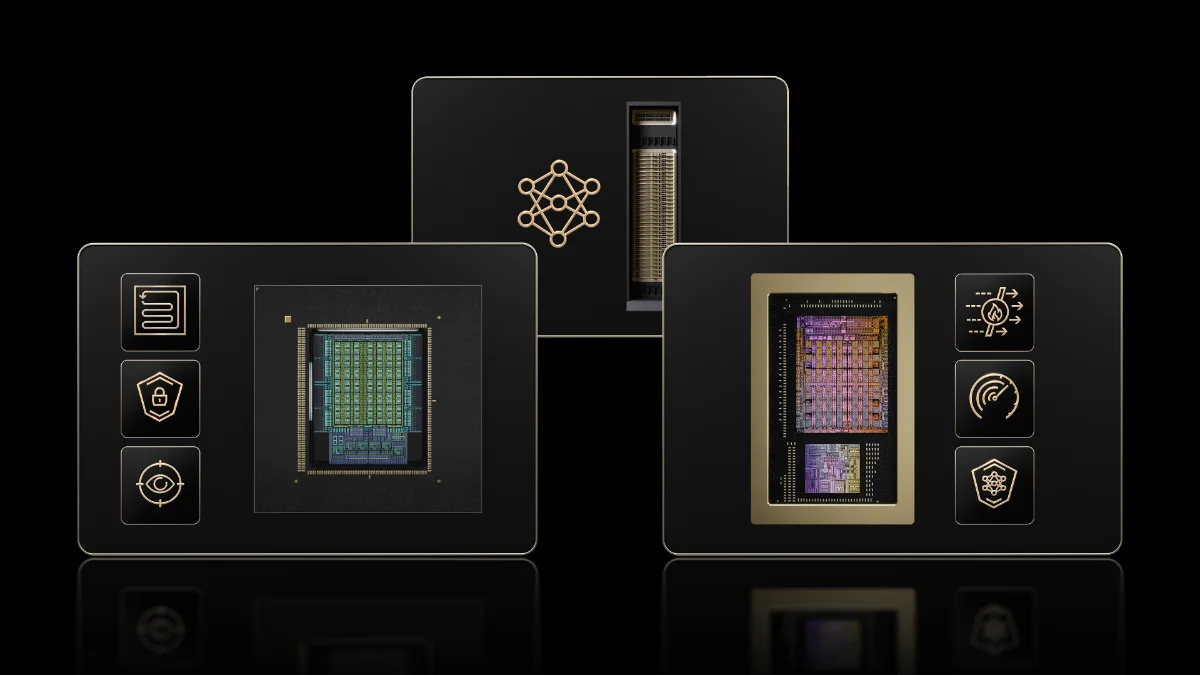
These tools help developers build agents that retrieve information, process documents and complete specialised tasks. The Kumo family adds models for making predictions from structured enterprise data.
NVIDIA said developers can adapt the models using their own data and industry knowledge. They can then deploy them on infrastructure they control. The company positioned its open models as a way for organisations to build systems tailored to local languages and industry requirements.
Availability varies across the portfolio. Several models are available through Hugging Face, GitHub, and NVIDIA’s own platforms, while others are scheduled for later release.
Cosmos Data Factory for Physical AI Deployment
NVIDIA expanded Cosmos with tools for training, evaluating and optimising world models. These models help physical AI systems understand and simulate real-world environments.
The company introduced Cosmos Data Factory, a set of tools and workflows for curating, labelling, augmenting and evaluating training data. Its blueprints cover autonomous driving, image augmentation, event video generation and defect detection.
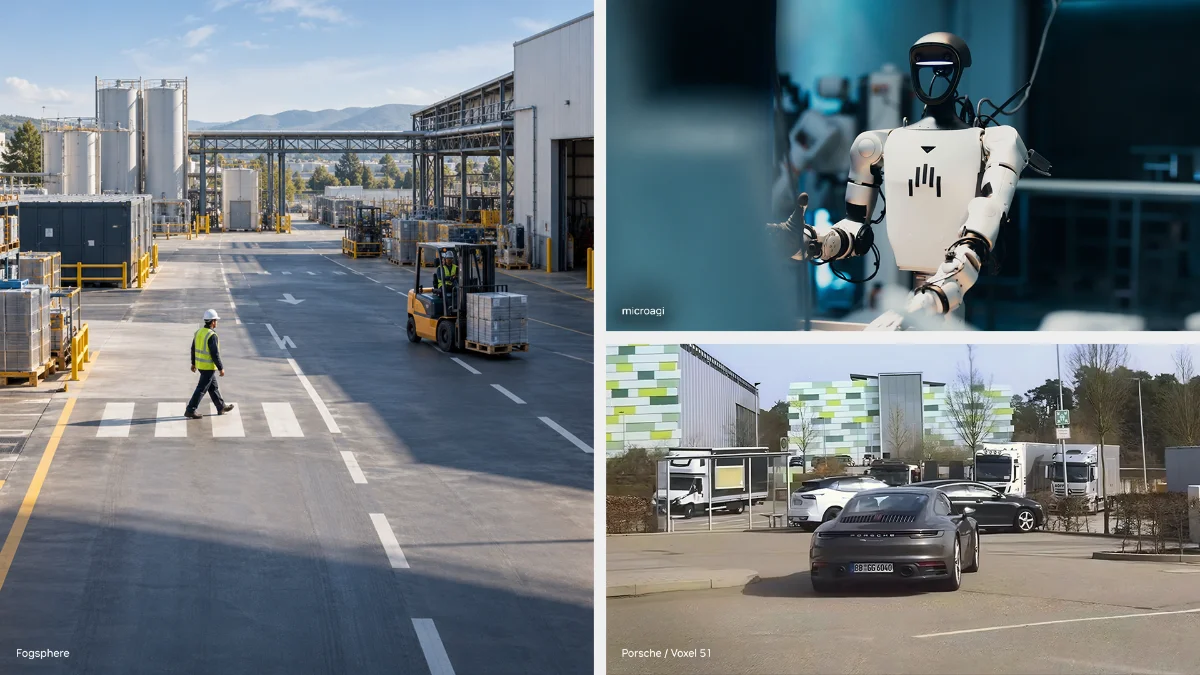
Cosmos also adds simulation checkpoints that let developers evaluate driving and robotic manipulation before real-world testing. New training and optimisation tools aim to improve models while reducing computing requirements.
NVIDIA said Porsche is using Cosmos Data Factory through Voxel51 to support autonomous vehicle development. ANYbotics has generated more than 1,500 synthetic video clips to train industrial inspection robots.
The updates address the data and testing challenges of building systems that operate in physical environments.
New Partnerships for Autonomous Vehicles and Robotaxi Fleets
NVIDIA also announced new partnerships and safety tools for autonomous vehicles and robotaxi fleets through its Hyperion computing platform.
Ride-hailing platform Bolt selected NVIDIA Alpamayo Stack for its European robotaxi programme, beginning with future Lucid vehicles built on Hyperion. Volvo Cars is adopting Hyperion and Alpamayo Stack for automated driving.
Mercedes-Benz, Volkswagen Commercial Vehicles and Einride are also showcasing autonomous mobility applications. These cover potential Level 3 and Level 4 driving use cases, including future robotaxi fleets.
NVIDIA introduced Halos SAFE, a framework that combines simulation and physical testing. It aims to help developers produce measurable evidence for autonomous vehicle safety.
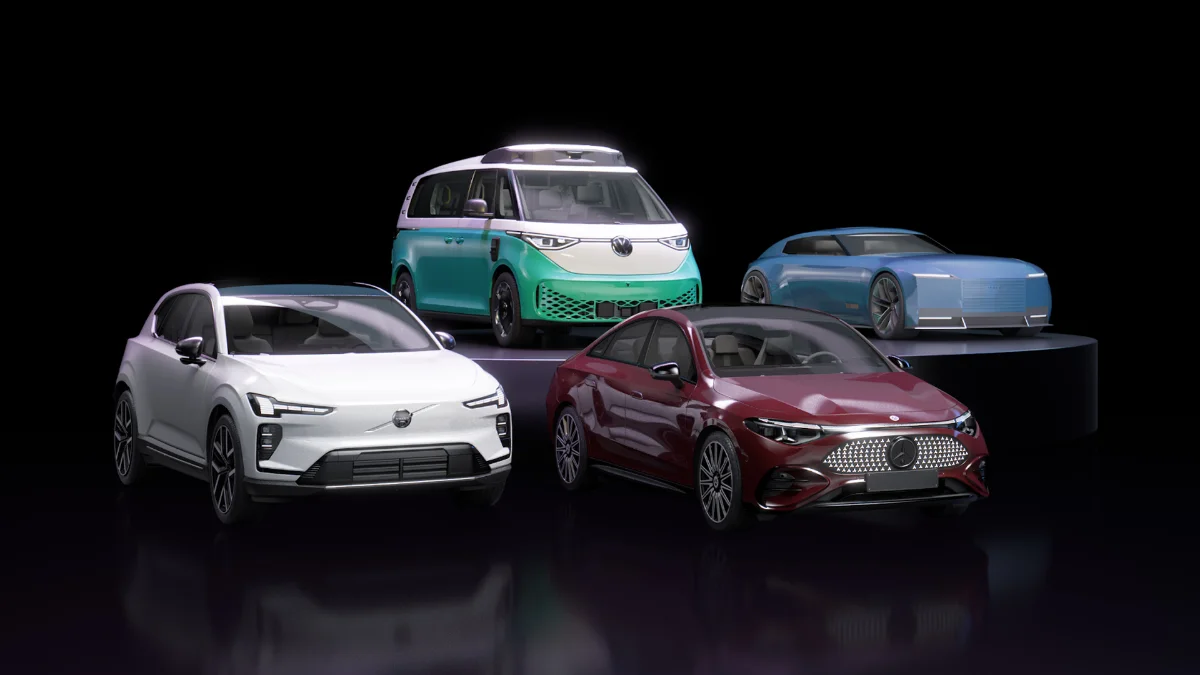
The company also announced Alpamayo Agentic Factory and new Cosmos 3 Nano model variants. These tools aim to help developers build and evaluate driving systems across vehicles and operating conditions.
“Robotaxis are the first mass-market application of robotics and physical AI,” Huang said. The announcements bring together computing, driving models and safety tools for developers working towards autonomous transport.
Isaac for Humanoid and General-Purpose Robotics
NVIDIA expanded its Isaac robotics platform with a humanoid reference system, new runtime software, simulation tools and training workflows.
Agile Robots announced Agile ONE SN, a humanoid reference platform built on Isaac GR00T and powered by Jetson Thor. The platform is designed for robotics researchers and developers.
Agile ONE SN combines the humanoid body with onboard computing, sensing and software for robot learning and control. It is planned to be available in early 2027.
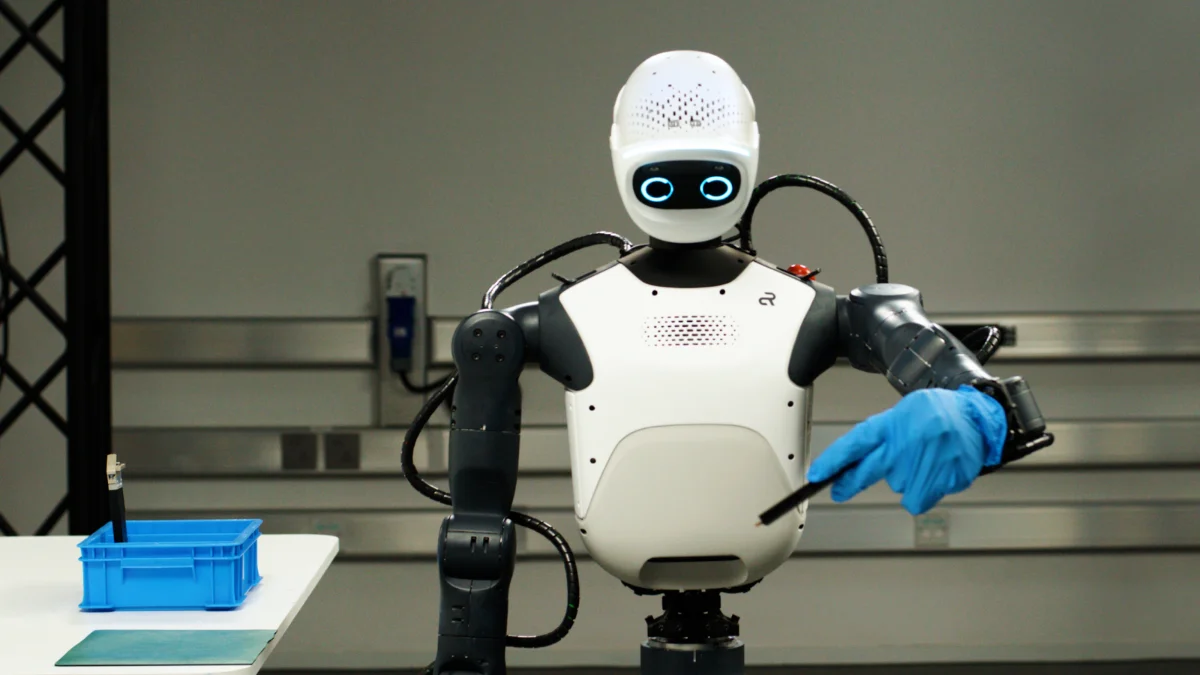
NVIDIA also announced Isaac OS runtime updates, Isaac Lab 3.0 and reference workflows for generating data, training robots and evaluating their performance. The tools aim to help developers move from simulation to physical deployment without assembling every part of the development process separately.
“With NVIDIA Isaac, we are giving developers the models, data, simulation tools and computing systems to bring physical AI to the world's largest industries,” Huang said.
The platform supports NVIDIA’s effort to expand robotics beyond specialised machines towards systems that can learn and perform multiple tasks.
Ising Model Tests for Quantum Computing
NVIDIA also highlighted its Ising family of open models designed to support quantum computing development.
The models target processor calibration and quantum error correction. Calibration helps researchers tune quantum hardware, while error correction addresses errors that affect quantum computations.
Quantum systems need specialised methods to manage hardware behaviour and reliably process information. NVIDIA says Ising provides a foundation that developers can adapt to different quantum processor designs.
Quantum computing company IQM is using Ising to calibrate its processors. SEEQC is combining Ising with NVIDIA’s NVQLink platform and its Digital Link technology to support low-latency quantum error correction.
AWS is integrating the Ising family into AWS Parallel Computing Service. This will let researchers work with the models before deploying them alongside quantum processors.
The launch extends NVIDIA’s open-model strategy into quantum computing, where progress depends on both quantum hardware and the classical systems that support it.
Protein Design Model Launch with University of Washington
NVIDIA and the University of Washington’s Institute for Protein Design introduced BioNeMo RFD4-Proteina, an open model for protein design.
The model generates protein sequences and three-dimensional structures. Researchers can use it to explore proteins that bind to difficult targets, assemble into complex structures or interact with small molecules.
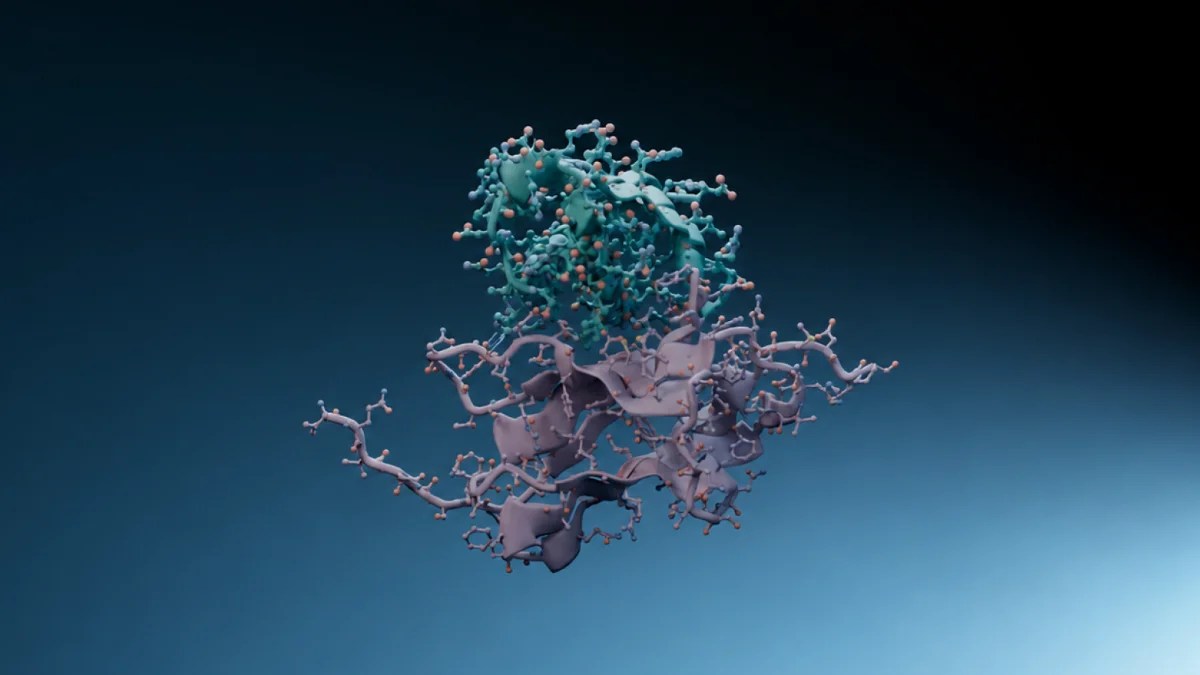
The model helps researchers generate and evaluate candidates before selecting designs for laboratory testing. NVIDIA reported generating designs about 13 times faster than RFdiffusion3 in a benchmark involving 200-amino-acid proteins.
That result measures computational design speed, not experimental success or clinical outcomes.
David Baker, Director of the Institute for Protein Design, said the model could help scientists design proteins for drug discovery and enzymes that break down pesticides.
“Making the model open will allow researchers around the world to build on these capabilities,” Baker said. The model extends NVIDIA’s open-model portfolio into scientific research and computational biology.

Your reaction