
India’s deeptech ambitions are becoming louder, but the country’s startup ecosystem still faces a widening gap between policy announcements and execution realities.
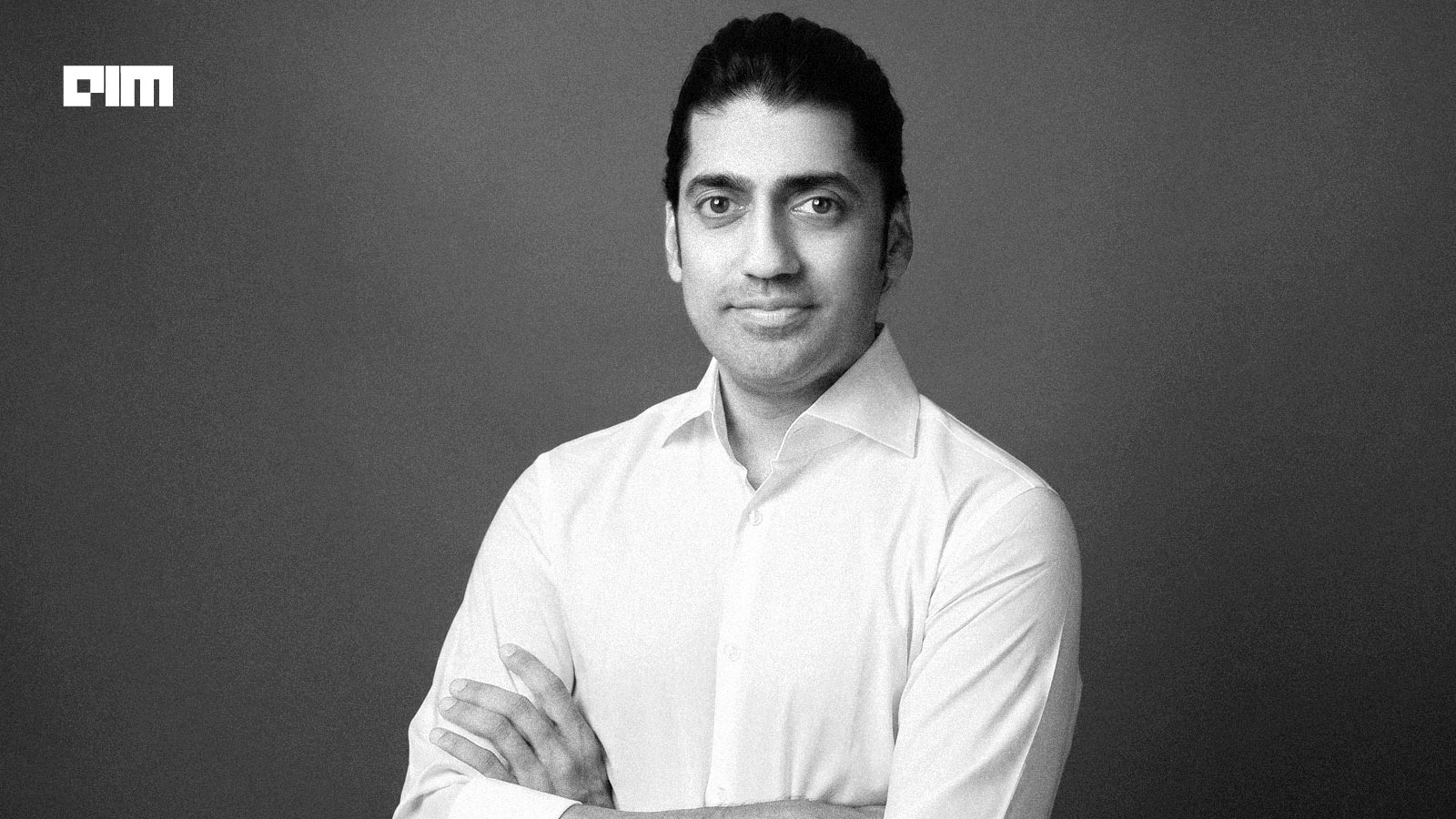
According to Aditya Vuchi, General Partner at VCMint and Founder of B2B adtech company MediaMint and telecom-tech startup Doosra, the next phase of Indian innovation will depend less on hype around AI and semiconductors and more on patient capital, founder conviction, and ecosystem maturity.
Speaking to AIM, Vuchi says India’s venture ecosystem still lacks the long-term mindset required for deeptech investing. “For deeptech companies to really succeed, we need patient capital,” he says. “Without that, a founder is trying to pull a rabbit out of a hat.”
His remarks come at a time when India is aggressively positioning itself as a global AI and semiconductor hub through initiatives such as the IndiaAI Mission, semiconductor incentives, and production-linked incentive schemes. But Vuchi argues that India needs to identify where it can realistically compete instead of attempting to mirror the frontier AI race unfolding in the US.
“There’s so much money being poured into frontier technology in AI in the US,” he says. “To mirror that in India would be a little foolish. We need to be smart about where we invest our time.”
Vuchi believes the focus should remain on solving customer problems rather than chasing technological vanity. He turns to the same principle throughout the conversation: founders must understand who they are building for. “AI is a means to an end,” he says. “Application of the technology is what makes a difference.”
Sovereignty, Semiconductors, and Global Dependence
The conversation also touches on India’s growing emphasis on technological sovereignty, especially around semiconductors, AI infrastructure, and domestic manufacturing capabilities. Vuchi acknowledges that India’s ambitions are valid, but says the path toward independence will be gradual and heavily dependent on global supply chains.
“We are more at 28 nanometres today (in chip design) for a lot of applications,” he says, referring to India’s semiconductor ambitions. “If we want to compete globally, then you need to find the right applications where it makes sense.”
He adds that complete independence remains unrealistic in the near term because hardware ecosystems continue to rely on imported components and international partnerships. “Everybody is dependent on each other,” he says. “That’s true across the world.”
Despite this, Vuchi remains optimistic about the government’s evolving role in startup financing and ecosystem development. He points to the government’s decision to channel startup funding through venture funds rather than distributing capital directly as a sign of institutional maturity.
“The ₹10,000 crore fund wasn’t designed to be deployed directly by the government,” he says. “The funds have the ability to evaluate startups and invest in them.”
He also believes collaboration between public institutions and private capital has improved significantly over the years, especially as government-backed entities become anchor investors in venture funds. Scepticism toward state involvement, he says, is slowly fading.
At the same time, he argues that India’s compliance environment still creates friction for founders. Corporate governance processes, taxation structures, and regulatory penalties remain too burdensome for early-stage companies trying to survive.
“Running a private limited company is compliance-heavy,” he says. “There needs to be a lot more stability.”
The Founder-Investor Relationship is Changing
Vuchi’s own investment philosophy differs from traditional venture capital frameworks. VCMint writes relatively small cheques, typically between $100,000 and $200,000, and avoids exerting excessive control over founders. Out of more than 60 investments, Vuchi says he sits on only two boards.
“We are not trying to influence the direction of a company,” he says. “Our bet is on whether this is a large market and whether the founding team understands their customer deeply.”
That founder-first approach also shapes how Vuchi handles struggling startups. He says founders should not feel trapped in businesses that no longer align with their goals, and investors must become more comfortable with experimentation and failure.
“In cases where founders want to shut down, I actively work with them,” he says. “There’s a power dynamic between founders and investors.”
The broader startup ecosystem, according to Vuchi, is becoming more accepting of failure as entrepreneurial experience increasingly gains value within larger companies. “The courage that founders have today is the maturity of a great startup ecosystem,” he says.
Interestingly, Vuchi sees AI reducing the cost of experimentation for founders rather than replacing entrepreneurship altogether. He says software development has become dramatically cheaper, allowing startups to validate products faster without raising large rounds of capital. “The value has moved to problem solving, not just building software.”
Beyond Venture Capital
Some of Vuchi’s most ambitious projects today sit outside traditional venture investing altogether. One of them is the Council for Digital Safety and Wellbeing, a nonprofit initiative focused on helping parents, schools, and students navigate excessive digital consumption.
As the parent of two children, Vuchi says digital wellbeing has become deeply personal. “If I’m asking them to reduce screen time, but I have five hours of my own, I have no moral standing,” he says.
The initiative works with schools and parents to build healthier digital habits for children between grades two and ten. Vuchi believes India’s understanding of digital wellbeing remains uneven, especially outside urban centres where digital access is still expanding rapidly.
Another project focuses on physical infrastructure for gig workers. After surveying more than 1,000 workers, Vuchi and his team discovered recurring concerns around access to clean restrooms, resting spaces, and social dignity. Their solution is a network of community centres in Hyderabad equipped with charging stations, cafeterias, healthcare facilities, and skilling programmes.
“Nobody sees their career as a gig worker,” he says. “Everybody sees this as a pit stop to something bigger.”
The initiative reflects a broader theme running through the conversation: India’s technology ecosystem cannot focus exclusively on valuation growth while ignoring human infrastructure.

Your reaction
Discussion
What's your take on this story?
No comments yet — be the first to share your view.