
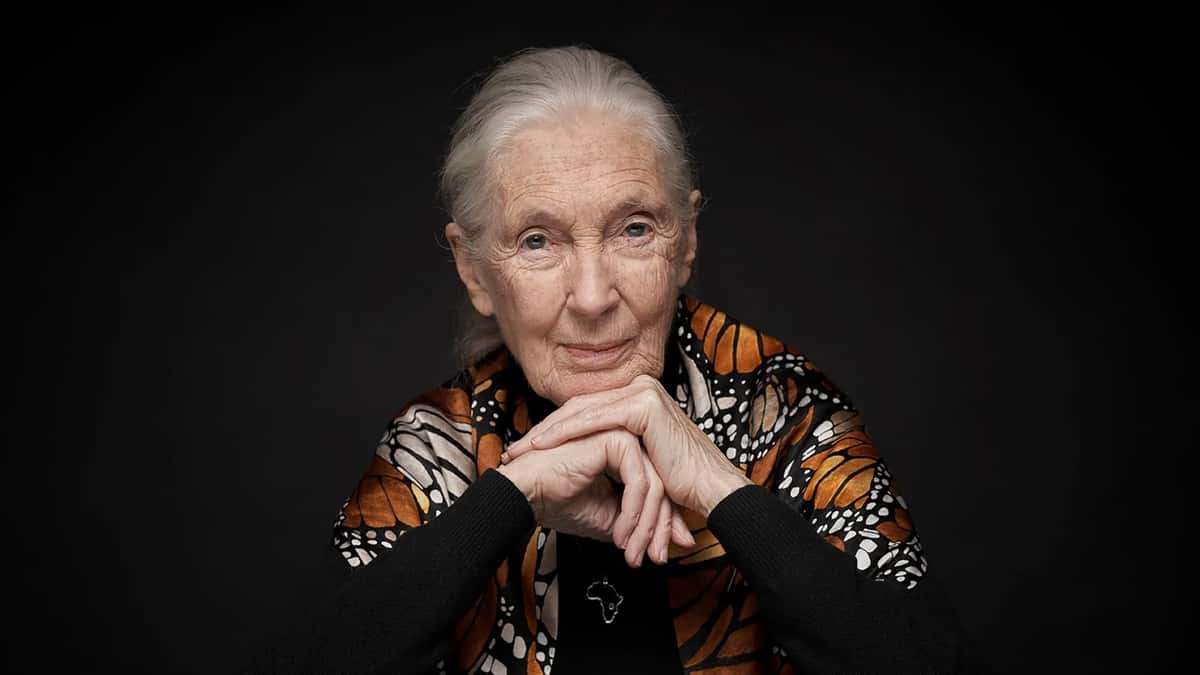

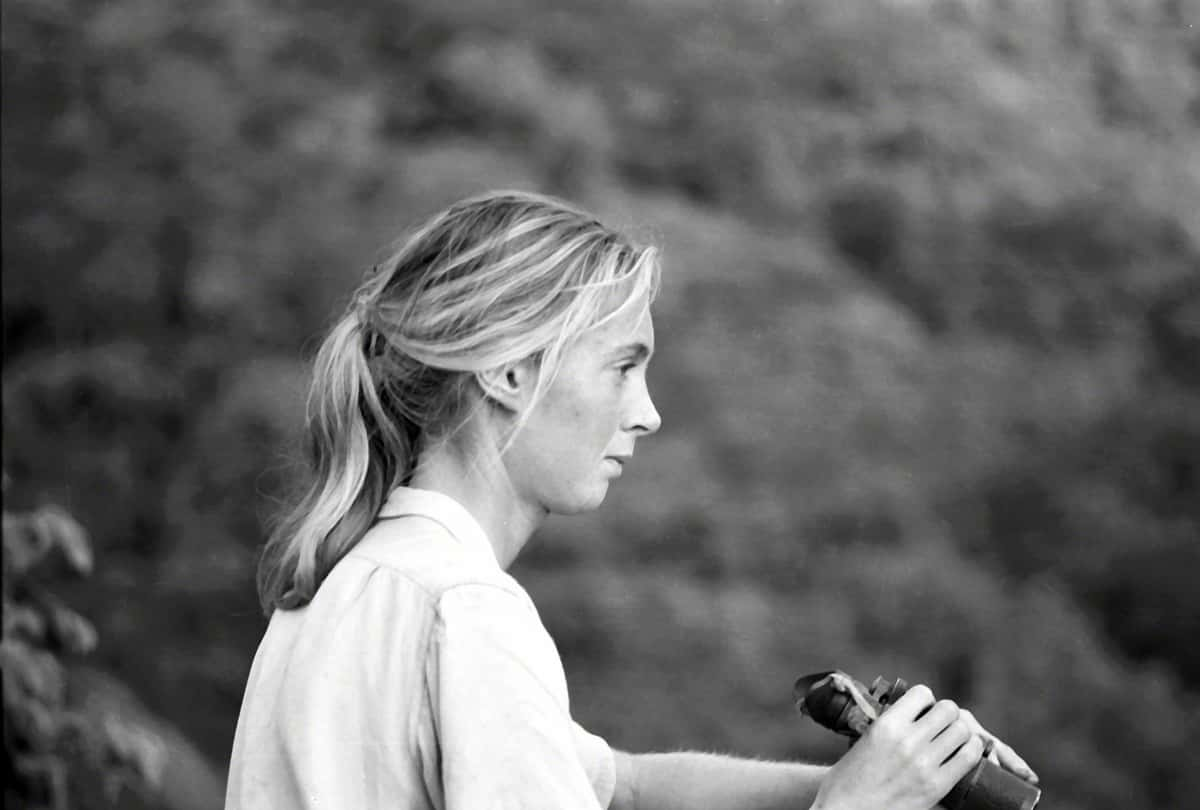
It was 1957, when a 23-year-old Jane Goodall was travelling to Africa’s Tanganyika, present-day Tanzania, in search of something deeper and an unshakeable passion for wildlife.
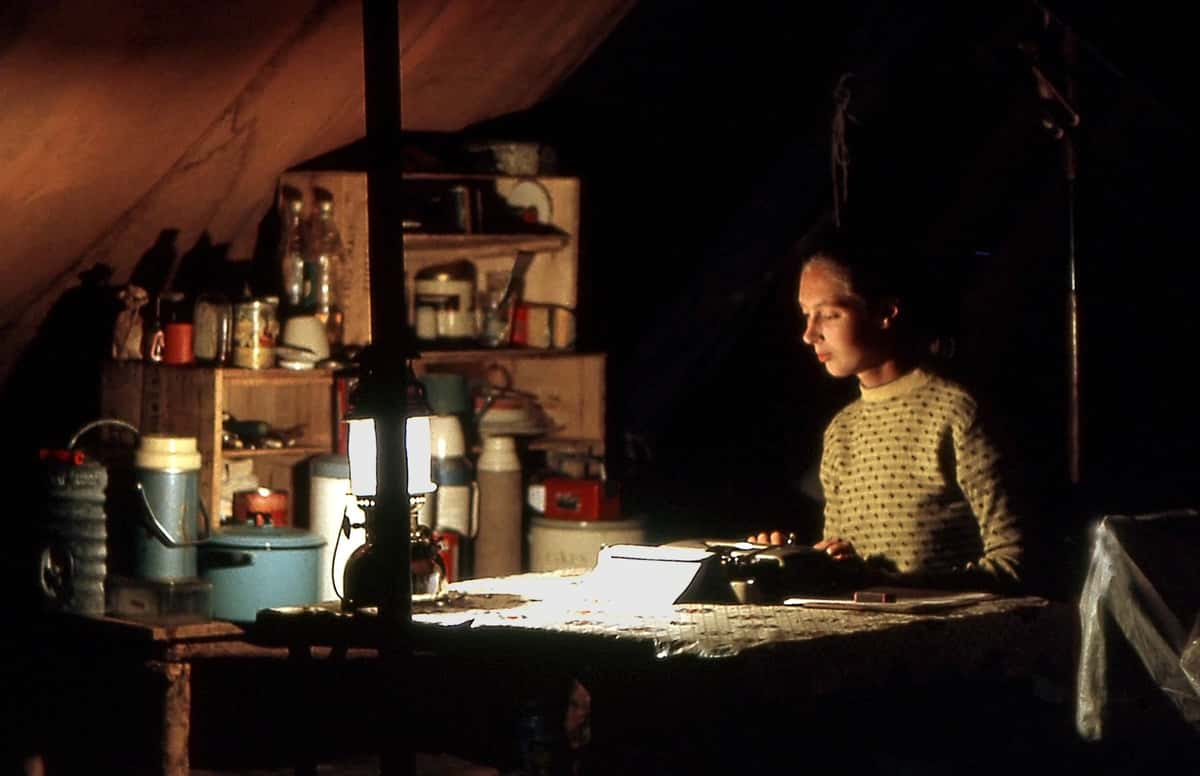
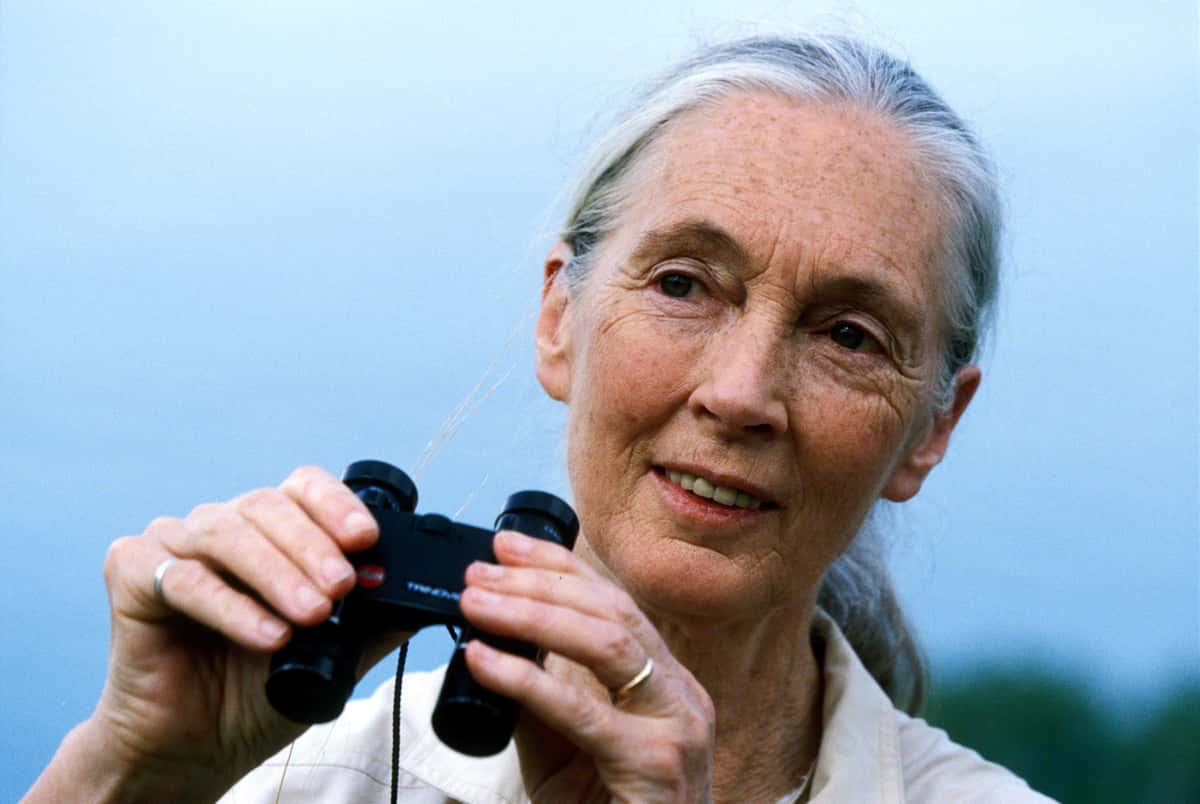
Three years after joining paleoanthropologists Louis and Mary Leakey at Olduvai Gorge on their excavations, she reached the Gombe Stream Game Reserve, now Gombe National Park, in 1960. On the eastern shore of Lake Tanganyika, on a boat, she was equipped with little more to conduct her studies than a pair of old binoculars, a notebook and a pen. Goodall was not entirely alone. She was accompanied by her mother, Vanne, and a cook named Dominic, as local officials would not allow her to stay alone due to security concerns.
The journey was only the beginning of a life devoted to studying the animals known to be humans’ closest relatives. In the years that followed, she would become a beacon of love and care for chimpanzees who, the world at the time and herself, knew very little about.
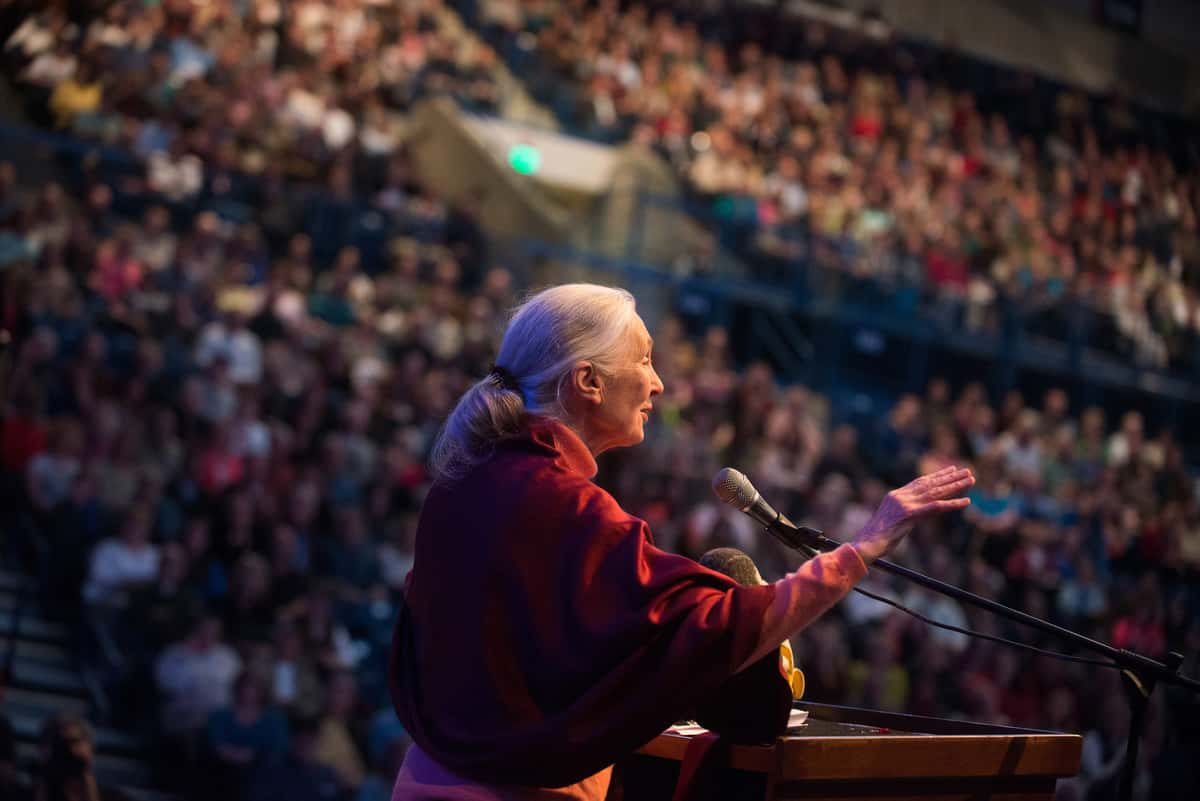
Goodall, who passed away in 2025, left behind a body of work that continues to shape how Gombe is studied and protected.
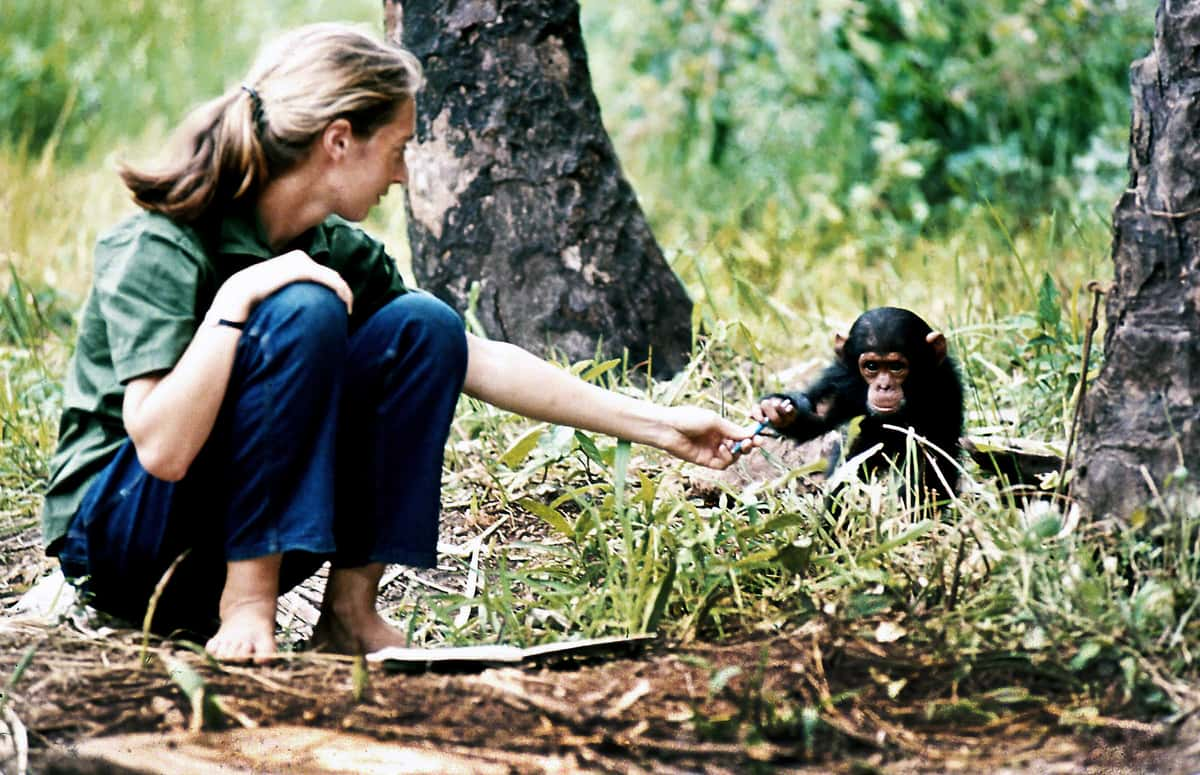
Unknown to her then, she was on the verge of crossing paths with David Greybeard, a male chimpanzee known for his gentle nature, whose trust she would slowly earn. Greybeard became the first to show her tool-making, using grass to fish termites, and eating meat, intrinsically allowing Goodall access to a whole world of chimpanzees out in Gombe.
Starting with just that, she spent decades observing chimpanzees, filling notebooks with the meticulous, handwritten descriptions that formed the backbone of modern-day animal behaviour research. She spent her life on that forest floor. Then, nearly four decades later, a PhD student came into the picture.
<iframe width="100%" height="450" scrolling="no" frameborder="no" allow="autoplay" src="https://w.soundcloud.com/player/?url=https%3A//api.soundcloud.com/tracks/soundcloud%253Atracks%253A2255029529&color=%23ff5500&auto_play=false&hide_related=false&show_comments=true&show_user=true&show_reposts=false&show_teaser=true&visual=true"></iframe>
<div style="font-size: 10px; color: #cccccc;line-break: anywhere;word-break: normal;overflow: hidden;white-space: nowrap;text-overflow: ellipsis; font-family: Interstate,Lucida Grande,Lucida Sans Unicode,Lucida Sans,Garuda,Verdana,Tahoma,sans-serif;font-weight: 100;"><a href="https://soundcloud.com/sanjana-gupta-479101867" title="Sanjana Gupta" target="_blank" style="color: #cccccc; text-decoration: none;">Sanjana Gupta</a> · <a href="https://soundcloud.com/sanjana-gupta-479101867/storytime-with-dr-jane-with" title="Storytime with Jane - With Love_ Flo and Flint | Source: JGI" target="_blank" style="color: #cccccc; text-decoration: none;">Storytime with Jane - With Love_ Flo and Flint | Source: JGI</a></div>
Lilian Pintea, who had grown up inspired by Goodall’s stories, arrived in Gombe in December 2000. With years of experience, he shared with her the potential of technologies like geographic information systems (GIS), and mapping using satellite imagery and aerial photos to advance conservation.
Pintea’s fascination with maps began long before AI. “I grew up in Moldova and was reading [Goodall’s] books about Gombe,” he said. “I was dreaming about being a conservation biologist working with wildlife in Africa.”
He recalled showing Goodall aerial photos and satellite images from as early as 1947 and 1972, and the look in her eyes when she understood what such remote sensing data could reveal about the forest she knew so intimately. This pivotal moment sparked their long-term collaboration, and as she traced the contours of the landscape on that photograph, she looked up and said, “This is magic.” That moment stayed with Pintea for the next quarter-century.
Today, as vice president of conservation science at the Jane Goodall Institute (JGI), he stands at the centre of a much larger transformation. Here, satellites, microphones, handwritten field notes, and now generative AI are converging to keep Gombe’s scientific and conservation legacy alive.
The Institute
The notes, collected daily by Goodall and generations of local scientists in the forest over the last 65 years, remain archived and preserved at the institute. But they are fragile, scattered across decades, and handwritten in multiple languages. Since the early 1990s, one of Goodall’s former students, Dr Anne Pusey and her students, started to digitise, organise and analyse Gombe data, and publish the results in scientific journals. Eventually, Goodall and the institute decided it was time to build on and expand those efforts to digitise it all—written records, audios and videos alike.
The task, however, is far from straightforward. Pintea explained to AIM in an exclusive conversation, “When the field researchers write, it’s a combination of Swahili and Kiha with some local abbreviations. So it’s a unique Gombe language.”
The institute is now working with AWS to digitise the remaining 65 years of field notes, most of which are recorded on paper. The effort is not simply about preserving the past; it is about continuing the longest ongoing study of chimpanzees in the world and equipping future scientists and local communities with tools Jane herself supported.
They hope that this work continues for as long as technology remains in the service of people, animals and the environment. The question the project now asks gets clearer, can AI help us see the forest the way Jane once did?
What Can Generative AI Do?
When AWS engineers visited Gombe, they were curious about whether generative AI could decode this hybrid script. To test it, Pintea handed them a scanned copy of a page with handwritten notes. The result surprised everyone.
“Just spending a couple of minutes trying to train the AI, we were able to actually see real improvements and get to around 80% accuracy,” he said. Pintea elaborated that the team realised they were able to train a model which would recognise the unique Gombe language.
It was the kind of breakthrough that pushed JGI to imagine an entirely new kind of research platform, one that could unify paper notes, satellite images, video recordings and acoustic data into a searchable, intelligent system.
Where Satellites Meet Chimpanzees
Satellite imagery, Pintea said, is “much more than just data, it creates that common ground and understanding.” It is holistic, revealing both ecological and socio-economic factors shaping the landscapes and land use change.
In Gombe, overlaying decades of chimpanzee behaviour data onto vegetation maps showed something unexpected: when fires were controlled, and the park was protected, the forest grew back, and so did new patterns of chimpanzee feeding and movement emerge.
This ability to track behaviour and habitat together helped JGI understand that conservation cannot happen from space alone. It must centre on communities, a principle Goodall championed.
Goodall’s community-led conservation model, Tacare, insists that local people must be recognised as the stewards of their own natural resources and the environment. “They are the ones who need to own and drive those decisions on their land, and they have to trust and value science information and technologies as part of their decision-making processes,” Pintea explained.
This philosophy also shaped how JGI approached AI.
Goodall was clear about its role. “We need to think about this new generative AI and other AI technologies as tools that are not replacing, but supporting people [and] local communities in their stewardship of the land so that it will improve the lives of people, animals and the environment,” Pintea said.
Her endorsement helped catalyse the institute’s partnership with AWS, but she also drew a line. When asked about AI applications, Pintea expressed, “Jane was very clear that she was not supporting any technology which would put words that she never said before or would generate any new words.”
The team continues to hold that ethical boundary as they digitise the past to inform the next generation of science questions and conservation applications.
The Forest Speaks and AI Listens
One of the most surprising discoveries in recent years has come not from images, but from sound. Three years ago, JGI placed 100 microphones across Gombe. When the recordings were analysed with AI, the forest revealed secrets even long-time researchers didn’t know.
“In the first two weeks, it enabled us to find a new species of primate, Thomas’s Dwarf Galago (Galagoides thomasi), a bush baby which is common in tropical West and Central Africa, but we didn’t know existed in Gombe and in Tanzania,” Pintea said. “We also found eight new species of birds in Gombe.”
This success helped shape the architecture of the new generative AI research platform. “You will see that there is actually a separate data workflow designed for acoustics,” he explained. The team will be able to integrate the observations coming from paper data and, through a simple AI prompt, query the data coming from images, video and audio sources, such as satellites, ecoacoustic sensors and camera traps.
In short, scientists may soon “ask” decades of data collected in the forest a question, and receive an answer that spans handwritten notes, satellite maps and sound recordings.
In addition, digitisation comes with its own dilemmas.
Gombe’s records are not a single dataset but dozens of them, collected by many researchers over many years. Pintea stressed that it was really important to have similar tools to integrate, organise and manage access to the data to preserve and respect intellectual property while continuing collaborative research, as started by Jane.
https://youtu.be/sJ5IPxY6W-U?si=irO2jqiTVBiOWCIT
Not every dataset should be open. Some, such as community-mapped sacred sites, must remain private if the communities made that request. “If I’m a villager and I don’t want the sacred sites to be known to the rest of the world,” he said. AI models must be able to consider that and restrict visibility.
JGI is therefore exploring hyper-local AI models, trained only on locally approved datasets to support specific communities, an approach that mirrors how Tacare empowers local decision-making.
Looking into AI computation turned out to be important for designing more sustainable systems. Computing power and processing had to be measured carefully. Upon further thought, the researchers realised that high-resolution videos strain processing resources, so they degraded the videos, ran intensive tasks during off-peak hours and designed more efficient model architectures.
“Even if we degrade the videos, the results are the same, and the data can be processed very fast,” Pintea said. This significantly reduced the environmental impact that the team was hoping to achieve as part of their work towards a more responsible AI.
Goodall’s Enduring Presence
Despite Goodall’s absence, her influence is everywhere in JGI’s new efforts. Pintea speaks of her in a way that makes it seem she is still present, sitting among the trees, listening.
“I miss Jane a lot,” he said. “I miss her humbleness and her way of doing things.”
He remembered a moment in Hyderabad when the team visited years ago. Jane insisted on walking around a small lake outside a hotel to watch ducks and other waterfowl paddling across the pond. He further talked about their experience eating the food in Hyderabad, her love for India and the team’s project in the country through Jane Goodall’s Roots & Shoots, the Jane Goodall Institute’s youth-action programme.
Nevertheless, her commitment remained unwavering. “100% commitment until the last day she passed away,” Pintea said. “She was supposed to plant trees with a thousand students the day she passed away.”
He added that she also resisted being placed on a pedestal. “She really didn’t want to see herself put as a saint because the moment we do that, we create a barrier,” Pintea said. “She was empowering us all to be very special too.”
The Gombe archive is one of the longest-running wildlife research datasets in the world. Soon, it could also be one of the most technologically advanced. “We can digitise, organise, share, and analyse data in ways which we never had a chance to do before,” Pintea said.
But at its core, the project remains rooted in Jane’s first principles: observe carefully, listen deeply and connect science with humanity.
AI may become a powerful new tool, but it is still only a tool, according to the institute. Goodall would expect researchers to use it with humility.
At the end of the day, to understand a forest, one must first learn to hear it. And now, perhaps for the first time, AI is learning to listen too.
- From Humanoid Robots to Telecom Trials, 12 Major Announcements at NVIDIA GTC Berlin 2026
- Anyone Can Make a Robot Move, Few Can Make It Stop
- After ISRO’s PSLV Failure, TakeMe2Space Looks to SpaceX for Reliable Launch
- Why AI Agents are the Next Frontier in Quantum Security
- Physical AI Squeezes Labour Market, And Low-Skilled Immigrant Jobs May Be First to Fall
- Rocket Math Isn’t Mathing: Why India’s Space Launches are Expensive