

In 2025, India marked its 100th launch from Sriharikota. These numerous rockets usually begin their journey with fire. A traditional launch relies on heavy boosters that burn vast amounts of propellant in the first few minutes to push it up and through the densest layers of the atmosphere.
That early phase is highly expensive and technically demanding. Engineers must design structures strong enough to withstand intense pressure, vibration and drag, all before the rocket even approaches space.
For decades, scientists have pondered the idea of lifting a vehicle to high altitude using a balloon or airship before ignition. While high-altitude balloons have long been used for research, the first formal proposal and successful execution of the rockoon (rocket-balloon) are credited to American space physicist James Van Allen—after whom the Van Allen Radiation Belts are named—and his team at the University of Iowa in the late 1940s.
By starting ignition higher, a rocket could reduce drag, use less fuel, and reduce structural requirements. Several companies have attempted this balloon-assisted model. Spain’s Zero 2 Infinity and the UK’s B2Space explored near-space launches using high-altitude balloons.
Others experimented with hybrid systems that combine lighter-than-air lift with conventional propulsion. Yet, none have delivered a sustained, commercially viable orbital launch service.
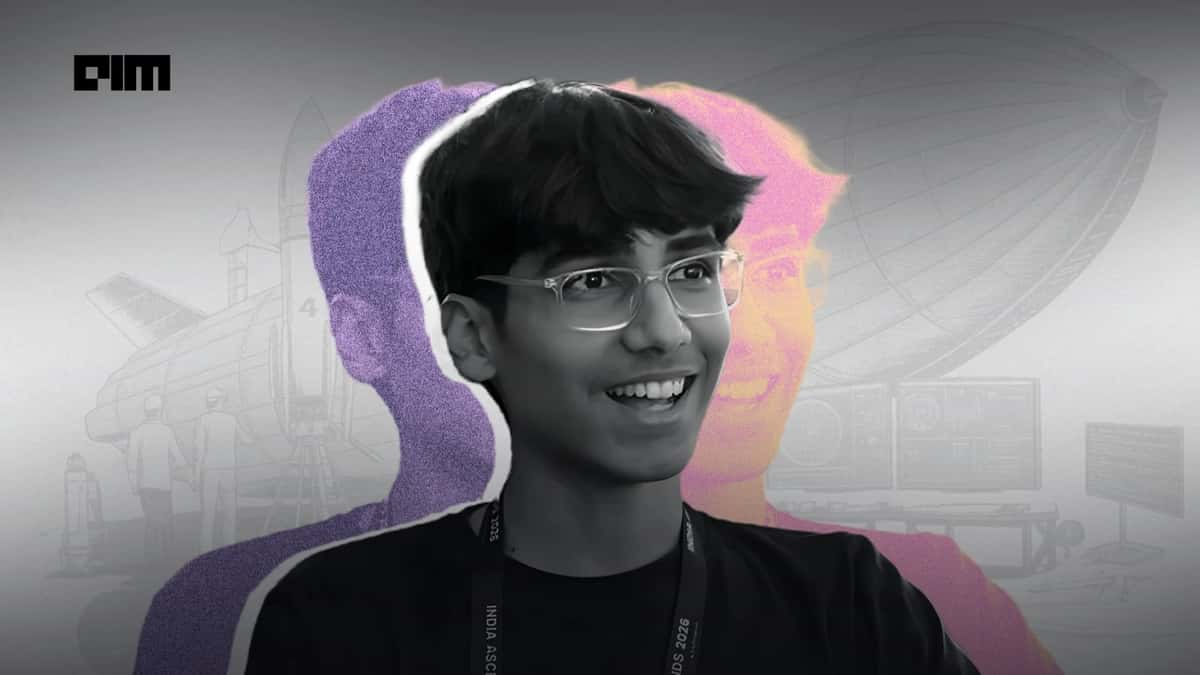
Fifteen-year-old Shreyans Jain wants to make an impact exactly in this domain by building on how India reaches space. As the Founder of Gurugram-based Celestial Aerospace, he is building a balloon-assisted rocket launch system to lower costs for small satellite operators.
His startup recently emerged as one of the winners of Lightspeed’s India Ascends 2026 programme, selected from over 5,000 applicants.
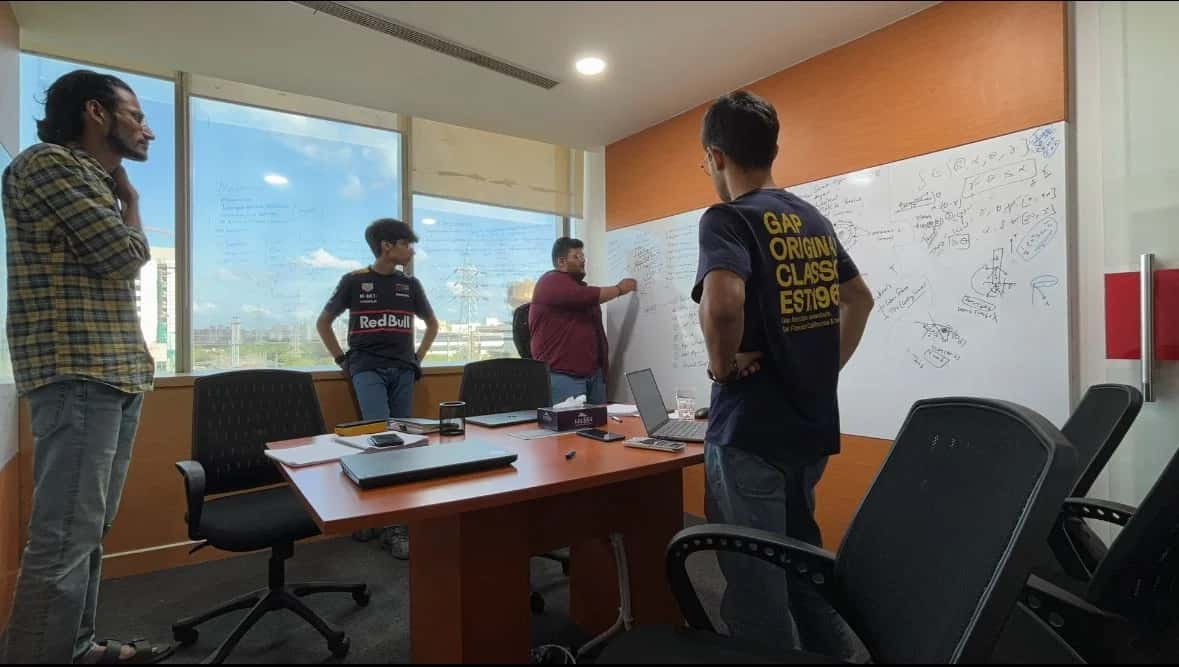
Jain leads a team of eight engineers aged between 25 and 35. He works half days at the company while preparing for school board exams in the other half.
Celestial Aerospace focuses on launch economics. Jain says small launch vehicles struggle to compete as larger rockets enter the market. “We’re currently in the small-scale domain where people charge anywhere between $25,000 to 30,000 per kilogram, and in our first year, we’re targeting about $17,000 per kilogram,” he says.
Looking ahead, the company’s planned orbital vehicle—named Phoenix—is designed to carry a payload of up to 800 kg. It will launch the rocket from an altitude of 25 kilometres using a fully controlled airship, before ignition. It is being developed as a partially reusable, two-stage Kerolox (kerosene and liquid oxygen) vehicle, combining conventional propulsion with high-altitude deployment. The rocket will then continue upward before returning with a parachute.
Jain says the test aims to fully validate the concept. “No one’s ever done this before. We’re going to be the first company to do this, and so we really need the data to be able to make a very efficient vehicle.”
What is This Airship?
Instead of a traditional booster, Celestial uses lift from an airship. Jain says the idea reduces development and structural costs. A key focus for the startup remains making reaching orbit cheaper. It aims to do that not just by making the vehicle more efficient, but also by mitigating the initial difficulties of the ascent during the early, dense part of the atmosphere by using a balloon instead of a booster.
Jain clarifies that the system uses a controlled airship rather than a free-floating balloon. “An airship has propellers and wings and is more aerodynamically shaped.”
The launch sequence remains complex. The rocket detaches at altitude and must ignite immediately to avoid dropping. “The rocket is just stuck to the balloon, right? We have to ensure that it doesn’t fall once we’ve detached it. So we have to switch on the engines and ramp them up accordingly.”
He says the team simplified the procedure after studying past failures and interacting with the founders of such companies. “There was Zero 2 Infinity, B2Space, Canada’s SpaceRyde and an Indian company called Vellon Space,” he notes. “So it was the people who had previously tried to work on the balloon rocket concept.”
When asked what Celestial approached differently, Jain highlights two key elements. First, the team introduced a far more streamlined launch process, as he believes previous systems had been made unnecessarily complex. Second, rather than relying on a single breakthrough, they combined several simple ideas in a way that could successfully turn the concept into reality.
From School Project to Startup
Jain began working on the idea in September 2024. The concept did not initially involve balloons; it started as a deep-space propulsion idea. “Even my IP is not on the balloon concept. It’s on an idea of interplanetary travel using this expandable structure, which allows electric propulsion.”
He consulted industry experts at DRDO and ISRO before formally committing to start the company in March 2025. The team currently operates from his father’s office in Gurugram while a 5,000-square-foot testing facility is under construction.
The company has raised ₹3 crore in a pre-seed round from family and friends. Jain confirms that Lightspeed backs the recent seed round, and says he plans to raise more capital after the concept vehicle flies.
Lightspeed says that its decision was based on both the problem and the team.
Romit Mehta, Vice President for Investments at Lightspeed, tells AIM that Celestial Aerospace “stood out to us on a few parameters”, beginning with the problem it is tackling. He noted that the company is working to fill a significant gap in India’s space ecosystem by developing advanced propulsion technologies.
He points out that although the founder is young, he possesses strong technical depth and a clear vision, supported by a team with the specialised expertise needed to operate in a complex, high-stakes sector such as space.
Mehta also highlights “their velocity of execution”, saying the journey from concept to tangible progress has been marked by disciplined execution, rapid iteration and a consistent ability to translate ambition into measurable milestones.
Finally, he says he was impressed by “their pitch and storytelling, which reflected strategic clarity”, noting that the team clearly communicated not only what they are building, but why it matters for India, the broader ecosystem and the future of advanced aerospace innovation.
Jain says India’s private space momentum has been quite helpful. “We’re in touch with a few directors over at IN-SPACe and ISRO for approvals and overall development.”
He acknowledges that building rockets at 15 invites scepticism, not because of his age, but because he is building hardware. “A kid can code, that’s fine. But a kid building rockets, that’s a little hard to believe.”
Celestial targets a commercial orbital launch by early 2029. Jain says the next few years will test the team’s pace and discipline. For now, he says he prefers propulsion over textbooks. “I would like to do this much more than studying,” he jokes.
- From Humanoid Robots to Telecom Trials, 12 Major Announcements at NVIDIA GTC Berlin 2026
- Anyone Can Make a Robot Move, Few Can Make It Stop
- After ISRO’s PSLV Failure, TakeMe2Space Looks to SpaceX for Reliable Launch
- Why AI Agents are the Next Frontier in Quantum Security
- Physical AI Squeezes Labour Market, And Low-Skilled Immigrant Jobs May Be First to Fall
- Rocket Math Isn’t Mathing: Why India’s Space Launches are Expensive