Anthropic CEO Dario Amodei Sees India as the World’s Largest AI Experiment
By Siddharth Jindal ·
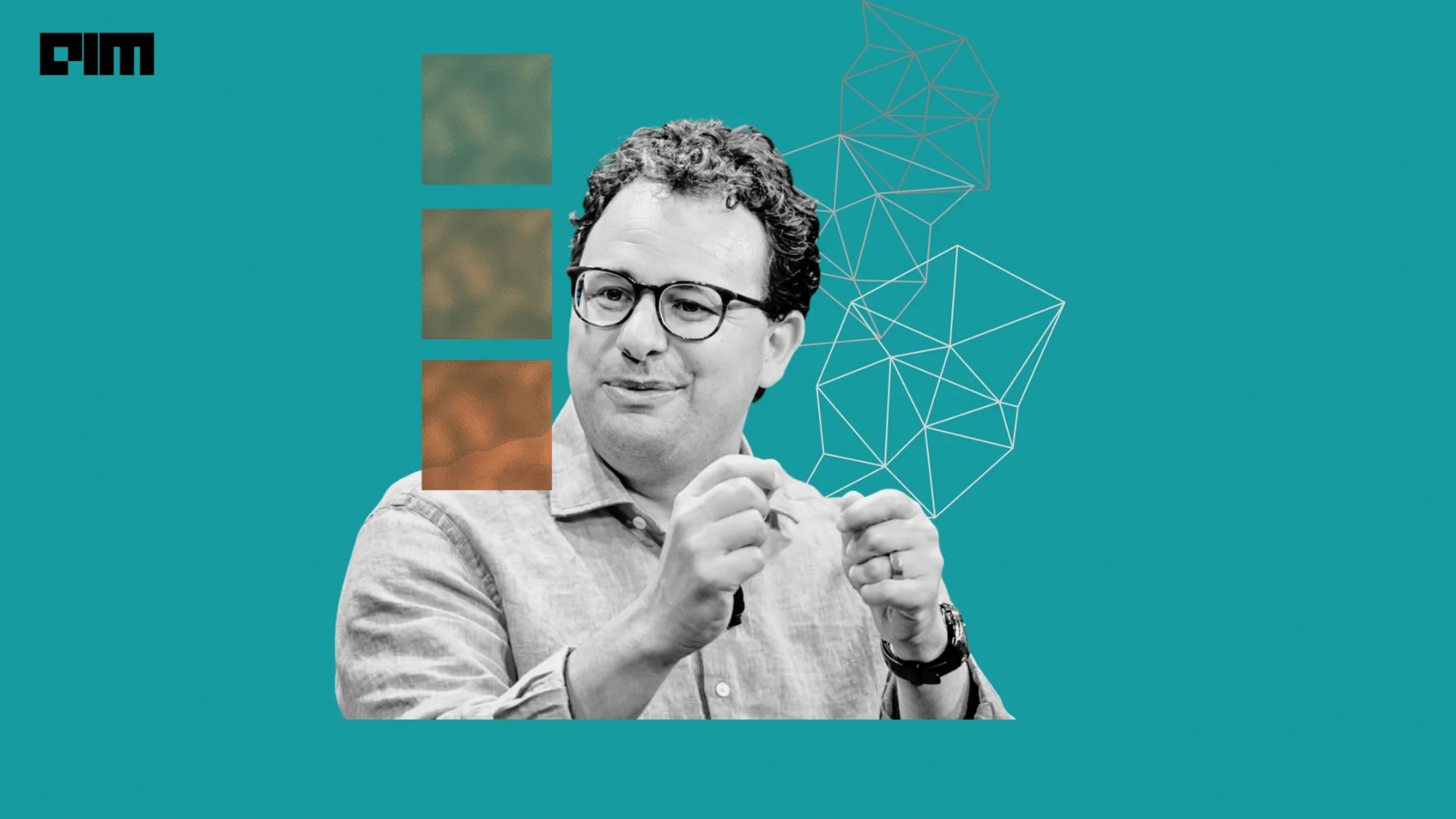
When Anthropic CEO Dario Amodei took the stage in Bengaluru on February 16, he returned to a theme he has emphasised repeatedly over the past year: AI is moving faster than most institutions are prepared for.
Amodei, who has visited India twice in the past six months, said the intensity of developer engagement in the country stands out even in a global market that is already moving quickly.
The company also officially announced the opening of its Bengaluru office at Embassy Golf Links, where it is recruiting talent across various roles.
India’s ‘Technical Intensity’
While AI tools globally have seen a mix of consumer curiosity and enterprise pilots, Amodei suggested that India’s usage pattern looks different—skewing strongly towards technical and professional applications.
“One of the most unique things about India is the technical intensity of the usage of Claude,” Amodei said. “We’ve always seen a mixture of casual consumer use and developer use, but I think that’s even more so here in India.”
He pointed to the scale of API adoption and the use of Claude Code by Indian developers. “We just have a huge community of developers who use the API, developers who use Claude Code or Claude Code within the API.”
According to Amodei, Anthropic’s revenue run rate in India has doubled in the past four months since October last year.
Irina Ghose, Managing Director of India, Anthropic, said that 6% of the company’s total global conversations originate from India. Nearly half of Claude’s usage in India comprises computer and mathematical tasks, including building applications, modernising systems and shipping production software.
Speed, Scale and Experimentation
Beyond startups, Amodei said he has been struck by how quickly public institutions are experimenting.
He cited an example he heard during his visit. “The Ministry of Statistics here is building an MCP server to query economic data and economic statistics,” he said. “Generally speaking, government bodies elsewhere don’t move this fast.”
For him, two structural factors define India’s AI opportunity—energy and scale.
“The efficiency of the market here, the energy of very large numbers of people wanting to find something and build something, that exceeds what I’ve seen anywhere else,” he said.
He also pointed to India’s population size as a testing ground. “We can do experiments here with hundreds of millions of people. The pure scale allows us, as long as we’re willing to pivot our experiments, to learn things very quickly that you can’t do in smaller markets,” he said.
That, he argued, enables entrepreneurs to “learn quickly and fail fast” in ways that are harder elsewhere.
Multilingual AI and Public Infrastructure
Some of the most interesting applications Amodei has seen in India relate to language diversity.
As part of its India push, Anthropic is improving Claude’s performance in 10 major Indian languages, including Hindi, Bengali, Marathi, Telugu and Tamil.
In education, Anthropic has partnered with Pratham, which is piloting its Claude-powered Anytime Testing Machine with 1,500 students across 20 schools. The programme is expected to expand to 100 schools by the end of 2026.
Agriculture is another focus area, with Anthropic collaborating with the EkStep Foundation through the OpenAgriNet initiative. In healthcare and social services, nonprofits such as Noora Health and Intelehealth are using Claude Code and Cowork.
Amodei also mentioned non-profit initiatives such as Adalat AI, which are making court case information more accessible.
For him, these use cases reflect a broader idea of bringing AI into public systems so more people can benefit.
In enterprise developments, Air India, CRED and Cognizant are deploying Claude Code across software and internal systems, with Cognizant extending it to 3.5 lakh employees globally.
Startups including Razorpay, Enterpret and Emergent are integrating Claude into product and engineering workflows. Emergent said it reached $25 million in annual recurring revenue in under five months using Claude.
Build for Where Models are Going
Turning to global enterprises, Amodei advised planning ahead of the current model’s capability.
“One of the most important things here is scaling where the puck is going… You shouldn’t build for where AI models are now. You should build for where they are in a year or two.”
Because deployment and testing take time, organisations should be imaginative about future capabilities, he said.
“Don’t build for step four out of a 10-step workflow. Try and do the whole workflow, even if the model isn’t quite capable of it yet,” he said.
Within Anthropic, teams outside engineering adopted agent-based systems early. “Our legal department, our finance department, our comms department started using the agentic engine underneath Claude Code,” he said.
Companies that deploy models broadly, he added, are often “able to see ahead of our roadmap.”
Risks and Responsibility
Amodei further discussed the societal impact of AI.
“This technology is going to change the world at a speed and to a degree that we haven’t seen before,” he said.
He warned that capability brings risk. “If we build a model that helps people write code, it can also be used for cyber attacks,” he said. “We try to put safeguards there, but we need the help of our customers.”
He emphasised the importance of democratic institutions adapting alongside AI. “India is the world’s largest democracy,” he said. “Helping government to be more efficient and serve people better is a valuable use of the technology.”
At the same time, he acknowledged economic disruption. “There are going to be big economic changes that come from this technology,” he said. “We need to make sure that everyone shares in the benefits.”
AI in Medicine and the Physical World
Asked where durable businesses might emerge, Amodei pointed to sectors tied to the physical world.
“The things that are going to have the biggest moats are those that relate to the physical world or something real in the world of atoms,” he said. “Biology and medicine fit that.”
These fields require domain expertise and regulatory navigation, creating higher barriers to entry. “All that hard work can lead to durable businesses,” he said.
Amodei also cautioned against building products that optimise only for short-term engagement. “It’s easy to build products that are addictive or only in people’s short-term interest,” he said. “But we can build AI agents that act in our long-term interest and make people’s lives better.”
What to Expect Next
Looking ahead, Amodei highlighted three areas of progress: science, software and professional workflows. “As models get better at science and biology, I think we’re starting to get there.”
In software, he expects deeper automation. “Models are starting to do multi-stage workflows,” he said. “Humans can step into the role of supervisors and accelerate themselves by a factor of 10x to 100x.”
The models are improving in finance and legal work as well. “There’s a lot of startups and things to be built,” he said.
Amodei ended with a call for experimentation at scale.“We need to let a thousand flowers bloom and try a bunch of different approaches in different locations in the world,” he said.
In Bengaluru, that experiment appears well underway.