
In the popular sitcom The Office, where a sales organisation’s reps compete against each other to bring in revenue, a whiteboard in the corner shows the quarterly sales leaderboard. It puts, in black and white and for all to see, who everyone’s biggest competition is, and who’s the weakest link.
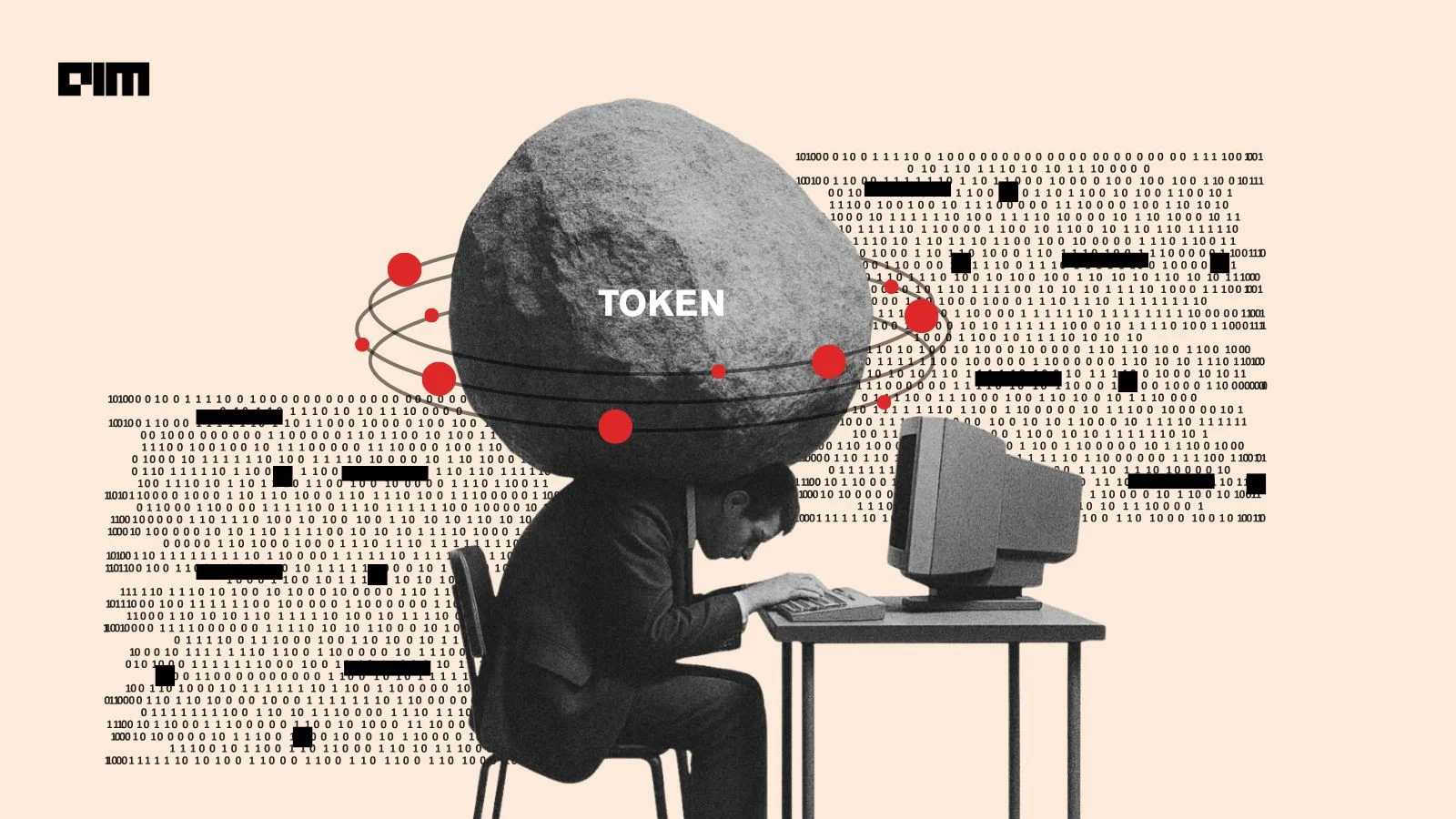
That sense of contest is now trickling into the coding workflows of developers at Big Tech companies, pushing them to use more AI tools. Many teams are now not only tracking token usage, but are putting up leaderboards in a bid to encourage developers to spend as many tokens as possible—what is now famously called tokenmaxxing.
But in the Indian offices of Big Tech giants, the rush to climb the leaderboard comes with a peculiar unease, and an anxiety about being at the bottom.
“Management at my company has set up leaderboards to track who is using the most tokens, and there is speculation that bad things may happen to you if you aren’t in the top 25%,” a developer posted on Reddit.
Tokenmaxxing Through the Roof
Tokenmaxxing treats AI usage like a contest, with teams chasing higher numbers, earning titles like ‘Token Legend,’ eventually driving up cloud bills.
It gained momentum after an internal Meta dashboard known as Claudeonomics went viral, first reported by The Information. Built by employees, it ranked engineers based on how many tokens they consumed using Anthropic’s Claude, with some of the highest users logging hundreds of millions to billions of tokens per month.
However, within days of its rollout, Meta reportedly shut it down.
But the idea is already showing up elsewhere.
According to a Business Insider report, at Disney, internal dashboards track AI usage, with developers reportedly running tens of thousands of prompts per day. In one case, an employee invoked Anthropic’s Claude roughly 460,000 times over nine workdays in mid-April, averaging about 51,000 uses per day. At JPMorgan, dashboards reportedly categorise employees as "non," "light," or "heavy" users.
This mirrors the situation at Uber, which exhausted its entire 2026 AI budget in roughly four months, with nearly 95% of Uber engineers actively using AI assistants in their workflows.
The Trend is Catching up
At Google, an internal dashboard tracks how developers use AI tools, but these are not treated as performance benchmarks.
“There is no productivity benchmark. It’s more like just to see how much engineers are using AI,” a Bengaluru-based staff engineer at Google tells AIM. “Just to visualise how many people are using it and what the token usage is.”
According to the developer, teams internally compare usage patterns across groups, with dashboards showing relative consumption trends rather than evaluating individual output.
Startups, driven by cost efficiencies, are on a similar AI adoption drive, but don’t “let it rip” just yet due to cost constraints. Adithya S Kolavi, a research engineer at Hugging Face and a former researcher at Microsoft Research, tells AIM that some startups do track usage, but more to understand patterns than to enforce strict limits.
“Most encourage adoption rather than constrain it. Legacy companies tend to be stricter with monitoring and controls, while Big Tech generally sees strong adoption without overly rigid tracking,” he says.
Beyond Numbers
While industry leaders like Jensen Huang have suggested allocating token budgets to developers, the Google engineer notes that the search giant already provides engineers with “a pretty generous quota.” However, with AI entering the picture, the culture within the organisation has changed, as developers are becoming more anxious about losing their jobs amid layoffs, adding pressure on developers to rely more on AI.
“They don’t require 10 engineers to do the same job; that can be done by maybe five or six engineers,” adding that there’s an inherent sense of anxiety around AI and how to use these tools to be more efficient.
But as AI accelerates code generation, traditional metrics such as the number of lines of code or bug fixes may become less reliable indicators of performance. “The volume you are generating might not be equivalent to the impact you have,” the person says.
Instead, he believes the definition of a strong engineer is shifting toward problem-solving and impact.
Similarly, Kolavi says productivity gains depend heavily on how effectively engineers use tokens. “With the pace at which things are moving, constantly adapting workflows can itself be mentally taxing. So it’s less about raw usage and more about thoughtful usage,” he says.
Kolavi says Microsoft doesn’t focus on token consumption. “The more meaningful metrics are things like PRs merged, speed of iteration, and overall progress on projects. That gives a much clearer signal of whether AI is being used effectively,” he explains.
One of the biggest cultural shifts, the Google developer says, is the transition from writing code to reviewing AI-generated output. Engineers are increasingly acting as reviewers or ‘managers’ of their sub-agents.
“You are basically reviewing a lot compared to authoring right now,” the person says.
Another emerging challenge is AI slop, which is essentially low-quality or misleading outputs generated by AI systems.
“AI naturally tries to do the task and might end up hallucinating and creating code that might not fully solve the problem,” he explains. This makes human oversight even more critical.
As AI overwhelms software development, writing code is no longer the hard part. It’s knowing what to trust and what to fix. Token usage can show how widely these tools are being used, but it says little about real impact. As expectations rise, what will matter more is how developers use AI, not how much they use it.
As former Google chief data scientist Cassie Kozyrkov put on LinkedIn, “Measuring AI skill by token usage is like measuring a writer by keystrokes or a surgeon by incisions. You will get more of it. You will not necessarily get better results.”

Your reaction
Discussion
What's your take on this story?
No comments yet — be the first to share your view.