
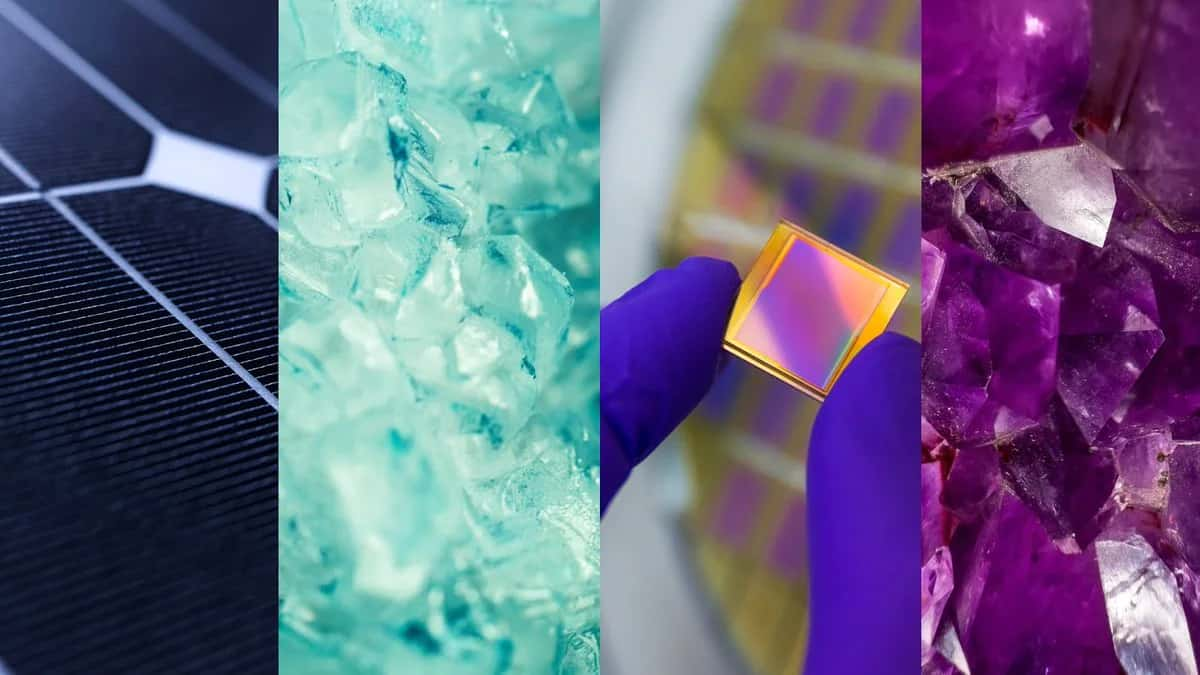
Google DeepMind and Lawrence Berkeley National Laboratory researchers recently introduced Graph Networks for Materials Exploration (GNoME), an AI tool to discover new materials and predict material stability.
“We are releasing 381K stable materials to help scientists pursue materials discovery breakthroughs,” said Pushmeet Kohli, head of research (AI for science, robustness and reliability) at DeepMind.
Check out the GitHub repository here.
With this, Google DeepMind looks to accelerate the discovery of stable materials for new technologies, alongside eliminating the need for slow and expensive traditional methods of material discovery.
So far, GNoME is said to have discovered over 2.2 million new materials, including 380,000 stable materials – i.e. equivalent to nearly 800 years’ worth of knowledge. It is said that these materials could power future technologies like superconductors, supercomputers, next-generation batteries and more.

(Source: Google DeepMind)
Interestingly, the team boosted the discovery rate of materials stability prediction from around 50% to 80%. Moreover, the GNoME project looks to drive down the cost of discovering new materials significantly.

(Source: Google DeepMind)
GNoME uses graph networks and deep learning to predict the stability of new materials. It is said to combine two pipelines: structural (creating candidates with structures similar to known crystals) and compositional (a randomised approach based on chemical formulas). The predictions are evaluated using Density Functional Theory calculations.
- Europe's Biggest Tech Startup Cuts AI Coding Costs by 90% Using Chinese Model
- E2E Networks Launches Blaze To Offer Pay-Per-Token AI Inference Services
- Apple Posts Record Revenue in India for Q4 FY26
- Dispatch Network Raises ₹5 Cr Pre-Seed Led by Antler India to Build AI-Powered Delivery Network
- Coforge Launches BridgeCX With Pega, Mastercard for Customer Personalisation
- HCLTech Launches AI Agents to Support Mainframe Operations