

5 min
[caption id="attachment_15632" align="aligncenter" width="1024"] Ranjit Radhakrishnan, Chief Product Officer at BYJU'S[/caption]
Byju’s, India’s largest K-12 learning app is one of the best funded ed-tech ventures and is billed to become India’s first educational unicorn. The popular K-12 education startup also earned another notch this year when it made to the Harvard Business school case study and is currently valued at $600-650 million. Valuations aside, Analytics India Magazine caught up with Byju’s Chief Product Officer Ranjit Radhakrishnan to understand Byju’s analytics system and the personalization engine that drives the impeccable online learning experience.
Radhakrishnan cites the backbone of Byju’s personalization engine is the rich learning profile that is built for every student. “We have our own analytics systems which capture millions of data points every day. This drives multiple decisions – such as from improving a feature to building highly contextual recommendations. The variety of student profiles also gives us an idea on what to improve or add to the overall content. It helps us change and modify the values of the parameters and properties associated with the various learning content,” said Radhakrishnan.
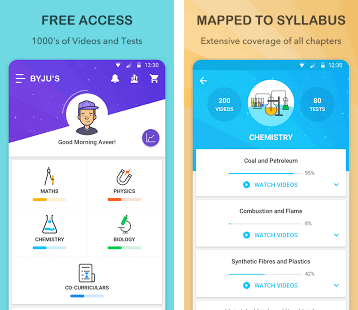 The edtech company is credited for creating a new segment of self-paced learners and its personalized focus has delivered 90% retention year-on-year. Talking about creating personalized learning experience, Radhakrishnan shares, “This is further powered by deep knowledge graphs of over 50,000 concepts and relationships that have been created to design personal learning journeys -- videos, questions, adaptive flows, quizzes, flashcards, correctional learning videos etc”.
Additionally, the learning content is also tagged to multiple other properties and parameters. Case in point, when a student starts the learning journey, a rich learning profile is built to personalize the experience. “This enables us to customize and personalize the learning experience for students based on their strengths and weaknesses and their specific learning gaps, pace and needs,” he said.
 The edtech venture uses the app data as the primary data backed by information about logged in web usage to enhance the user experience better. The user’s interactions with the websites, emails, etc are tracked in a separate system that is used for bettering marketing automation and behaviour analysis. “And the actions that define the user’s knowledge profile are based on interactions with content pieces,” shared Radhakrishnan.
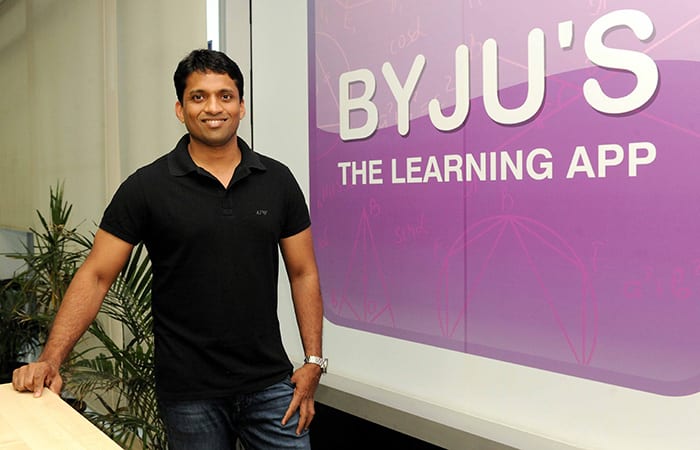 Byju Raveendran, founder and CEO of India's best-funded ed-tech start-up[/caption]
According to Byju’s senior executive, the content creation process is highly influenced by the data analytics at work as a lot of data and insights is generated in house. Case in point – if a large percentage of students are making mistakes in a particular concept, Byju’s add simpler videos, more content formats and easier questions to allow the system to create a smoother learning curve.
“In this way, students end up learning the difficult aspects of the concept gradually without getting demotivated,” reveals Radhakrishnan. The edtech venture also looks at specific learning content tagged to those concepts and constantly updates the parameters so that future learning paths for newer students are smoother. The effectiveness of all content modules and modes are also constantly analyzed for improvement.
 Ranjit Radhakrishnan, Chief Product Officer at BYJU'S[/caption]
Byju’s, India’s largest K-12 learning app is one of the best funded ed-tech ventures and is billed to become India’s first educational unicorn. The popular K-12 education startup also earned another notch this year when it made to the Harvard Business school case study and is currently valued at $600-650 million. Valuations aside, Analytics India Magazine caught up with Byju’s Chief Product Officer Ranjit Radhakrishnan to understand Byju’s analytics system and the personalization engine that drives the impeccable online learning experience.
Radhakrishnan cites the backbone of Byju’s personalization engine is the rich learning profile that is built for every student. “We have our own analytics systems which capture millions of data points every day. This drives multiple decisions – such as from improving a feature to building highly contextual recommendations. The variety of student profiles also gives us an idea on what to improve or add to the overall content. It helps us change and modify the values of the parameters and properties associated with the various learning content,” said Radhakrishnan.
A look at Byju’s personalization engine
The edtech company is credited for creating a new segment of self-paced learners and its personalized focus has delivered 90% retention year-on-year. Talking about creating personalized learning experience, Radhakrishnan shares, “This is further powered by deep knowledge graphs of over 50,000 concepts and relationships that have been created to design personal learning journeys -- videos, questions, adaptive flows, quizzes, flashcards, correctional learning videos etc”.
Additionally, the learning content is also tagged to multiple other properties and parameters. Case in point, when a student starts the learning journey, a rich learning profile is built to personalize the experience. “This enables us to customize and personalize the learning experience for students based on their strengths and weaknesses and their specific learning gaps, pace and needs,” he said.
User Experience is at the heart of Byju’s success
The edtech venture uses the app data as the primary data backed by information about logged in web usage to enhance the user experience better. The user’s interactions with the websites, emails, etc are tracked in a separate system that is used for bettering marketing automation and behaviour analysis. “And the actions that define the user’s knowledge profile are based on interactions with content pieces,” shared Radhakrishnan.
- The content is tagged at the sub-micro concept level
- This helps the algorithms to create a smooth learning curve for the student so that they feel challenged yet motivated
- This app works in a way similar fashion like a personal tutor and addresses the student’s learning gap in a more effective way backed by deep insights
Analytics driving better content creation
[caption id="attachment_15629" align="aligncenter" width="700"] Byju Raveendran, founder and CEO of India's best-funded ed-tech start-up[/caption]
According to Byju’s senior executive, the content creation process is highly influenced by the data analytics at work as a lot of data and insights is generated in house. Case in point – if a large percentage of students are making mistakes in a particular concept, Byju’s add simpler videos, more content formats and easier questions to allow the system to create a smoother learning curve.
“In this way, students end up learning the difficult aspects of the concept gradually without getting demotivated,” reveals Radhakrishnan. The edtech venture also looks at specific learning content tagged to those concepts and constantly updates the parameters so that future learning paths for newer students are smoother. The effectiveness of all content modules and modes are also constantly analyzed for improvement.

Your reaction
Discussion
What's your take on this story?
No comments yet — be the first to share your view.