
There’s an undercurrent of AI disclosure pervasive among most Indian IT services firms. They announce a platform, count how many lines of code are AI-generated, and give a breakdown of AI revenues during their quarterly earnings, reassuring investors that margins will follow.
Persistent Systems is taking a different route. During the Q3 earnings call, Executive Director and CEO Sandeep Kalra did not offer any AI breakdowns; rather, he talked about incorporating AI as part of every deal, centring the conversation on its GenAI-based engineering platform, SASVA 3.0.
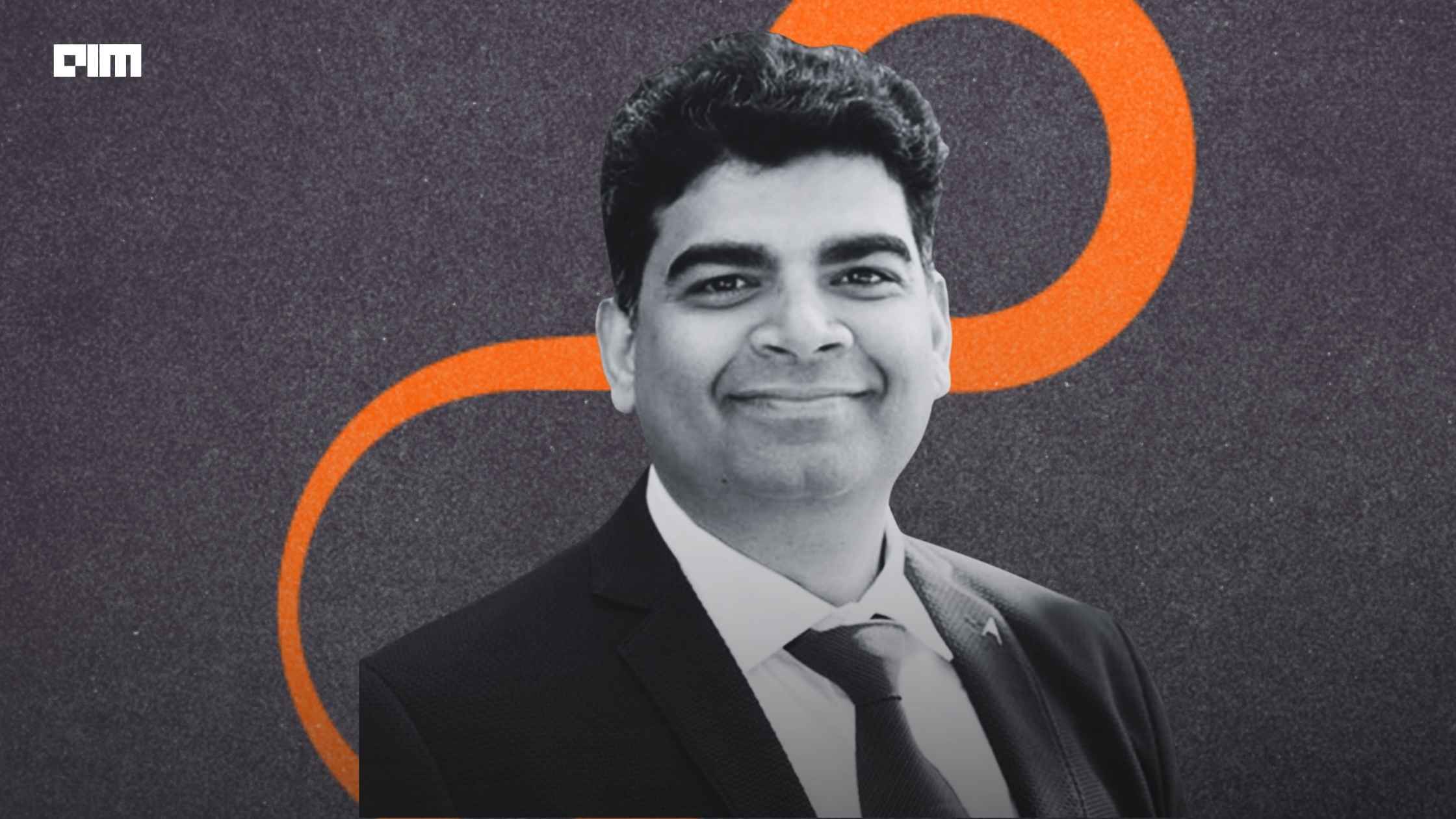
In a conversation with AIM, Nitish Shrivastava, Chief Technology Officer – Engineering Hyper-productivity at Persistent Systems, says the company is not chasing peers or stacking up against the usual suspects. He kept returning to one name that rarely comes up in Indian IT earnings calls—Cursor, the AI coding IDE (integrated development environment).
“We don’t compete with Coforge or Wipro for their platform. SASVA is a developer platform, which is India’s response to a Cursor,” Shrivastava says.
“There are things which are good with Cusor. There are many things which are good in SASVA. But we compete with Cursor when it comes to the developer landscape,” he explains.
Persistent’s AI Strategy
While most services firms are packaging copilots around delivery by partnering with Cursor, Anthropic for Claude, Replit, or Cognition, Persistent is building what looks more like a product company. SASVA, derived from the Sanskrit word for timelessness, is not pitched as an internal accelerator. It is a full developer positioned as a cost-effective alternative to global tools.
“If you end up spending, let’s say $10 in Cursor, you will spend a dollar in SASVA,” Shrivastava vaunts.
The larger context matters. Shrivastava calls this the “fifth AI wave”—after predictive AI, generative AI, agentic AI, and physical AI. AI has existed in automation and analytics for years. Generative AI simply pushed it into daily workflows. Suddenly, developer productivity, not just back office automation, became the battlefield.
Persistent’s response was to treat AI more structurally. The stack starts with data readiness. Data engineering, connecting sources, and knowledge management. Then comes what he calls “engineering hyper-productivity”. After that, business hyper-productivity. Finally, agentic systems that can act autonomously, guarded by security infrastructure.
In other words, Persistent is treating AI as its foundation. SASVA sits in the middle of this architecture. Shrivastava describes three design principles that shaped it.
The first is determinism. Results must be predictable. Enterprises cannot tolerate hallucinations. “On day one, we said, ‘Well, AI should be built around a deterministic system,’” he says.
The second is affordability. Inferencing costs remain high. Calling large models repeatedly is expensive. SASVA relies on smaller models and optimised workflows to enable multiple agents to collaborate cost-effectively.
The third is security. Everything runs inside the enterprise environment. No code or data is shipped to external clouds by default. That matters for healthcare and BFSI clients bent on protecting sensitive data.
Inside SASVA
SASVA splits into three separate products.
One is the developer platform. Like Cursor, it behaves like a coding IDE with AI assistance but is tuned for enterprise scale and cost.
The second is product intelligence. Shrivastava claims few players operate here beyond Replit or Lovable. Product managers use it to plan features, simulate ROI, and understand which roadmap choices drive revenue.
The third is business intelligence. Here, SASVA automates tech due diligence. Private equity firms use it to assess acquisition targets and generate quick manual audits.
“These are products where we have our own end customers competing with the best in the class, providing features that are comparable, and it is very, very cost-effective,” Shrivastava says.
Snapping Timelines
The logic becomes clearer when he explains why Persistent did not simply partner with popular AI IDEs like others. If tools like Cursor are so powerful, Shrivastava, why has the engineering headcount not collapsed?
“They give you 80% of the work in no time,” he says. “But then from there to the remaining 20%, you end up taking a month or more.”
That last mile is messy. Edge cases. Legacy systems. Compliance. Integration. Commodity copilots create the “wow” moment but struggle to finish complex enterprise work. SASVA is designed specifically for that 20%, the executive says.
He cites that in one case, a client wanted to migrate workloads from AWS to GCP. Traditionally, that means months of architectural work. With SASVA’s migration tools, the same job was automated end-to-end in two weeks.
Another client needed to modernise .NET applications and move from on premise to the cloud. Again, generic tools accelerated the first phase but stalled later. Shrivastava says SASVA’s purpose-built modules compressed timelines dramatically.
This focus on team problems, not individual productivity hacks, shapes how Persistent thinks about talent, too.
The classic services pyramid—a few architects and many junior developers—is fading. AI writes large chunks of code. Someone still needs to monitor what stays and what goes. “The role of developers has shifted,” he says. Engineers now act more like supervisors.
Persistent calls them “Mavericks.” These are developers trained to orchestrate AI tools such as Cursor, Windsurf, and Lovable, design workflows, use planning modes, and put guardrails around models. Their job is not typing code but directing systems.
Beyond coding, Shrivastava is bullish on agents. He points to new systems like open-source AI agent OpenClaw that behave autonomously rather than following scripted workflows. Instead of deterministic runbooks with AI sprinkled on top, agents can monitor environments, make decisions, and act independently.
“This is where the industry is heading,” he says. Coding will become more commoditised. Skilled bots will handle repeatable work. Humans will design, supervise, and intervene.
All of this also explains why Persistent refuses to report an AI revenue number.
For many peers, AI has become a line item. For Persistent, it has blurred into everything.
“Very difficult to differentiate between what is AI and what is not AI in a world where almost everything is touching AI,” he says. “What’s the point of reporting a number, which is not 100% accurate?”
In the quarter ended December 31, 2025, Persistent’s net profit grew 18% year-on-year to ₹439 crore. Its revenue from operations rose 23% YoY to ₹3,778 crore.

Your reaction
Discussion
What's your take on this story?
No comments yet — be the first to share your view.