
Key takeaways
- Kubernetes has evolved from an internal Google solution to a widely adopted platform for running microservices across cloud environments.
- Many developers utilise Kubernetes, recognising its capabilities for machine learning, scheduling, and scalability.
- As users become more advanced in Kubernetes, they influence companies to enhance their Kubernetes offerings, fostering a productive feedback loop.
- Understanding Kubernetes requires viewing it as an ecosystem, encouraging exploration of its use cases and integration with supporting tools.
From being an internal container orchestration solution at Google to open-sourcing it in 2014 to the tool we all know today, Kubernetes (aka K8s) has formed its ecosystem. It is becoming the de-facto standard for running microservices across cloud platforms.
The majority of developers today are using Kubernetes in some form and shape. Jeremie Vallee, AI infrastructure lead at Babylon, said it is a great platform for machine learning because it comes with all the scheduling and scalability you need. Meanwhile, travel-tech platform Booking.com also has a long history with Kubernetes. In 2015, the team prototyped a container platform based on Mesos and Marathon.
“As our users learn Kubernetes and become more sophisticated Kubernetes users, they put pressure on us to provide a better, more native Kubernetes experience, which is great. It is a super healthy dynamic,” said Ben Tyler, principal developer at Booking.com.
Kubernetes’ use cases
Ahmed ElFakharany, DevOps and cloud engineer expert, said that developers need to deal with Kubernetes as an ecosystem rather than a single technology. People need to explore Kubernetes use-cases and learn about the supporting tools that integrate with it to solve bigger problems and increase the overall value.
Here are some of the popular Kubernetes use cases:
- Develop simple applications: Get your app running by deploying it on a Kubernetes cluster.
- Microservices: Orchestrating complicated apps based on microservices architecture with many components.
- Lift and shift: Featuring the moving of on-prem apps to the cloud.
- Cloud-native network functions: Manage containers with encapsulated network functions.
- Machine learning: Managing machine learning workflow to deploy faster AI-based apps.
- Heavy computing: Enable heavy computing tasks.
- CI/CD: Easier to perform with Kubernetes.
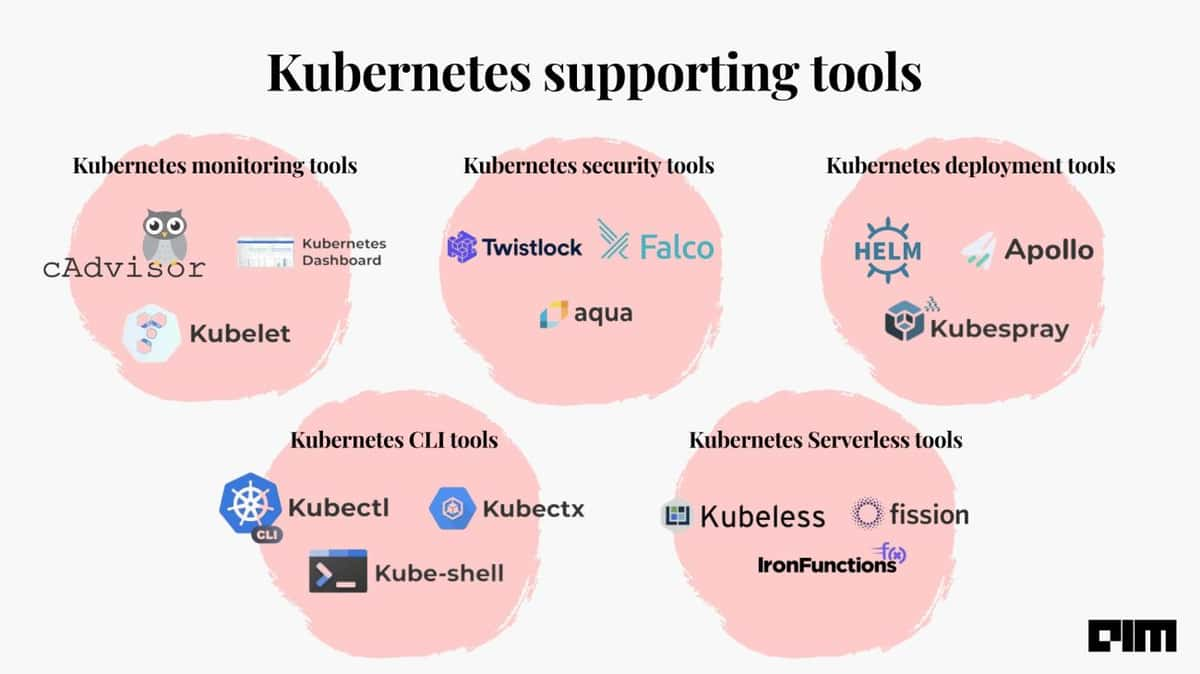
Kubernetes supporting tools
Today, a large majority of cloud providers are offering Kubernetes as a service, thus making it easier to adopt it as the foundation of distributed infrastructure.
In addition, there are plenty of backup tools like Velero (formerly Heptio Ark), deployment managers like Helm (now ArgoCD and Flux), Ingress Controllers, API gateways, and the policy-as-code tools like OPA, etc. The list goes on.
ElFakharany believes these tools came to existence because of the popularity Kubernetes has gained over the years. These tools aim to add even more value and solve issues not natively dealt with by the cluster.
Making sense of Kubernetes certifications
“Getting certified is just the start,” said ElFakharany.
He said some DevOps engineers learn Kubernetes with the sole intention of getting certified. Some popular certifications like CKA, CKAD, and the newest CKS may add value to your CV. They may get you an appointment for an interview, but they will not guarantee you a job.
Chandresh Shah, vice president at CITI, believes that certificates are important to understand the in and out of k8 and security. He said that even when people start solving a particular problem with some tools, they still need to know the basics. “Even if you go through the tools, it’s not a guarantee to get the jobs,” Shah added.
Further, he said, all tools come with certifications. “It is only your experience and the way you tackle the interview that can give you a job,” said Shah.
So, the question is, should you focus on getting more and more certifications to prove your understanding of Kubernetes and its supporting tools to the employer, or focus on the whole process of learning Kubernetes and explore ways to improve the ecosystem it has built over the years? Software developer Nozim Mehrubonov said: “That’s why I start to hate Kube once it’s getting ‘over certified.’ People just chase certificates for the sake of it instead of learning the tool.”
Wrapping up
Simply put, showcasing a Kubernetes certificate on your resume, to an extent, can get you an interview. But, it becomes important for candidates to showcase project/hands-on experience instead of a certification-based resume, where you are showcasing real use-cases and revealing how various supporting tools helped you deploy the required task. This can be a simple app, deploying computing-heavy tasks, machine learning, etc.